

Give Coleslaw A Subtle Sweetness With A Scoop Of This Fruit
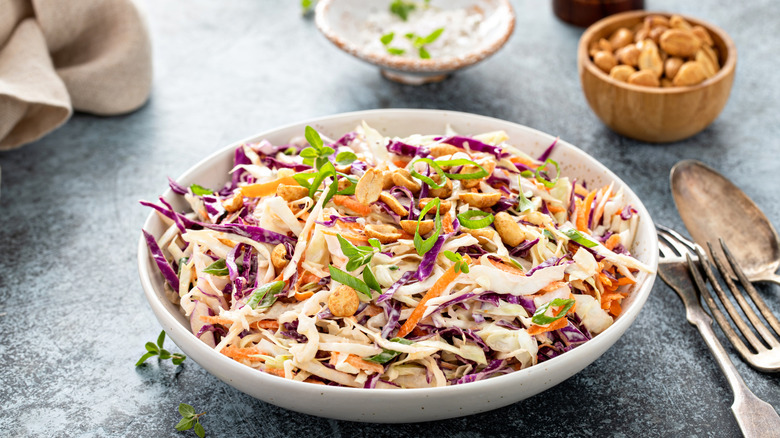
Coleslaw is a common side dish on barbecue plates and fried fish plates across the American South, and numerous variations of it exist across Europe. Though the main star is always raw cabbage, it can consist of any number of dressings and additional ingredients, from raw carrots and cranberries to dill pickles and nuts. One underrated mix-in for coleslaw is raisins, which create bursts of sweetness in this already complex flavor profile. Both golden and dark raisins add new depth.
Picking the right type for your coleslaw depends on what kind of flavor you want to achieve. The dark raisins you find in grocery stores are dried Thompson seedless grapes and have a subdued sweetness that avoids overpowering other ingredients. Golden raisins also come from Thompson seedless grapes, but undergo a different drying process. Instead of lying under the sun, they're dried using dehydration equipment that provides a controlled environment. The enhanced control leads to softer raisins with a higher-complexity sweetness and more moistness. You can even make your own raisins with leftover grapes sitting around.
Some say there's no discernable difference in flavor between the two varieties. Others insist that golden raisins are fruitier and even have notes of lemon. If you want your coleslaw more on the savory side, opt for milder dark raisins. Golden raisins are effective for adding brightness — both in taste and color — and a softer bite. Just avoid the biggest coleslaw mistake people often make, and you'll have a deliciously fresh bowl.
How to make raisins in coleslaw a success
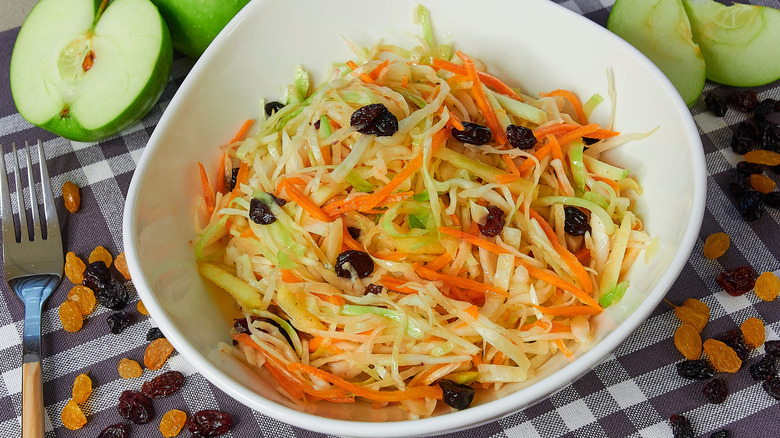
Many coleslaw recipes mix the dry and wet ingredients separately, but adding raisins to your dressing lets them absorb the liquid so the flavors marry and the raisins get plump. This step is especially beneficial for dark raisins, which are drier than golden raisins. You can skip this for golden raisins to avoid making them soggy. Anywhere from ⅔ cup to ½ cup of raisins is common for coleslaw recipes, though you may add more or less depending on the proportions of the other ingredients.
Fold in raisins alongside peanuts, almonds, or walnuts to give your coleslaw a pleasantly sweet crunchiness with hints of toasty, earthy flavor. A couple teaspoons of minced ginger takes it to the next level for an Asian-inspired slaw. If you typically use mayonnaise in your coleslaw dressing, try switching it for Greek yogurt for tanginess that plays well with the raisins.
Zante currants can be a great swap for raisins in coleslaw when you're in the mood for tangy instead of sweet. Both currants and raisins pair well with other fruit in coleslaw, such as apples. Their tart and sweet flavors also balance out the natural peppery, slightly bitter taste of red or green raw cabbage. But don't stop with raisins — try mixing in other simple coleslaw additions that give better flavor, and make your next barbecue or picnic memorable.