

This Old-School Deli Meat Is Still In Stores — But Younger Generations Wouldn't Touch It
We may receive a commission on purchases made from links.
People love pre-packaged deli meat for its convenience — just add some slices to bread to make a quick Italian sub sandwich. Not all of it is created equal, though, and people avoid certain varieties — especially younger generations. One such meat is liver cheese, which (despite its name) doesn't contain any cheesy goodness. Liver cheese consists of pork liver, pork fat, and other pork parts processed together to create the sliced meat.
Pork liver is an acquired taste due to its bitter, gamey flavor, and the gelatinous fat in liver cheese can be texturally off-putting. Older generations who had unpleasant experiences with eating liver cheese as kids would be unlikely to feed it to their own kids. Offal (aka organ meat) has historically been common among rural and poor communities because of its accessibility and affordability compared to prime cuts. However, eating offal fell out of favor once more people acquired higher incomes and could buy the meat cuts they see as desirable. Offal's relative disappearance happened most prevalently in Western cultures, with culture also influencing which meats are deemed acceptable to eat.
Today, liver cheese is more readily available in the delis of local grocers than at mainstream stores, but the Southern grocery chains Piggly Wiggly and Carlie C's still carry it, and they're not the only ones. It's mainly produced by the brands Fischer, King Cotton, and Scott Pete. You'll likely find liver cheese sold in areas that still have a cultural connection to eating offal, but younger foodies still tend avoid it because of perception, taste, and smell.
The confusion about what liver cheese really is
In addition to its regional specificity, liver cheese's largely forgotten nature could be due to its name. The term liver cheese is sometimes used interchangeably with liver mush or liver hash throughout the South, but liver mush is a slightly different food even though they share some ingredients. Liver mush combines cornmeal and spices with processed pork liver and other pork parts and comes in loaf form rather than as sliced meat. It's one of many forms of meat people ate when the Great Depression hit. Adding to the confusion, a similar processed, loaf-shaped meat in Germany is also referred to as liver cheese or leberkäse but typically contains no liver; it instead combines pork, beef, and bacon.
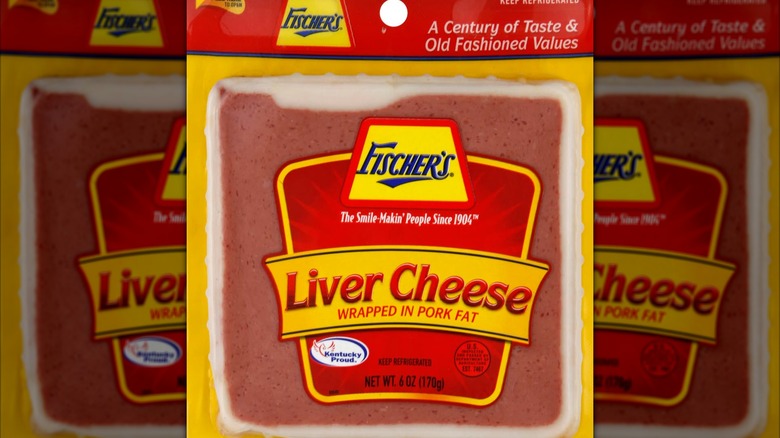
The liver cheese we're talking about here is easily identifiable from the others by its thin slices and surrounding ring of pork fat. Though some older generations pan-fried it to make the most of that fat, it was often eaten as is with crackers or between sandwich bread. It's not as palatable as many of the old-school ground beef dishes that have fallen into obscurity, but it did have favor at one point among those who grew up eating liver and other offal.