

Give Chili An Unbeatable Umami Boost With One Japanese Addition
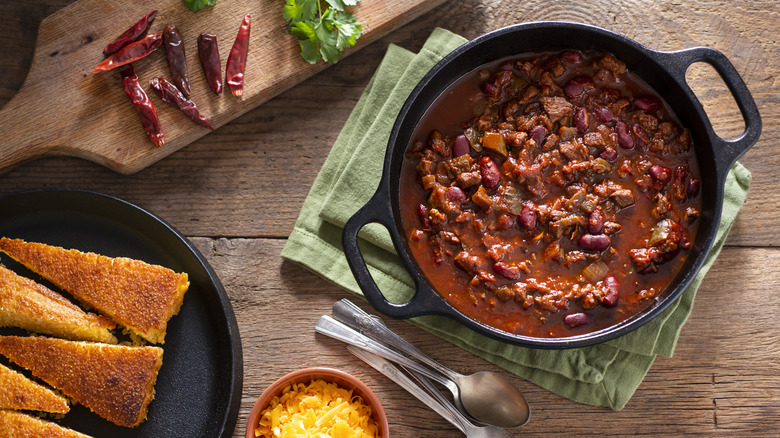
There are all kinds of ways to make an everyday chili more delicious, each with its own end goal. Tons of pepper varieties can send a chili careening up the Scoville scale and into the hearts of heat seekers everywhere. Some folks swear by less intense warming spices like flavorful cinnamon for making chili even cozier than it already is. And a bit of miso can make a chili taste particularly savory, thanks to the paste's inimitable umami quality.
Miso is made from fermented soybeans and often comes in plastic tubs or glass jars at the market. It is, perhaps, most famous for its use in miso soup, but you can also add it to an incredibly broad array of other preparations that could benefit from more depth. Chili is, of course, no exception. White, yellow, and red miso would all be suitable for use in chili, and they increase in intensity with corresponding color saturation.
The salty miso mingles just as merrily in just about any kind of chili. It is also particularly useful in vegetarian chilis, as it is plant-based but has a similar effect to the likewise umami-boosting anchovies that one might have otherwise used to maximize savory flavor. Like those anchovies, which would have needed to be pulverized to really distribute throughout a whole pot of chili, you'll also need to work miso's thick consistency to ensure that it disperses evenly into the dish.
Maximizing this paste in your next pot of chili
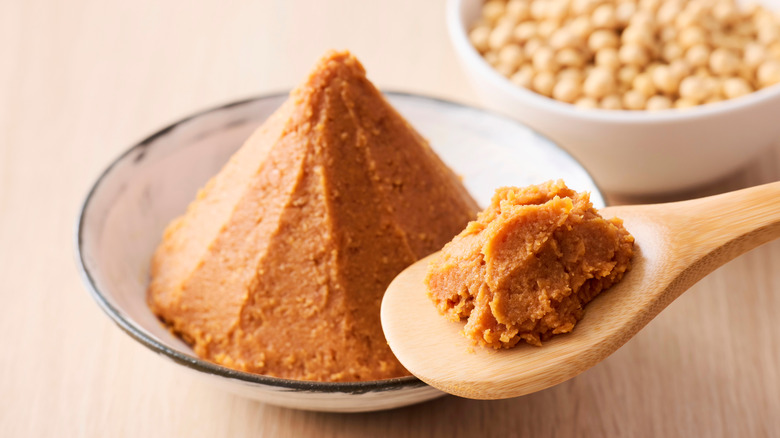
The chili recipe of your preference probably has a lot of separate steps that layer flavors to create the final product. With miso, you don't want to add the paste too the dish too soon. For one, miso is prone to burning, so you certainly would not want to try to saute it with your aromatics early in the cooking process. The same goes for your meat browning stage. However, miso paste's density also makes it a little challenging to fully stir in at the last minute. So, the key is to thin the miso and add it later in the preparation so that it both keeps its integrity and mingles throughout the pot.
Most chili recipes introduce a cooking liquid like chicken stock before everything is boiled together and left to simmer for a final half hour or so. Reserve a few tablespoons from that prescribed amount before you pour the rest in. In a separate bowl, you can whisk a couple of tablespoons of miso per pound of meat or equivalent base right into that reserved liquid until it's virtually invisible. You can then tip the infusion into the pot immediately after the chili comes off the heat and stir to combine before serving. Your tasters probably won't be able to identify the miso's precise soybean beginnings, but each bite will be richer than it would have been without this approximately one-minute addition. There are also plenty of more ways to use up the rest of the miso paste left over in the container, such as using it for marinades or turning it into compound butter.