

This Butter Technique Is The Humble Star Behind Tender, Airy Banana Bread
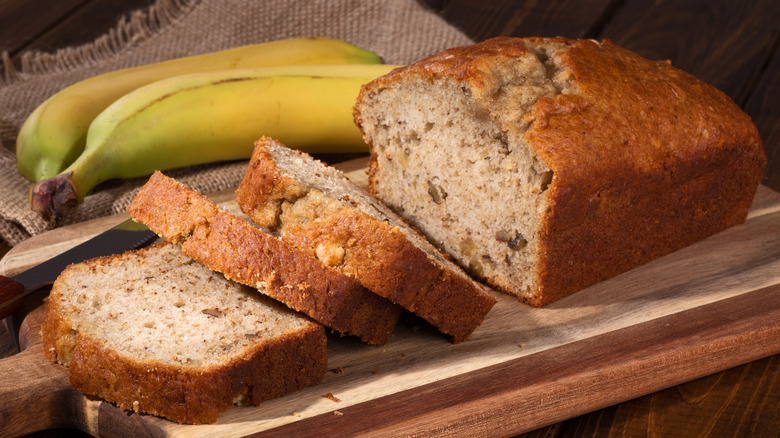
The difference between an okay loaf and bakery-worthy banana bread comes down to a few factors, including using room temperature eggs for the best texture and overripe bananas for the best flavor. But nearly as important is density and rise. The trick to baking tender, mouthwatering banana bread involves properly creaming your butter and sugar. It's an easy technique used throughout baking, known as mechanical leavening. Doing it right will help you achieve airy banana bread with a brilliant crumb and plenty of rise — one filled with pockets of air and a domed, cracked crust that tears apart easily and beautifully absorbs a pat of butter or cream cheese.
In baking, creaming involves taking softened butter and sugar and slowly beating them together using a fork, spatula, or an electric mixer. In addition to blending together, the mixture should change in color, texture, and volume, as zillions of tiny air bubbles are created in between the sugar crystals and the almost frosting-like butter. Sugar consists of irregular, sharp-edged crystals — like tiny bits of gravel — which create air pockets in the batter that help the banana bread rise in the oven. Those air pockets are also important when dealing with leavening agents as they trap the carbon dioxide released by baking soda and baking powder to create even more lift — essentially, the more air bubbles in the dough, the more those agents have to work with.
The key to properly creamed butter and sugar
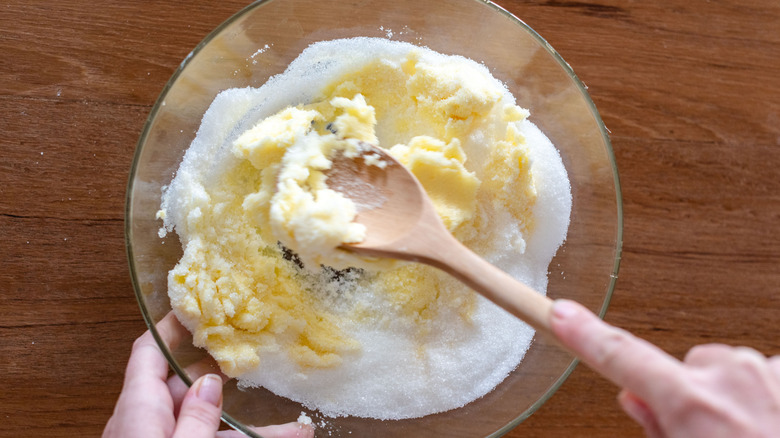
It's not enough to just whip together some butter and some sugar, though. You have to cream them just the right amount. Under-creamed, and you get dense bread with a flat top and possible tunneling — holes in the top of your loaf caused by large air pockets from unmixed butter chunks melting. Over-creamed butter also causes dense bread; in this case because of too many and too large air bubbles, causing the bread to rise too quickly and collapse.
Under-creamed butter and sugar will still have butter's bright yellow color, and even some chunks of butter or clumps of sugar. Over-creamed butter, on the other hand, looks almost like it's curdled, nearly white, and kind of greasy. Instead, slowly combine softened butter with sugar, watching for the moment where the color softens from bright to pale yellow and the texture gets creamier. Normally this takes about five minutes in a mixer, and just as with whipped cream or caramel sauce, the transformation happens quickly once it starts.
Properly incorporating creamed butter and sugar doesn't come down to just mixing time; there are a number of other factors that can influence how the mixture impacts your banana bread. Use room-temperature, softened butter. Both cold and microwaved butter will affect the final bake (though some recipes call for melted butter). Some pros say using an electric mixer creates a better, more consistent product than hand-mixing, which requires some effort. Finally, be careful not to overmix other ingredients like eggs, as that adds more and larger trapped air bubbles, contributing to a faster rise and collapse, just as if you'd over-creamed the butter in the first place.