

Bakery Science 101: How Properly Creaming Butter And Sugar Can Transform Your Baking
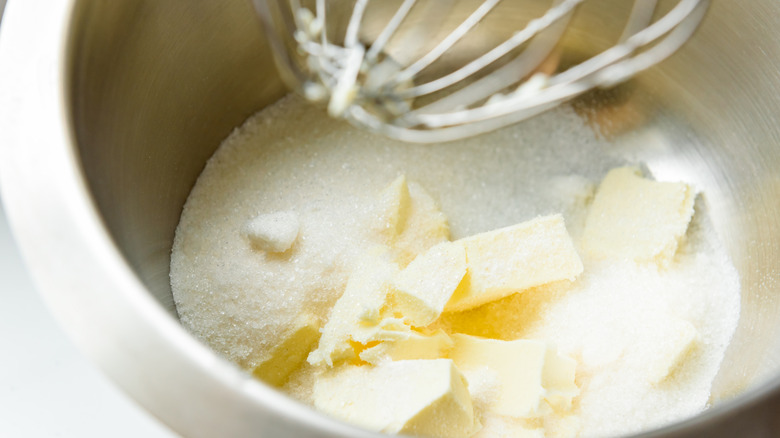
When you're trying to get through a recipe quickly while baking in a rush (we've all been there in the hours before a gathering), it can be tempting to skip certain steps. One of those might be taking the time to cream butter and sugar before adding the dry ingredients. However, failing to cream the butter and sugar when the recipe calls for it can make your baked goods fall flat (literally). Pastry chef Katherine Sprung (@iamsprung on Instagram), founder of Squish Marshmallows, spoke exclusively with Chowhound about why this step is so vital in certain baking recipes.
"When a recipe does call for creaming the butter and sugar, the goal is to create a light and fluffy mixture that holds lots of tiny air pockets that help give your final bake a nice lift," Sprung says. That being said, not all recipes call for creaming butter and sugar, so if your recipe doesn't specifically tell you to cream the two before adding dry ingredients, you don't need to add in the extra step. "Not all cookies are meant to have lift and not all cakes have butter," she notes. Sometimes, the lift in baked goods comes from other ingredients, like baking powder, baking soda, or eggs. Still, if you do have to cream butter and sugar, it's essential to know how to do it properly and what pitfalls to avoid.
What you need to know to cream butter and sugar perfectly
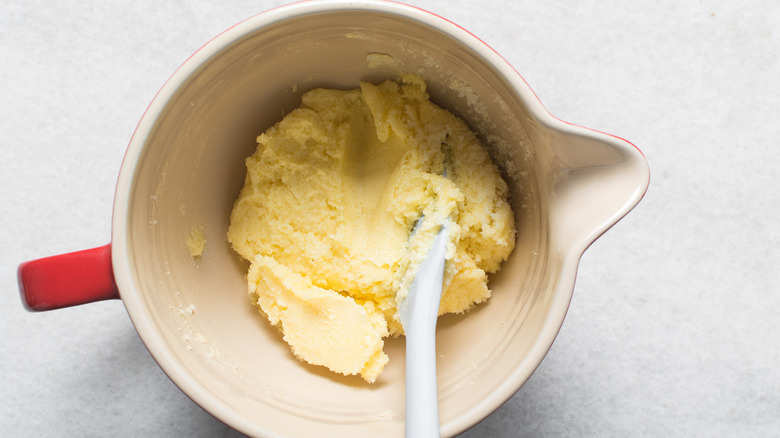
When creaming butter and sugar, room temperature butter is key, according to Katherine Sprung. She says that using cold butter is one of the most common mistakes baking beginners make. She also emphasizes that the microwave isn't necessarily your enemy when you need to soften butter fast. "If you're in a rush, a lot of people will tell you not to, but, I'll pop butter in the microwave," she says. Sprung recommends microwaving for five seconds or so per side at a time, up to 10 seconds total. You can also give Mary Berry's technique for softening butter a go — she cuts it into cubes and soaks it in a bowl of warm-ish (not hot) water. (One of Sprung's go-to methods omits the water and simply spreads the cubes out on a surface.) Or you can grate your butter using an unexpected kitchen tool to soften it faster.
You'll want to make sure to practice patience while you cream your butter and sugar though. "You want to make sure you're creaming on a medium speed for at least three minutes," Sprung says. There are a few ways to tell when you've creamed your butter and sugar for long enough. You should notice a lighter color and texture, according to Sprung. She also says that you'll be able to see a certain fluffiness. Although the grittiness of the mixture won't completely disappear during the creaming process, it should be a bit less gritty than it was when you started mixing. The bottom line: Creaming butter and sugar takes some time, but it's well worth your while to get the perfect amount of lift in your baked goods that call for this step.