

Bacon With The Best Flavor And Texture Always Uses This Simple Crispy-Edge Technique
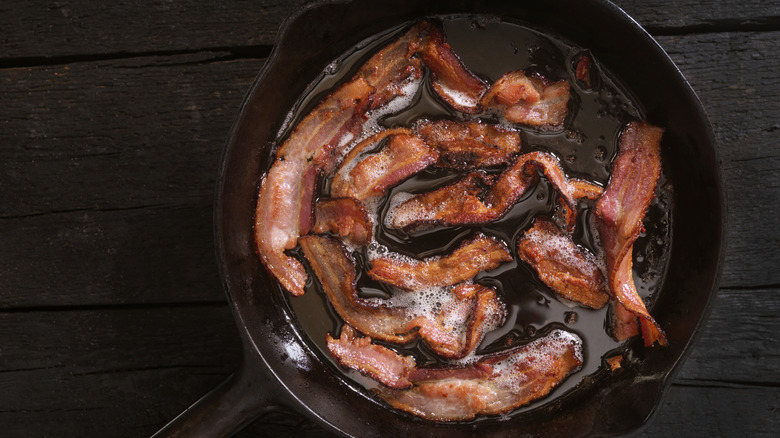
Bacon is one of the simple pleasures of life. Whether it's crispy slices on a BLT with fresh tomato and toasted bread, a side to your morning pancakes, or a cheeky piece straight from the oven rack, this food is a culinary classic. But sometimes, crispy turns to chewy, and you end up with a disappointing bite instead. There are many ways to cook bacon (with varying results) but there's an unconventional method that might be worth a try.
The cold-start sear method starts with a cold pan. Add your bacon first, then add ¼ cup of water. Turn up the heat, and bring the water to a simmer. Using water may seem weird, but it ensures that the bacon won't cook too quickly and unevenly. As the water evaporates, the fat will slowly be rendered (melted) from the meat. Once it's all evaporated, the only thing left over is the rendered fat. The meat will fry in its own savory drippings, producing evenly cooked strips of bacon, full of flavor and crispy all the way through with more uniformly tasty bites.
This method has a few benefits. Instead of introducing some other fat, like butter or oil, the bacon is fully self-sufficient throughout the cooking process. Cold-starting also allows the bacon to cook more gently with less points of contact on the pan, so you have to flip it less. The method is ideal for frying a full pack at once. Who knew a little bit of water could do so much?
What type of bacon is best for this method?
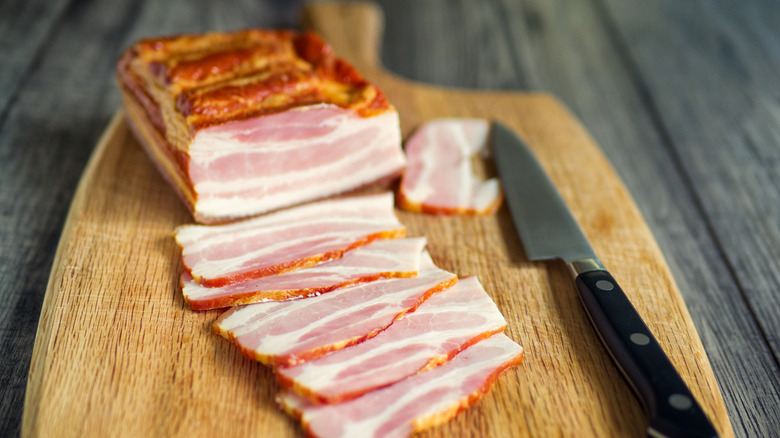
The history of bacon dates back thousands of years, spanning different continents and preparation styles. There are many different types of bacon, all varying in fat-content and which part of the pig it comes from. For cold-starting, you'll want to make sure you pick a variety that has a high amount of fat. Otherwise, you could end up with slightly soggy bacon that isn't appealing to the taste buds. Without the fat to render, the bacon can't get crispy using this method.
The variety you typically get at the grocery store in the United States is streaky bacon (from the belly of the pig), characterized by large streaks of fat throughout thinly cut strips of meat. This type is better suited for cold-starting; high fat content and thinness makes for a snappy, crispy piece of bacon, perfect for a breakfast plate or crumbled as a salad topping.
However, the method also works wonderfully for thick-cut bacon, either packaged or home cut from a slab. This type takes longer to cook evenly and also has a high amount of fat, making it the perfect cut for this method. It can be difficult to get this type to crisp, but by slowly rendering and frying the pieces fully, the entirety of this cut will cook evenly, producing a perfectly crispy bite. Ideal for BLTs or super bacony mashed potatoes, the thick-cut bacon will maintain its meaty chew, with a completely crispy exterior.