

Why It Pays To Add Oil To Your Pan When Cooking With Butter
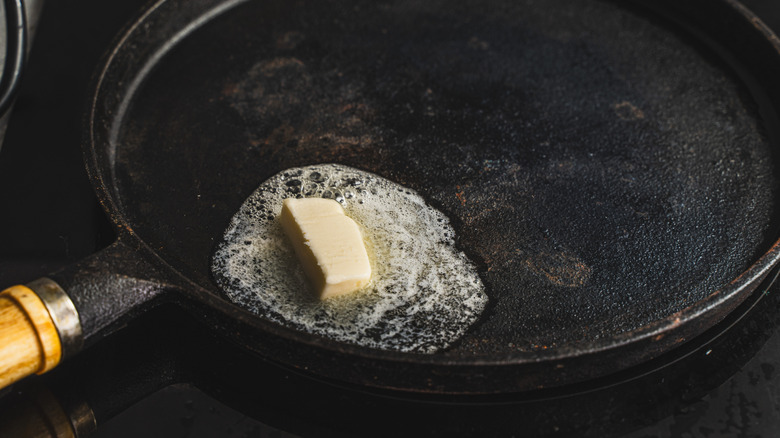
Many home cooks start their pan on the stove with a tablespoon of oil. Its neutral flavor is ideal for sauteeing pretty much anything, from veggies to meats. But adding butter to your pan when cooking with oil is an easy way to enhance your dish's flavor in a way oil alone couldn't.
People love cooking with butter for a reason: Its delicious, rich flavor adds a nutty complexity to most ingredients, like meat or vegetables. But, unfortunately, it has a low smoke point (350 degrees Fahrenheit). Smoke point refers to the temperature at which a fat will begin to smoke, creating a bitter, acrid flavor that can ruin a meal in no time. When cooking with very high temperatures, you need fats with a very high smoke point, like canola oil (400 degrees) or avocado oil (570 degrees). But you can get that good sear from oil along with the divine buttery flavor if you apply the fats in the right order.
Mixing the two fats doesn't mean the smoke point gets any higher; this is a common cooking myth. Your butter will still burn. Mitigate this by adding oil to your pan first for searing at high heat, and then, after whatever you're cooking is almost done, add butter and drop the heat. This method is commonly used to butter baste steak; you sear the meat with oil, then add butter and herbs at the end. The same methodology can apply for anything you want to sear. Oil first, then butter for flavor, without risk of burning.
Other ways to use this method
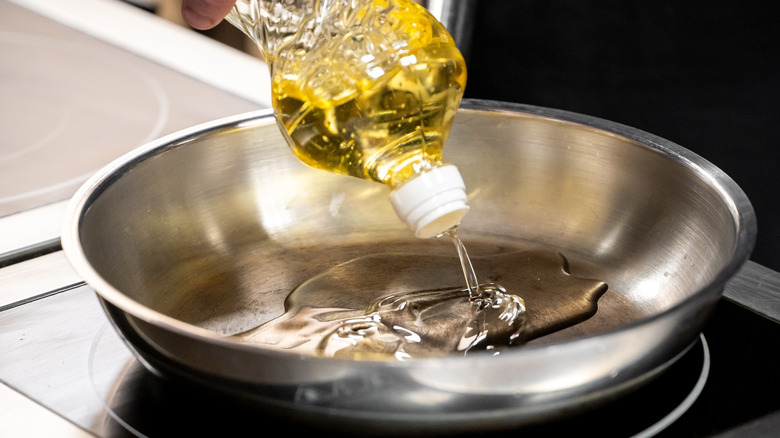
There are lots of different meats and veggies for which the "oil, then butter" method can be applied. Mushroom steaks are a great example. When seasoned and seared, the mushroom takes on a steak-like crust, with a juicy, umami flavor on the inside. The best type of mushroom for this is portobello, but the butter-basting method works wonderfully for many different types. You can also use this method for pan-searing Brussels sprouts, zucchini, and plenty of other vegetables. Sear on a medium-high to high heat with your favorite neutral oil for a caramelized flavor on the outside, then add butter and herbs for richness.
For even more complex notes, try butter-basting with compound butter instead of plain. Compound butter has been infused with herbs, garlic, or other aromatic ingredients. Like the butter itself, these herbs are likely to burn at high heat, so stick to basting at the very end. You can even tweak the butter to hit a specific flavor profile, like whiskey compound butter, or any other taste you'd like. Oil and butter may remain on different planes in the culinary world, but who says they have to be used separately? Working together, they can produce a much richer flavor than you'd get from oil alone.