

7 Disadvantages Of Using Single-Serve Coffee Makers
We may receive a commission on purchases made from links.
If you've checked into any hotel or grabbed a cup of joe from the break room in the past decade, you've probably noticed that single-serve coffee makers have taken over. These plastic pod machines are everywhere, caffeinating hotel guests and office workers worldwide. As a veteran coffee professional, I completely understand the appeal: Pop in a pod, press a button, and you have your coffee ready in seconds. That convenience is hard to deny, especially on busy mornings when you need a caffeine jolt to snap back into the matrix. However, you might not know the difference between Nespresso and Keurig — two of the biggest pod brands — or their inherent disadvantages.
I certainly do. After more than a decade in the specialty coffee industry — doing everything from competing in SCA (Specialty Coffee Association) barista competitions to selling coffee gear and managing cafes — I now believe I can critically assess coffee quality in all forms. I am certainly not here to be a coffee snob— by all means, drink what makes you happy! But as someone who trains baristas and evaluates equipment for a living, I feel it's important to look under the hood of these pod devices and assess the coffee they produce. Before you invest in your next countertop appliance, you might want to check out the best coffee makers on the market. But first, let's break down the biggest disadvantages of relying on single-serve coffee makers.
1. The coffee inside pods is very likely stale
It's my belief that there's a widespread misconception in the single-serve market about freshness. The marketing execs at these pod companies would probably insist that because the coffee is hermetically sealed inside a capsule, it's perfectly preserved and protected from oxygen. Unfortunately, this ignores how roasted coffee ages. During roasting, coffee beans trap large amounts of CO2 inside their cell walls. The moment you grind those beans, there's a violent, rapid release of that trapped gas — a process known as "degassing." As the CO2 escapes, the delicate volatile organic compounds (VOCs) that give coffee its complexity and nuanced flavors escape with it.
The truth is, these mass-produced coffee pods were likely packed with coffee grounds in a factory months ago. When I competed in coffee competitions, I ground the coffee mere minutes before serving it to judges to lock in flavor and ensure the final cup tasted fresh. And among coffee professionals and industry leaders, it's well known that coffee can be considered stale within only a few hours of being ground. So by the time the coffee reaches the pod, it has already lost a critical portion of its potential. Freshness is effectively destroyed before you even buy the box of capsules. Even if you buy one of the 10 common types of coffee beans in pod format, it is fundamentally pre-staled compared to whole beans ground right before brewing.
2. You can't control the extractions
Saying you can't control the extractions is just barista lingo to explain how you can't control the coffee strength. When you brew drip coffee manually, you're in the driver's seat — you control the dose, grind size, and water temperature, all of which determine how strong the final cup is. Single-serve machines, however, operate on fixed parameters. The dose in the pod is predetermined, and you can't change how much water the machine dispenses. Sure, you could brew two pods back-to-back if you want more coffee, but the strength stays the same. As a result, you can't tweak the brew to suit your preferences or your guests'; you're at the whim of the machine's factory settings and the coffee dose of the pod.
And unlike a French press, which can do so much more than just brew coffee, you really have no clue how hot the water inside the machine gets. With a French press, you can be sure the brew water on the stove is boiling — and with an electric temperature-controlled kettle, like this Chefman Electric Kettle, you can even adjust the temperature to the exact degree. This lets you tailor the water temp to the roast: cooler water (185 to 195 degrees Fahrenheit) for super dark roasts and hotter water (200 to 210 degrees Fahrenheit) for light roasts, optimizing extraction. This lack of control is why pod machines fail to meet the Specialty Coffee Association's (SCA) rigorous "Golden Cup" standards for the best extraction, and I see this as a major drawback.
3. Pods contribute to excess waste
Since the advent of these single-serve coffee makers, eco concerns have been a hot topic. Some industry-backed lifecycle assessments (LCAs) argue that pods are environmentally friendly because their precise dose prevents the water and coffee waste that comes from overfilling a drip machine's brew basket. However, this narrow focus on the carbon footprint of the coffee grounds themselves diverts attention from the pod format's catastrophic waste reality.
Zooming in, we see that single-serve pod systems generate more waste per cup than traditional brew methods. A standard drip coffee setup using whole beans generates minimal packaging waste per serving, as a single bag of beans usually lasts a week or more. In contrast, single-serve systems require a massive volume of multi-material packaging for every cup you brew.
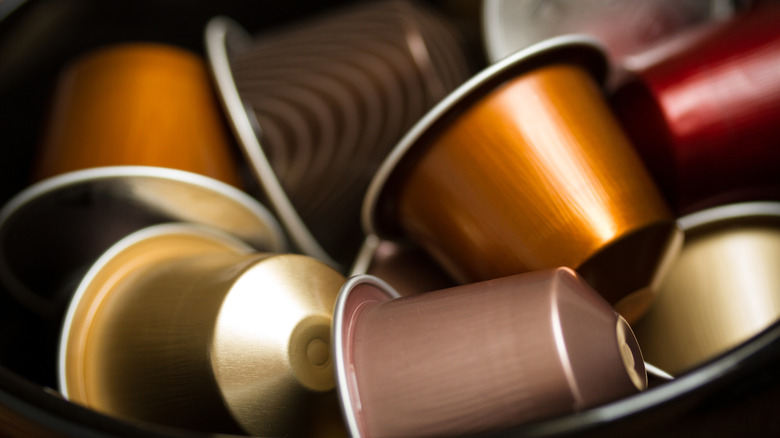
What's more, the marketed recyclability of these pods is often a misleading narrative. Most standard capsules are typically composites made of a plastic or aluminum shell, a foil lid, a mini internal paper filter, and coffee grounds. This specific configuration cannot be easily separated or processed by your average municipal recycling facility. Despite past claims made by "big pod" about the recyclability of their single cups, the reality is that many of the billions of pods produced annually will end up sitting in landfills.
4. The coffee ends up costing more than drip coffee
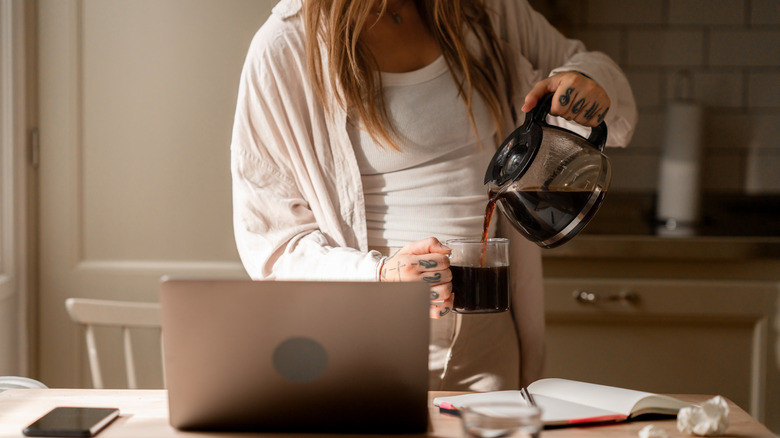
Getting coffee at a cafe can be an indulgence, and most of us willfully turn a blind eye to the latte price shown on the tablet. It's a little treat for the day, and you justify the cost on your own terms. But for my daily coffee, I make most of it at home because it's the cheapest option. While I don't use a single-serve machine myself, others like me who can't afford that daily $7 latte use pod machines at home. You might think you're saving a ton of money, but over time, the per-cup cost of pods surpasses that of drip coffee. By locking you into a proprietary delivery system, the convenience premium of these single-serve cups makes a cheap pantry staple costlier than you might assume.
This could matter to readers amid rising inflation, when everyone is feeling the pinch. When you do the math and calculate the cost strictly by weight, single-serve coffee pods are shockingly expensive. On average, per pound, pods cost roughly 2.4 to 3.4 times more than your standard supermarket ground coffee. To put that into perspective, Keurig's web shop pricing across multiple coffee brands averages out to roughly $39 per pound. Compare that figure to the $9.30 U.S. average for a pound of standard ground coffee, and the convenience factor starts to sting. Sure, grinding coffee and brewing a pot is more work, but the relative savings are undeniable.
5. You get locked into a brand-specific ecosystem
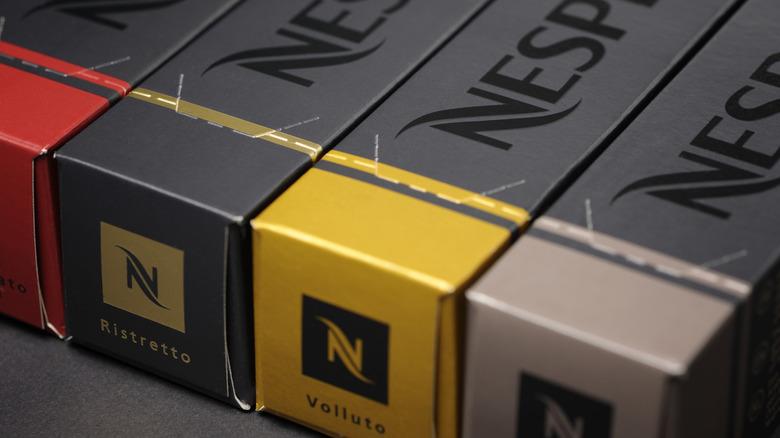
One thing I love about being a coffee nerd is that I can brew coffee at home in five or six different ways, using a variety of gadgets and machines. I can also go to the grocery store to try cheap coffee brands that actually taste good, or splurge on an exotic varietal of beans from my local cafe. Sure, this is excessive, but I have ultimate freedom in my coffee preferences. Single-serve machines operate on the exact opposite principle. Buying one of these machines will effectively lock you into a restrictive, brand-specific ecosystem.
If you think about it, the single-serve appliance industry's business model is devised to monopolize the consumable pod market. These coffee makers require proprietary, brand-specific capsules to function, thus limiting your coffee choices and forcing you to rely on particular pods. This is no accident; it is a deliberate technological strategy, as past Keurig digital rights management (DRM) patents show with enforced lock-in.
Such limitations might not matter to those who view coffee as nothing more than fuel. But if you truly like the beverage and seek variety, pod machine prerequisites prevent exploration. And while knowing the average lifespan of a Keurig coffee maker matters, you should also know that, for its entire lifespan, you're essentially held captive by the manufacturer's pricing and brand partnerships. I see this as yet another disadvantage of single-serve coffee makers.
6. They can be dangerous when they malfunction
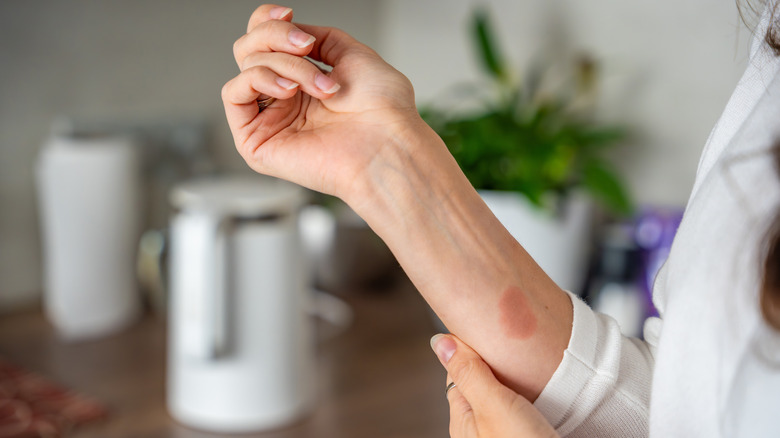
As a former barista, I've been scalded by hot water in cafes countless times. Battle scars, if you will. It was an occupational hazard and a regular occurrence, and I'm glad those days are behind me. But when I make coffee at home on my trusty Moccamaster, getting scalded is the last thing on my mind. And really, when discussing kitchen appliances writ large, besides deep fryers or pressure cookers, safety is rarely the first thing that comes to mind — especially for something as seemingly safe as a coffee maker. But the internal mechanics of single-serve brewers are significantly more volatile than those of a standard filter machine. Pod appliances operate by flash-heating water and forcing it under high pressure through a tiny puncture hole in the sealed capsules.
This combination of boiling water and mechanical pressure can pose a real hazard when something goes wrong inside the machine. This isn't a hypothetical risk; the U.S. Consumer Product Safety Commission (CPSC) issued a major recall in 2014 affecting more than 6.6 million Keurig MINI Plus brewers. The recall was initiated after the company received numerous reports of hot liquid squirting from the machine, which unfortunately injured 90 owners with burns. While manufacturers have improved safety valves, these machines can still feel flimsy to me. I wouldn't wince when firing one up at an Airbnb, but the way these brewers work and the cheap-feeling materials they use don't fill me with confidence, either.
7. Single-serve machines are a pain to clean
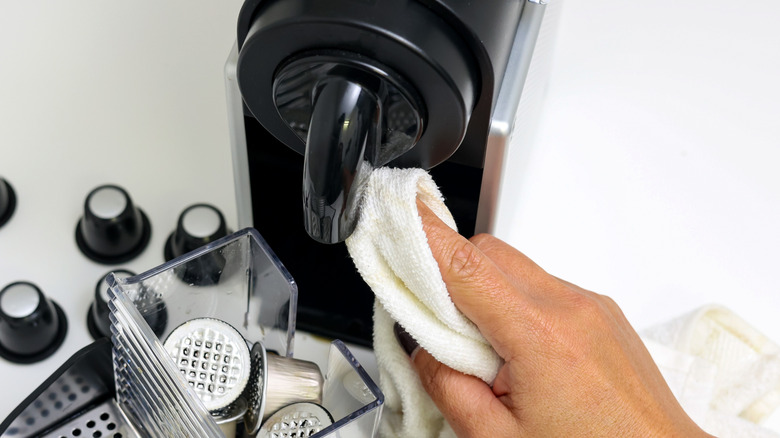
Working as a barista involves a ton of cleaning — more than you would ever imagine. Cleaning espresso machines takes a lot of time and effort, with multiple steps, cleaning solutions, and brushes to get the job done. That's why you go to a cafe for a professionally made cortado: You don't have to worry about the mess espresso and steaming milk creates. So when the main selling point of a single-serve coffee maker is convenience, you'd think the cleaning would be quick and simple, like the coffee it produces. What gets overlooked is the significant and frustrating maintenance required to keep these complex little machines working properly.
Unlike a massive espresso machine or even a standard drip coffee maker, these machines can't be taken apart for deep cleans. The internals are virtually inaccessible, making it almost impossible to see what's going on inside. Keurig recommends a rigorous schedule of water reservoir rinsing, drip-tray cleaning, and delicate needle maintenance to clear out stuck coffee grounds. It also advises users to perform a routine full chemical descaling process roughly to remove hard water mineral deposits. It's a lot. If you can't stick with this maintenance regimen, the delicate internal flow meters and narrow injection needles could succumb to limescale blockages, with downstream effects that can lead to erratic water pressure and foul-tasting coffee. For me, this cleaning protocol is a pretty big disadvantage of single-serve coffee makers.