

Not Tajín: A Dash Of This Seasoning Is All Cantaloupe Needs For A Major Flavor Boost
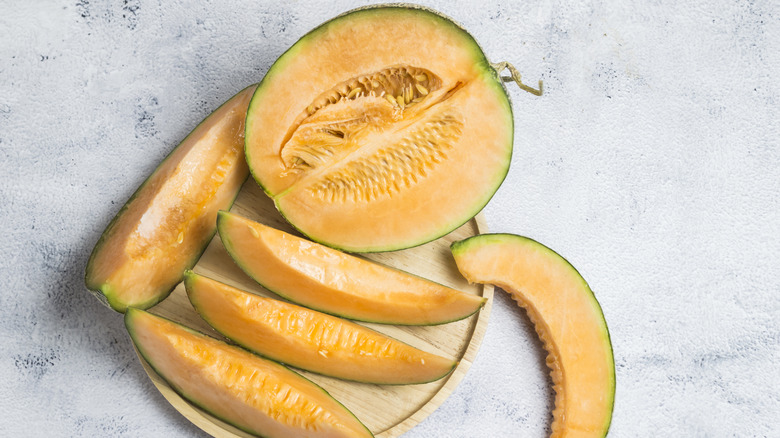
Originally produced in Mexico, Tajín seasoning debuted in the US in the early 1990s so that Latin American cooks could season their foods with authentic flavors using just one convenient product. Its popularity increased when it started showing up in mainstream American grocery store chains in the 2010s. Though Tajín is delicious on both sweet and savory foods and is particularly beloved when sprinkled onto fruits, you might wonder if there are other spices that can replicate that fruity yet spicy flavor experience. Aleppo pepper is an excellent way to kick fruits like cantaloupe up a notch, complementing its sweet, floral flavor.
The pepper is sold as flakes or a powder and can simply be sprinkled on top of sliced cantaloupe like you would Tajín. It offers mild, salty heat and is comparable to cumin in its undertones, along with offering fruity notes. Its sharper flavors combine well with ingredients like honey, lemon juice, and sherry vinegar. Make your dishes more interesting by creating an Aleppo pepper dressing with wet ingredients to pour over your fruits.
Seasonings like Tajín, Aleppo pepper, salt, and black pepper mesh with fruit because they enhance the sweet quality. Salt, in particular, makes sweet foods taste sweeter to the tongue. With hot spices, the sweet juices of the fruit balance the intensity to provide a mellow but still heated flavor. The next time you're looking to give mild cantaloupe a more lively flavor, elevate it with savory seasonings like Aleppo pepper flakes.
Where this fruity, smoky pepper comes from and how it gets its flavor
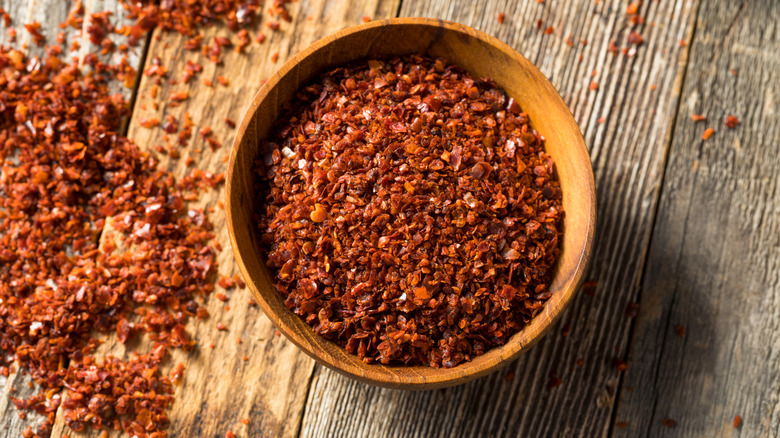
Though it shares a name with the Syrian city that influenced its popularity and even changed the flavor of this pepper with its soil, Aleppo pepper hails from South America. It was brought to Europe in the 1400s and eventually spread to Asia, with Middle Eastern countries beginning to grow it, including Syria. Today, it commonly comes from Turkey. The Syrian Civil War significantly affected accessibility to the pepper and halted exports; seeds were brought over to Turkey so that the plant could be grown and harvested there.
After harvest, the ground-up peppers are combined with olive oil and salt and dried a final time to give them their unique flavor. This mix of salt, fruitiness, and mild heat is why Aleppo pepper is so versatile, fitting in alongside other spices like paprika, nutmeg, turmeric, and coriander in savory and sweet dishes alike. Use it with sumac, another Middle Eastern spice, to add earthiness to a refreshing fruit salad. Among the other seasonings that every kitchen should have for crafting unforgettable dishes, make sure Aleppo pepper has a spot on your shelf.