

Meet White Ketchup — The 18th Century Condiment Without A Lick Of Tomato
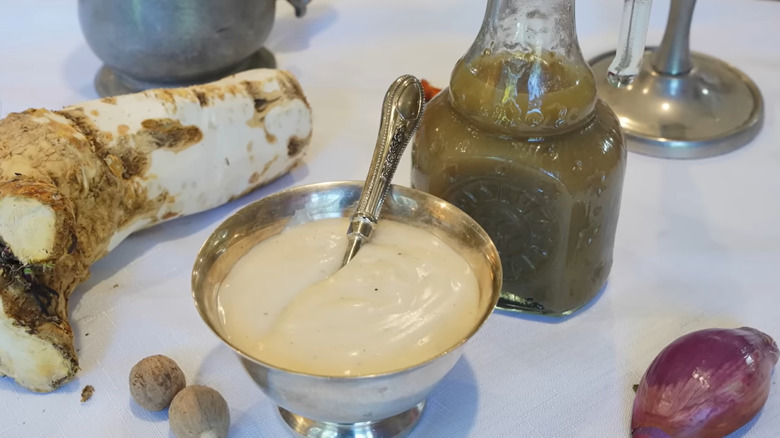
Ketchup has made an undeniable mark in the varied range of tomato-based foods and condiments, proven by its widespread use for any dish from fries to meatloaf. It didn't always have that recognizable red hue or sweet-acidic flavor, though. One of the earliest instances of a written white ketchup recipe appeared in the 1787 cookbook "The Lady's Assistant for Regulating and Supplying Her Table" by Charlotte Mason. It contains the anchovies and pepper you'd more likely find in Caesar salad dressing, though this recipe uses white instead of black pepper, and its color also resembles the popular dressing. This recipe could possibly stem from attempts to make a pickled fish brine sauce consumed in Asian countries like China and Malaysia, which was called kôe-chiap, kê-chiap, or kicap depending on the country, language, and dialect. Soy and fish sauces had begun showing up in English meals earlier in the 1600s.
Other white ketchup ingredients are elderflower vinegar, water, horseradish, shallots, mace, and nutmeg. The ketchup was made by combining all of these ingredients and boiling until the mixture reduced by half, then straining out all the bits and pieces. The resulting liquid would actually be brown, not white, and it was more watery than today's ketchup. The "white" distinction arose because the recipe instructed that the strained liquid be added to white sauces rather than served on its own. These strong ingredients led to a very salty, tangy taste somewhat comparable to modern ketchup's acidity, but combining the liquid with other sauces mellowed out the flavor profile.
How you can try white ketchup today
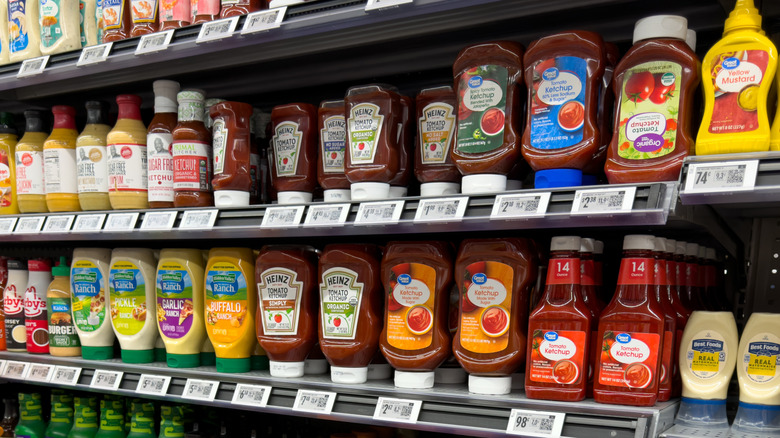
Due to the past ambiguity around what "ketchup" entailed, numerous ingredients cycled in and out of use, which even gave rise to old-school mushroom ketchup. A recipe from the 1700s book "The Family Magazine" by Arabella Atkyns is very similar to the white ketchup recipe above, but it adds ginger, red or white port wine, and lemon peel. This lack of a defined ingredient list may also be why you won't find white ketchup on any store shelves or in home pantries today. Tomato-based ketchup caught on after scientist James Mease published his ketchup recipe containing tomatoes in 1812, and sugar entered the picture as Americans grew an affinity for sweet foods.
If you're curious enough to try white ketchup yourself, most of the ingredients are relatively easy to procure. Elderflower vinegar is sometimes a rarer find, but you can make it yourself by adding a few heads of fresh elderflowers to white vinegar in a mason jar and soaking it for two weeks. Any leftover elderflowers make a delicious fried treat on their own. Mace is more abundant and should be simpler to obtain; this spice grows on the same tree as nutmeg and comes from the aril, which is the outer covering enclosing the nutmeg seed. Eat white ketchup with any savory meal you like, or make the most obvious choice — try it with fries.