

You Shouldn't Marinate Meat In A Metal Container — But There's One Exception
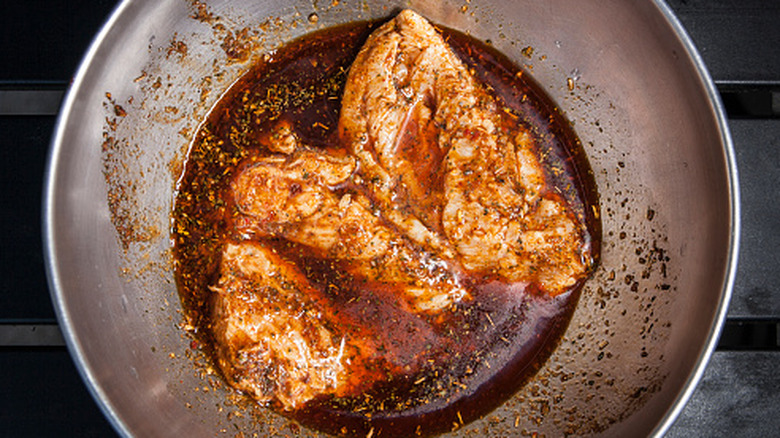
When making a marinade, you should be concerned with perfecting your flavors and ingredient ratios. Your ingredients will depend on the cut and type of meat you're preparing, as you wouldn't use a steak marinade to get the best flavor from chicken thighs. As you select ingredients, you should also be aware of what type of container you marinate your meat in, because choosing the wrong one can ruin your efforts to build an unforgettable flavor profile. You should never marinate meat in metal containers because the metal can react with the acids, such as lemon juice or vinegar, and impart a bitter or metallic flavor on your meat. This occurs because the acid causes the metal to leach into the food, like with uncoated aluminum and unlined copper.
You don't have to avoid all metals, though, as a stainless steel bowl is a safe vessel for marinated meat. Stainless steel doesn't react with acids due to the high amount of chromium and nickel, which form a protective surface layer and resist corrosion and acid. Grade 304 stainless steel, the most common type used in cookware, reliably avoids acid corrosion in food-based applications due to its 18/8 or 18/10 composition of chromium and nickel. This durability makes stainless steel the best container for marinating meat, but you also have other options.
Alternative containers to use when marinating meat
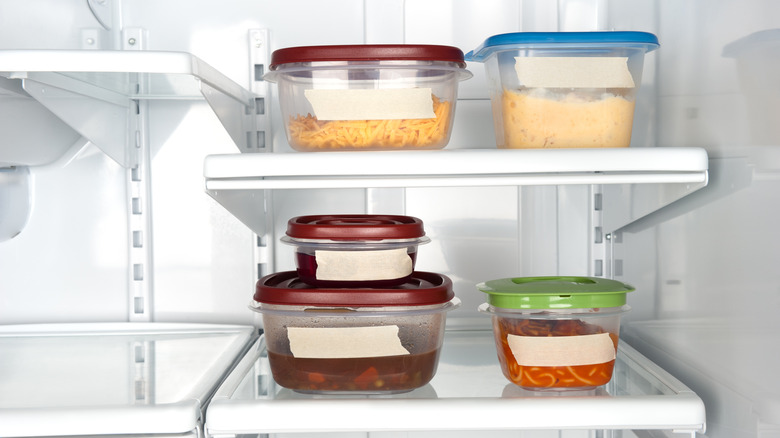
If you don't have stainless steel bowls on hand, glass or food-grade plastic bowls are good replacements. Neither material will react with the acids used in marinade preparation, which will help keep your perfectly balanced flavors intact. However, plastic containers can absorb smells and stains over time because of the material's porous nature, especially if they're not cleaned thoroughly after use. In contrast, glass is nonporous and won't hold on to smells, but safe handling is paramount to avoid breakage.
An enclosed resealable bag also works for marination, and its size and malleability let it take up less space in your fridge. Plus, easy disposal of plastic bags removes the need to spend time scrubbing and sanitizing to avoid odors or bacterial cross-contamination from the meat. Plastic might be a concern for eco-conscious cooks, though, and thin plastics like Ziplocs can't be readily recycled, so a reusable container wins out in this case. In the end, stainless steel comes out on top for its non-reactivity, durability, and eco-friendliness.