

The Flavorful Green Marinade One Top Chef Recommends For Cooking Steaks
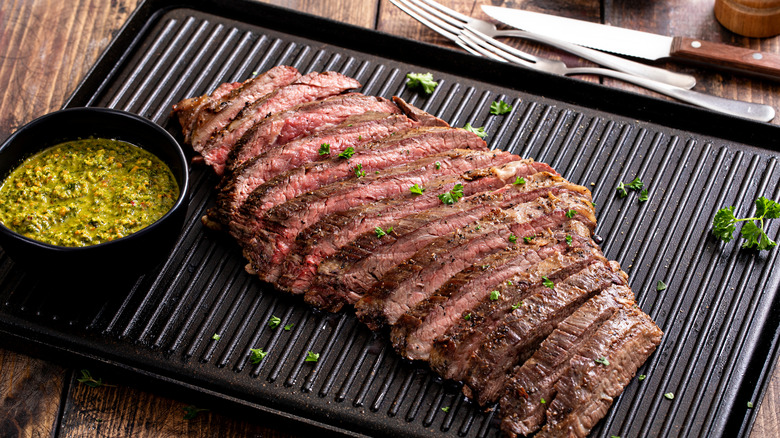
James Beard Award winner and Season 13 "Top Chef" contestant Kwame Onwuachi knows how to do bold flavor. His cooking draws on his mixed Trinidadian, Jamaican, Nigerian, and Creole roots, mixing ample spices with big hits of ginger, garlic, and chiles. One of his go-to mixes is called green seasoning, or sometimes "blend up" or just "seasonin'." It's originally from Trinidad and Tobago, and is now popular in various Caribbean culinary cultures.
Befitting the name, it mixes together a bunch of green ingredients: chiles, parsley, celery, thyme, and scallions. There's no one single recipe for green seasoning though. You might also see culantro (not to be confused with cilantro: This one is sharper and more citrusy, although cilantro is a decent substitute), lime juice, and bell peppers in there, or other herbs such as basil, marjoram, or rosemary. Traditionally, it's all pounded together by hand but blenders will also do the trick. There are also pre-mixed dry versions of it available if you're short on time.
Green seasoning works with all sorts of meats, and steak is an obvious candidate. Green seasoning will typically be a wet marinade (you'll want to add some oil to it), as opposed to a dry marinade or dry rub, a mix of dried spices that you'd rub on the outside of a steak. Wet marinades soak into meat better, while also adding moisture and tenderizing the meat (you'll need acid like vinegar or citrus juice in there to do this). Don't forget the salt: This helps the meat stay moist.
What steak to use green seasoning with, and how to cook it
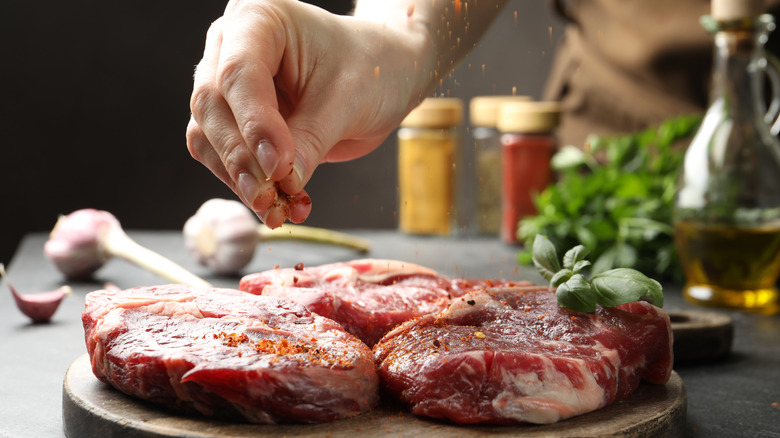
Generally speaking, wet marinades are great for steaks that are leaner or tougher, helping ensure they come out tender. Steaks that are already tender and have good marbling (streaks of fat within the meat) don't really need a marinade to do this kind of work; some would even argue that you should keep the seasoning to a minimum with cuts like ribeye, strip, and filet mignon to let the beefy flavor shine through.
Thin steaks are also better suited for a green seasoning marinade. Marinades won't really penetrate to the center of a thick cut, but they might for thinner cuts like skirt, flank or hanger steaks. Try to plan ahead and marinate the steak for a few hours to let the flavor soak in. But beware: You can over-marinate meat. If you think a two-day marinade will make for intense flavor, the acid will actually turn the meat mushy. Kwame Onwuachi's go-to is flat-iron, a shoulder cut that's fairly tender and not too pricy; he cooks on the grill.
Once you're ready to cook it, try to dry the steak after it comes out of the green marinade, as excess liquid can mess with the searing. High and direct heat are your friend here. This also matches the open-flame cooking that's popular in Caribbean barbecue.