

Ribeye And Tomahawk Steak Come From The Same Cut — So What's The Difference?
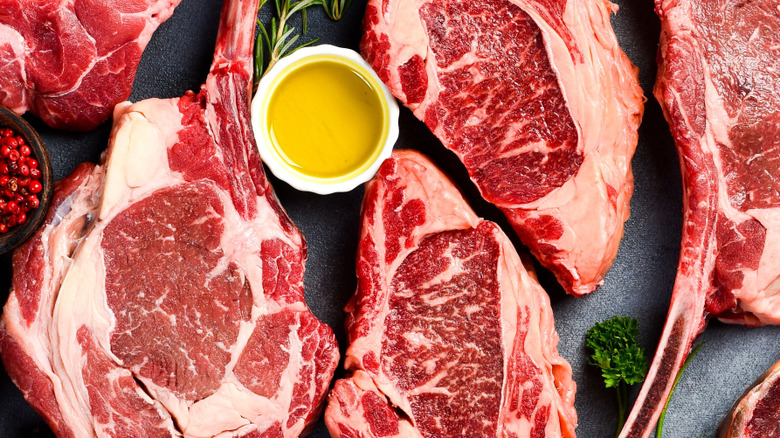
With its dramatic rib bone that looks like an axe handle protruding from a well-marbled piece of beef, the tomahawk steak has become a bit of a culinary celebrity. But what exactly differentiates it from a ribeye, another popular steak? While they may look quite different at first glance, if you get past the tomahawk's jutting bone you'll see just how similar the two are, since, in essence, they're the same, except for the bone. While ribeyes can be sold either boneless or bone-in, the tomahawk has a long Frenched (cleaned) bone that protrudes dramatically from the steak.
Both come from the rib primal, which is located at the front section of the backbone and includes ribs 6 through 12. It's considered the tastiest part of the cow by many since it's so well marbled and very tender. Both cuts include the prized ribeye cap or spinalis dorsi, beloved for its flavor and tenderness.
Besides the bone, there's usually another difference between the two cuts. The tomahawk is often thicker, at least 2 inches thick compared with a boneless ribeye that is commonly sold at 1 ¼ inches thick. The tomahawk is heavier as well, typically ranging from 1 ½ to 3 pounds, compared with about 8 ounces to a little more than a pound for a ribeye. Another difference you'll find is in the price.
Why is the tomahawk so much more expensive than a ribeye?
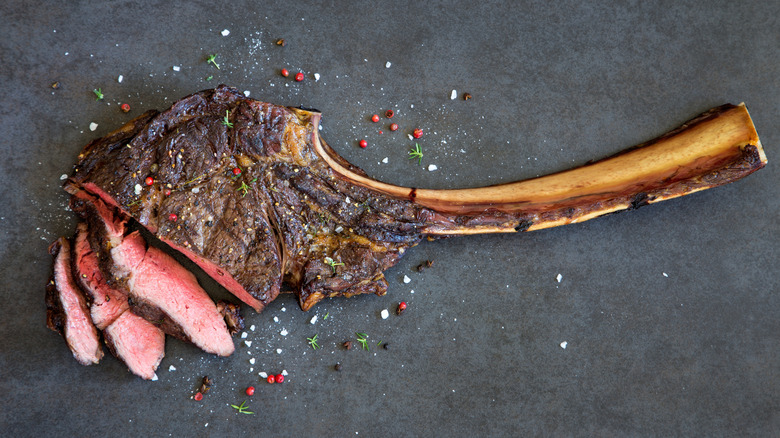
Tomahawk steaks tend to be among the priciest cuts available, costing $20 a pound or more, depending on where they're sourced. At a restaurant, you might find one for about $125 on the low end but will likely pay much more at a fancy steakhouse. There are a few reasons why tomahawk steaks are more expensive than ribeyes. The first is the thickness we mentioned before. Since you're getting more meat, you're not surprisingly going to pay more. If you buy one from a butcher, it's typically sold by weight, so that long bone that's basically decorative, but can weigh as much as 8 ounces, is part of the price.
Another factor is the extra work that butchers have to put into Frenching the long bone to make it presentable. Finally, you're also paying for the wow factor of this dramatic steak cut, especially if you're getting it at a restaurant. If you're wondering if that big bone adds more flavor to a tomahawk steak versus a ribeye, the answer is no. It does act to insulate the meat, which means the meat closest to the bone tends to be rarer, with less moisture loss. There's a third steak cut that we haven't mentioned. It's called the cowboy steak, and it's a ribeye with a shorter Frenched bone, which means you get a little drama with a smaller tab.