

For The Most Filling And Flavorful Baked Potatoes, Load Them Up Turkish Style
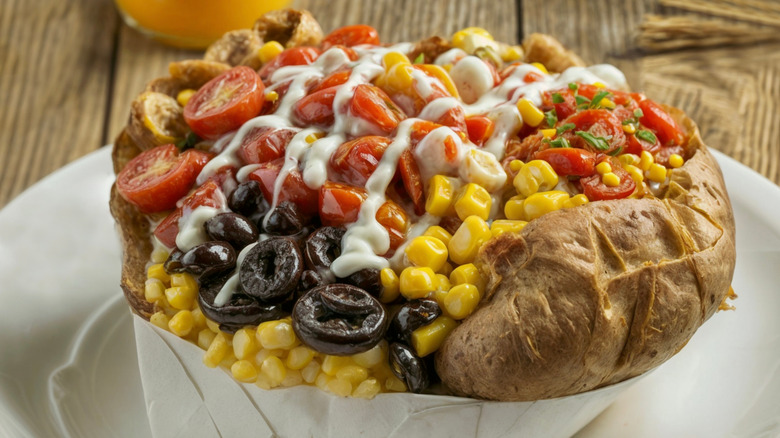
Butter and chives aren't a bad baked potato topping if you like to keep things simple, but those who prefer maximum flavor should look to Turkey, where the local take on baked potatoes, called kumpir, packs on the toppings. Kumpir is sold as a street food in Turkey, and depending on the stall where you pick it up, the range of toppings can number in the dozens.
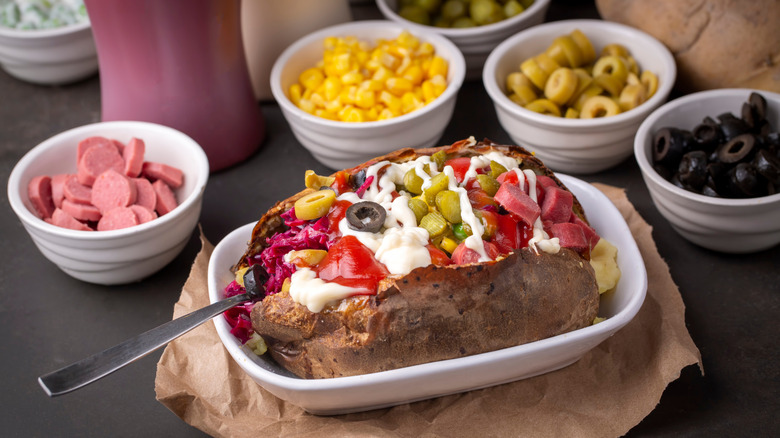
The most common include sliced olives (both green and black), corn kernels, pickles, and sliced sucuk (also called sujuk), a garlicky cured Turkish beef sausage. Russian salad, sautéed mushrooms, and jalapeños are also fairly common, and there are usually a few options for sauces to put on top such as ketchup, hot sauce, and mayo. There's no official list of toppings that defines kumpir, though — so, depending on the vendor, you could even find peas, shredded cabbage or carrot salad, tomato, seasoned bulgur (a grainy cracked wheat that looks like couscous), and tursu, a Turkish pickled mix that might include carrots, cabbage, green tomatoes, or even fruit like plums.
One thing that sets kumpir aside from some other types of loaded baked potatoes is the ultra-creamy texture of the potato. This is because instead of just slicing it open and maybe throwing a little butter on there, the flesh gets mashed up with butter and cheese — usually a Turkish cheese called kasar, a semi-hard cow's milk cheese that melts well. You could use mozzarella or cheddar as substitutes if you're making it at home.
A little history, and tips for making kumpir
In some places like the United Kingdom, loaded baked potatoes have been around for over a century; British "jacket potatoes" were a popular street food as far back as the 1800s. In Turkey, though, they're a relatively new part of local cuisine: The dish is commonly considered to have come from Balkan countries via migrants in the 1980s, with the name deriving from the word krumpir, which means potato in various Balkan languages; some histories suggest it has slowly made its way overland from Germany through the Balkans.
Although shops dedicated to kumpir first appeared in Turkey's capital, Ankara, it's now heavily associated with the Ortaköy district of Istanbul, where a restaurant called Tarihi Ortaköy Kumpircisi helped make it a local icon. There are now numerous kumpir restaurants and stands in that area, although that's hardly the only place to find it.
If you want to make kumpir at home, you'll want a decently large potato so you'll have room for a mountain of toppings. Go for evenly-sized potatoes so they cook through evenly, and a floury type like russet for the creamy interior (which Alton Brown also recommends); skip waxy varieties. Bake it in the oven (street vendors usually wrap them in foil) and slice it lengthwise but without cutting the bottom open; then you can add butter and shredded cheese and mash up that creamy interior. From here, it's really up to you: Many of the standard toppings are supermarket staples, although some like sucuk (the beef sausage) or bulgur may require a visit to a specialty grocery store or anywhere that sells halal meats. Chorizo, while not halal, is one decent substitute if you can't find it.