

Red And Green Flags To Look For When Picking Out The Best Spuds For Baked Potatoes
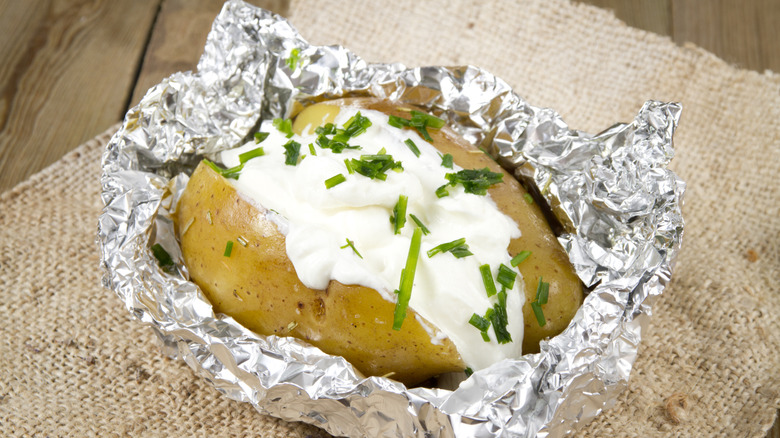
A great baked potato should have structure and a crisp exterior, but it should also be soft and fluffy, with the right size that can fit all your beloved toppings. So, making the best baked potatoes of your life all starts with this: learning how to choose the best spuds. Starchy potatoes are best, all-purpose potatoes are fine, and waxy potatoes get an automatic pass. We expound on this deeper below, adding the importance of having the right variety on hand. Naturally, potatoes exhibiting signs that they have gone bad should be an obvious no-go. While spotting a few sprouts is okay, stay away from those that look like they already have their own ecosystem. Wrinkled and green skin is also better tossed into the trash bin, as these could mean that the quality of the spuds have taken a hit or that they're no longer safe to eat.
A few nitty-gritty details, like knowing the right thickness of the spud's skin, will make spotting the right variety even easier, in case you're lost in the sea of unlabeled potatoes. Sometimes, it's the little details that make or break the dish, and these red and green flags can steer you in the right direction.
Avoid the spuds for your baked potatoes if you see these red flags
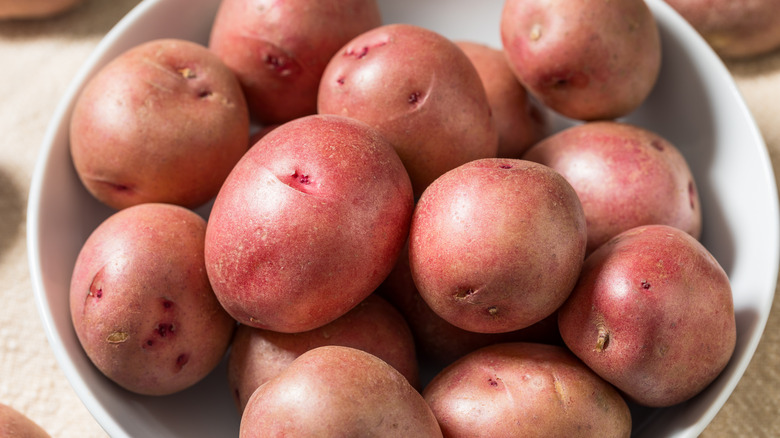
Potatoes with a thin exterior and a small, round shape aren't cause for alarm, but they're better saved for your potato salads. This is because waxy potatoes are packed with more moisture, which is opposite of what you want for baked potatoes. Knowing the differences between waxy and starchy potatoes can help you better choose the perfect spuds for your dish. Waxy potatoes — like new potatoes — are also characterized by their red or yellow skin, so they're not that hard to identify and set aside. When baked, specifically the red variety, they can become overly dense and tough for the dish — and, if you haven't noticed, the right texture makes all the difference.
Meanwhile, wrinkled spuds mean they're decaying, while green skin means they've been exposed to light, which causes the development of a toxin called solanine, further leading to another called chaconine. While the two toxins are not harmful when ingested in small quantities, the high levels in green potatoes can result in acute poisoning. Even though these signs are evidently relevant in a general sense — not just when making baked potatoes — we think they're still important to mention, as knowing when to toss them out should go hand in hand with knowing which one to bake.
The green flags that say they're perfect for baked potatoes
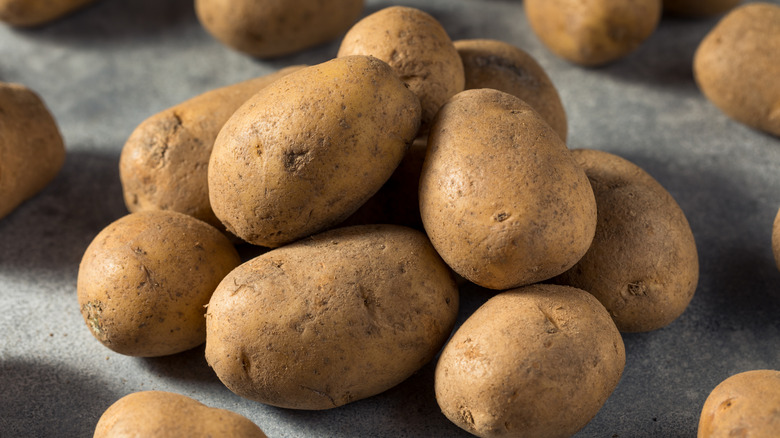
Starchy potatoes (Russets are pretty popular) should automatically be on your radar. Their skin produces a nice, crispy exterior, and their interior remains soft without losing its structure — perfect for baked spuds. A starchy potato's flesh is also the perfect texture to absorb the saucy toppings you're going to introduce. You can easily spot starchy spuds, as they have thick skin and an elongated shape. Coincidentally, their shape also helps hold the toppings, as it creates a spacious base. Some grocery stores will make it easy for you, labeling the produce as baking potatoes.
There are also all-purpose varieties, like Yukon Gold, which you can use for any scenario. These can strike a nice balance between waxy and starchy when talking about moisture. When used for baking, they tend to give a less fluffy outcome, but their interiors are lightly sweet and creamy, and their skins crisp beautifully.
The potatoes should also have an earthy smell, almost as if they've just been plucked from the ground. This signals that they've spent less time in moist environments, which can otherwise result in spuds that lack structure or spoil faster. You're choosing starchy potatoes because they contain less moisture, so you don't want them taking on more of it. Finally, even though this isn't an automatic deal breaker, if you're making a big batch, it helps to choose same-sized potatoes so that the cooking time for each is the same, allowing for fewer trips to the oven and a more uniform result.