

Not Mayo, Not Mustard — Make British-Style Sandwiches By Spreading One Staple On Your Bread
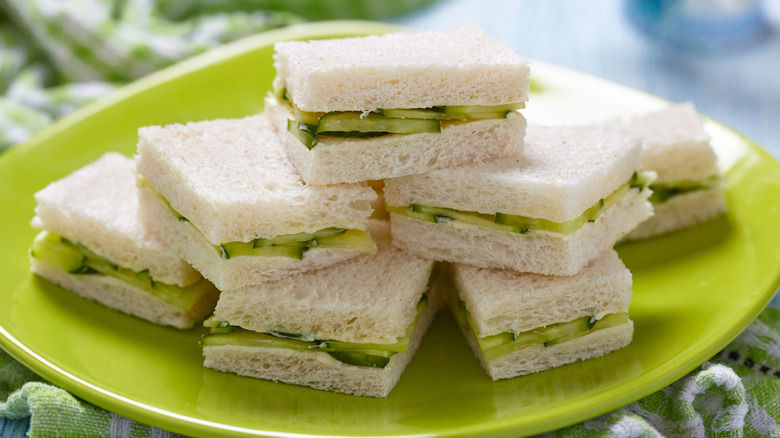
With many majestic meetings of protein, veg, and bread, the United States is known for plenty of iconic sandwiches — like the mighty Philadelphia cheesesteak, Chicago's Italian beef, and the decadent Louisville hot brown. We truly have enough sandwich ideas to boomerang from sea to shining sea, and yet so few of our famed contributions to the genre butter the bread quite like our friends across the pond — an oversight deliciously remedied with the flick of a knife.
A cursory search of headlines across British periodicals paints a portrait of a nation perplexed as to why we don't butter our darn sandwiches over here. Salty, creamy, and just a little sweet, butter is delicious, after all. Its moisture-repelling quality is also touted as an effective barrier to every sandwich's worst enemy: sogginess. This isn't limited to the dainty cucumber triangles at the fanciest teas, either; you're just as likely to grab a buttered ham and cheese to go at any Pret around London's office buildings.
So why aren't we buttering our sandwiches, indeed? To be fair, a lot of the aforementioned classics just already have enough going on. A Philly's pile of beef and cloak of Whiz doesn't exactly need a pat of Kerrygold. But that doesn't mean that we can't take some inspiration from the UK when optimizing simpler sandwiches at home. Some easy steps will help to ensure the smoothest sandwich buttering experience on either side of the Atlantic.
Things to keep in mind when buttering your bread Briton style
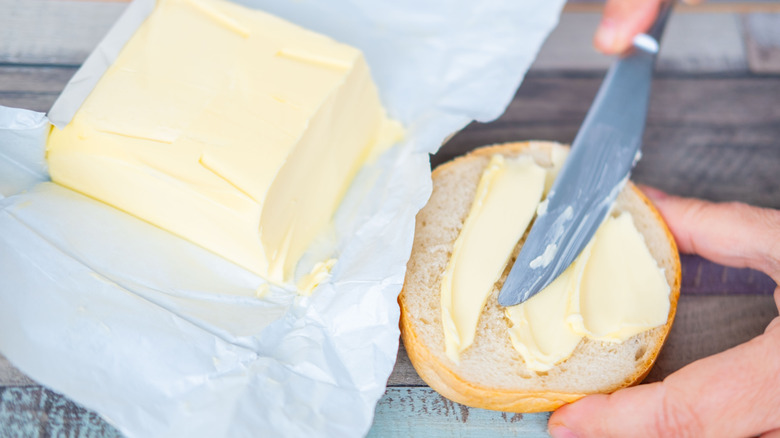
The first step to buttering your sandwich bread is getting ahold of some high-quality dairy. It is pretty broadly accepted that Europe has better butter than the U.S., so you might have to search a little harder for the good stuff. Some of that superiority is because standard European butter brands have a higher fat content, so sourcing something with at least 82% is a great start.
Texture is also of paramount importance when buttering bread. Nothing can ruin a promising egg and cress — a British standard — like cold butter's tear through a slice of sandwich loaf. Americans aren't exactly at the forefront of the room temperature butter storage movement, either, but you can reasonably expect that butter can sit out on the kitchen counter for about two days, which is more than enough time to soften those sticks for proper spreading.
Once it's good and soft, you won't need much more than a swipe on the inside of one or both pieces of your sandwich bread to enjoy its effect. Aim to create a thin layer like a stain rather than a thick, paint-like coat. Do remember to keep it simple. That thin layer of butter, which can stave off moisture in both a British cucumber classic and a tomato sandwich from the American South, will have a bigger impact in a straightforward sandwich.