

Here's How Long Butter Can Sit Out On The Counter Before It Becomes A Safety Concern
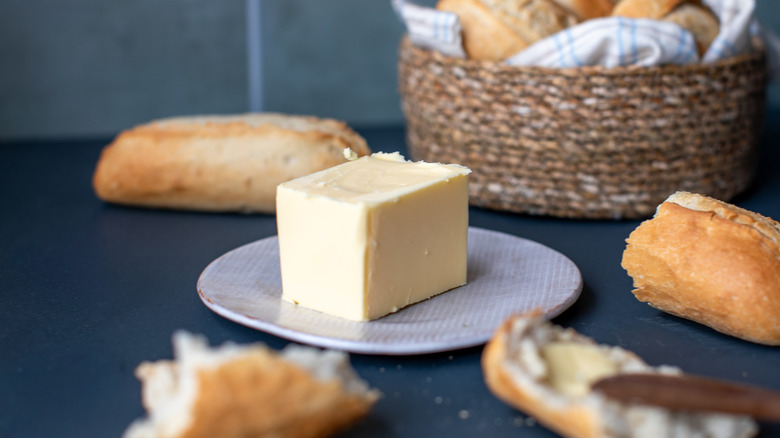
I have long yearned to be a counter-butter household. The kind of carefree sitcom folks whose lives may sometimes twirl into madcap adventures, but always revolving around a crock of maximally spreadable butter. The United States Department of Agriculture's assertion that butter should only be stored unrefrigerated for one or two days doesn't exactly move the dial toward this otherwise achievable dream. While that's more than plenty of time to soften butter for baking, it is not enough to cultivate a whole new aspirational lifestyle. Good thing we don't eat that much toast.
To be clear, I refer only to salted for counter butter. Salted butter has a better chance of staying fresh longer thanks to the mineral's preservative qualities. While how much salt is really in salted butter varies by brand, that added sodium can help slow spoilage compared with unsalted varieties. U.S. Dairy explicitly says to just keep it refrigerated. (The hour or so it should take to soften as needed should keep unsalted in the safe zone.)
But wait. You might know someone who leaves their butter on the counter until it runs out. You may even be that person, alive and well and obviously not bested by a bit of spoiled butter. Both the USDA and U.S. Dairy are mum on the consequences of eating butter left out after that reliably safe 48-hour window. But common sense dictates that room-temperature butter will eventually go bad. It's just a matter of when. So who are these rebel souls keeping their prized blocks of Kerrygold right there on the counter? These calculated risk-takers are almost certainly salted butter lovers, for one. And there are ways that you can minimize potential counter butter mishaps, too.
Some counter butter tips to (maybe) make it less risky
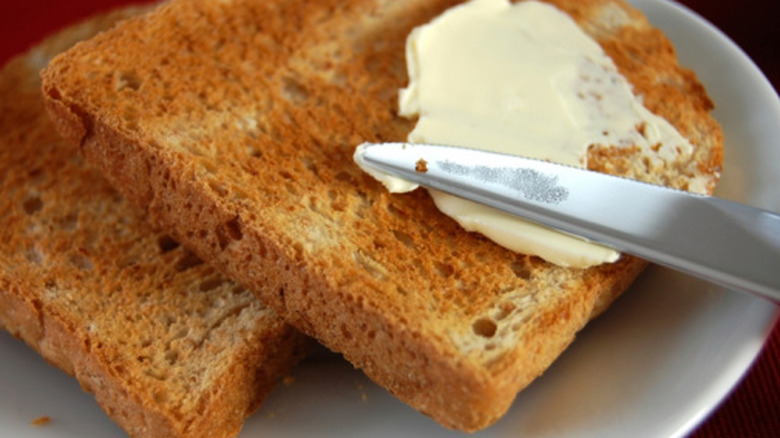
If the federal government advises that butter be kept at room temperature for no more than two days, those are words to literally live by. This guidance can also help you manage your counter butter expectations and eliminate any guesswork about whether that four- or five-day-old dairy is actually okay. And you've still got up to 48 buttery hours to work with, baby! Maybe just counter store as much as you know you'll use in that period for spreadable success. You can also keep it in a butter bell or dedicated dish for even cuter convenience.
Speaking of those darling containers, you definitely need a covered vessel to protect your butter from the elements and any fruit flies (or worse) that might be near. You also want your kitchen climate to hover around a comfortable 70 degrees Fahrenheit or lower, lest your butter become too soft, melt, or go bad faster. Store your butter keeper away from hotspots and out of direct sunlight. And once your butter shows even a single sign of unusual flavor, fragrance, or appearance, it's time to toss it out. Keep to the USDA's recommended one to two days, and you should be able to safely enjoy the counter butter fantasy to which some of us may only ever aspire.