

The Unexpected Way Tempura Inspired The Creation Of Instant Ramen
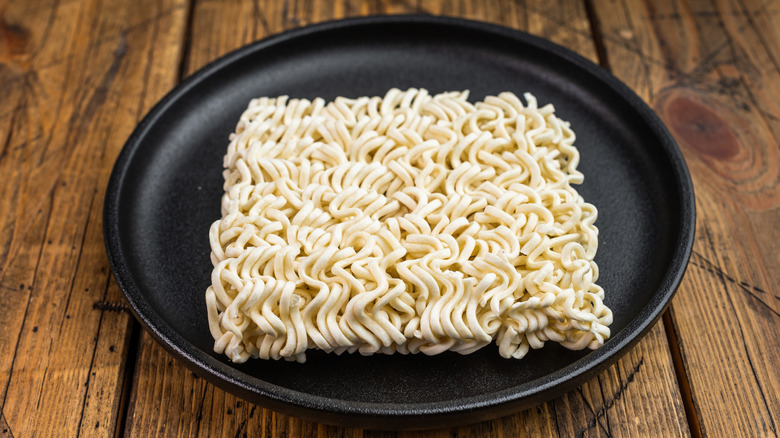
Many great inventions were born out of necessity, much like instant ramen. But aside from having to thank its creator, Momofuku Ando, we also have to extend our gratitude to his wife, Masako, and the cooking method used to create the perfect tempura. When tempura is placed in hot oil, it takes the moisture out of its batter. Ando drew from the idea as he watched his wife cook, developing preservation methods for the noodles by dehydrating them. Unknowingly, Ando discovered the flash-frying process that became the blueprint for instant noodles, helping create the science behind what makes instant noodles instant. This also made them more shelf-stable, helping prevent them from spoiling quickly — which was especially important, as this was years following World War II, when food shortages were rampant. The period was particularly influential; it also resulted in the rise of fish camps, changing how we enjoy seafood today.
After several trials, Ando succeeded in making a more hassle-free bowl of noodles that wouldn't take several hours and steps to make, adding chicken soup to the mix before giving the noodles a good frying. But the first time Ando's chicken-flavored instant noodles that were packaged in plastic were released to the public, they were six times more expensive than fresh noodles. Fortunately, they eventually became more affordable because of consumer interest. Ando's influence in modern-day instant ramen didn't just stop at the technology that made it reality, but he also revolutionized how we eat it in modern times.
The evolution of instant ramen
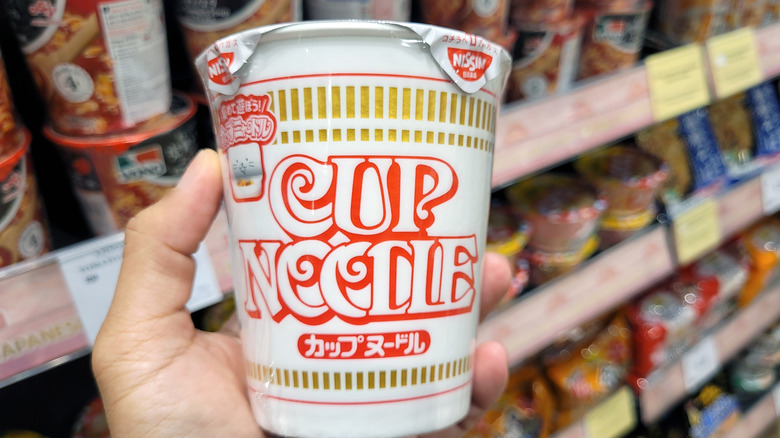
Momofuku Ando had another idea when he saw how people in the U.S. ate his instant ramen — cutting the noodles into smaller blocks so that they could fit into paper cups, pouring hot water over them, and eating with a fork. This inspired Ando to devise a different packaging, one that's more convenient and allows people to eat the noodles without grabbing a separate container. Aside from designing a container that resembles a big cup, Ando also considered the material, settling on polystyrene foam for its almost weightless quality, cheap costs, and impressive heat retention properties. It has a wide mouth that modestly narrows as it reaches the bottom.
However, Ando encountered another issue. While the packaging was ready, the noodles easily moved around inside, which made them too fragile to be transported. The solution was middle retention, which is all about making the noodle blocks big enough so that they only stayed in the middle portion of the cup — but this made the cup unstable. Ando's successful solution was to place the cup over the reversed noodle block, and with this started the mass production.
Eventually, Ando's company, Nissin, spread to different countries, and even created instant ramen inspired by localized flavors to easily adapt to each country's unique palate. By 2021, Nissin had already sold 1.48 billion servings, even inspiring more noodle brands to do their own twists. That's why when we go to grocery stores today, we'll see different brands of instant ramen available, all vying for the top ranking, like Fly By Jing and Momofuku — all thanks to Momofuku and Masako Ando, and tempura.