

The Titanic's First-Class Breakfast Included This Hearty Twist On Pancakes
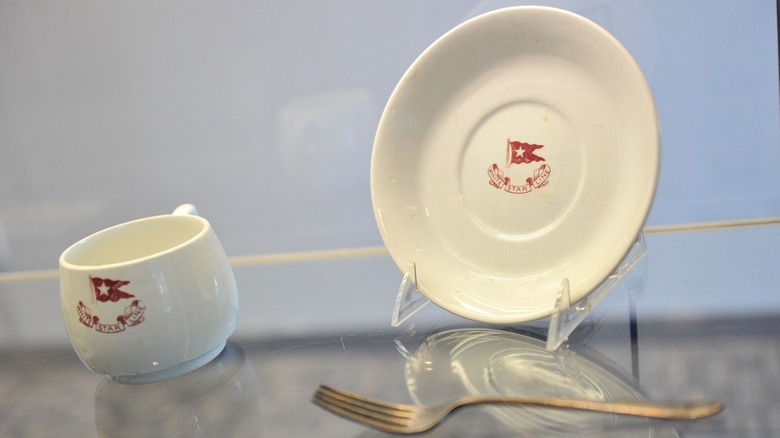
The RMS Titanic is well known as the supposedly unsinkable ocean liner that sank on her maiden voyage in 1912 after striking an iceberg. It's also known for having been the very peak of extravagance and comfort at the time, especially for the first-class passengers who dined in luxury on the Titanic. The sumptuous breakfast menu featured delicacies that would make modern mouths water, including an old-fashioned recipe not commonly seen today: Buckwheat cakes. If you like pancakes, you might love this fun twist on them, which are essentially just pancakes made with milled buckwheat flour. They're also usually on the thin side, more like a tasty crêpe.
It's worth noting that while various fake ship menus have surfaced over the years, few actual menus from the Titanic survive. Per Smithsonian Magazine, lunch and dinner menus have been sold at auction for large sums, and most are from April 14, the day the ship sank. While far fewer breakfast menus were saved, authentic examples have surfaced and gone up for auction, including one on an April 11 second-class postcard, mailed from port, that explicitly listed buckwheat cakes, complete with maple syrup. Furthermore, records and recipe books confirm that the dish wasn't limited to second class; buckwheat cakes were enjoyed in first class as well.
Buckwheat cakes were an age-old treat well before Titantic
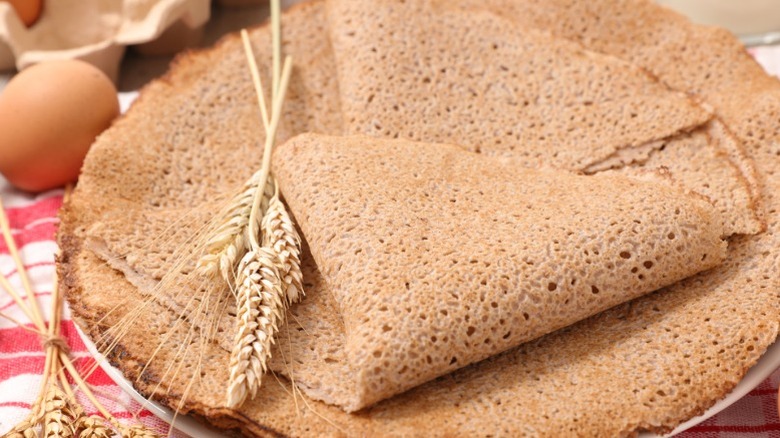
The Titanic stood out for offering luxuries not found on other passenger vessels, but historical menus from other passenger ships and hotels during the early 1900s show buckwheat pancakes were a common staple of the era, alongside other foods like milk toast, Wheatena, and other vintage breakfast dishes that have long since faded from popularity. At the Waldorf Astoria in New York, for example, 30 cents would have you dining on buckwheat cakes like the Titanic's upper-class passengers.
Truthfully, though, buckwheat cakes likely go back much further than the 20th century. Although some sources say Dutch immigrants brought buckwheat cakes to the U.S. in the mid-1700s, Preston County, West Virginia claims it was 1800s farmers in the area that popularized them — the place holds an annual buckwheat festival to celebrate these agricultural roots (though the pancakes are also considered a cornerstone of West Virginia cooking in general). Whether it was these same types of buckwheat cakes that made their way into the repertoire of the White Star Line's ship culinary team is unclear, but the American version would make sense given that over 23% of the passengers were American, most of them in first class. Buckwheat was also widely grown in both Britain and Ireland since at least the 16th Century by that point. While this was primarily to feed poultry rather than people, other kinds of wheatcakes have a history in Europe long before that.
Buckwheat pancakes remain a versatile breakfast food today
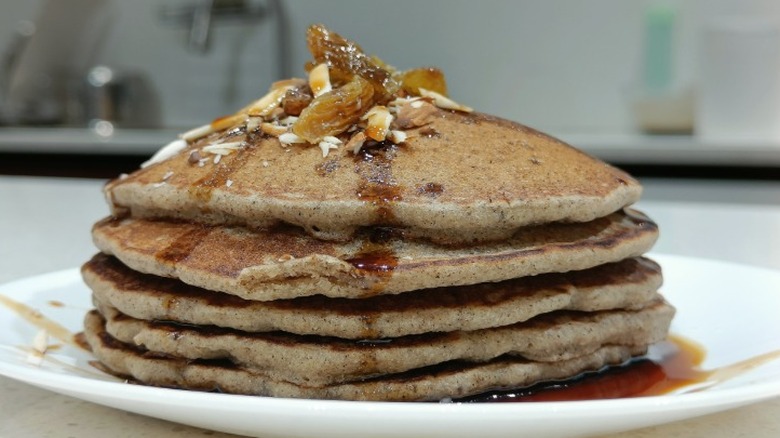
If you're curious about what a Titanic first-class breakfast may have tasted like, you can always try making your own buckwheat cakes. They may no longer be a common fixture on 21st century menus, at least in the U.S., but they're flavorful and highly versatile. Compared to regular pancakes, buckwheat versions have a nuttier, richer taste with a mildly savory finish. The classic version simply calls for buckwheat flour instead of the usual all-purpose flour for regular pancakes, so you can make them similarly to regular pancakes and can shape and customize them as desired.
Another cool thing about buckwheat cakes is that they're naturally gluten-free — buckwheat isn't actually a form of wheat, but a type of seed. Gluten likely wasn't a concern for Titanic passengers in that era, but for many modern diners, it's just one more reason to give them a try. This does mean that buckwheat cakes won't be as naturally airy as other pancakes, but you can make them less dense by mixing in some baking powder or beaten egg whites and get a fluffier texture.
Just like crepes and pancakes, buckwheat cakes taste great with toppings like syrup, fruit, nutty spreads, jellies, or just powdered sugar — it's like a breakfast canvas you can build whatever flavors you choose on. And while you don't have to dine on a white tablecloth in your best attire, you might want to consider it if you really want to embrace the first-class fancy.