

First-Class Passengers On The Titanic Ate Roasted Meats Paired With This Sweet Sauce
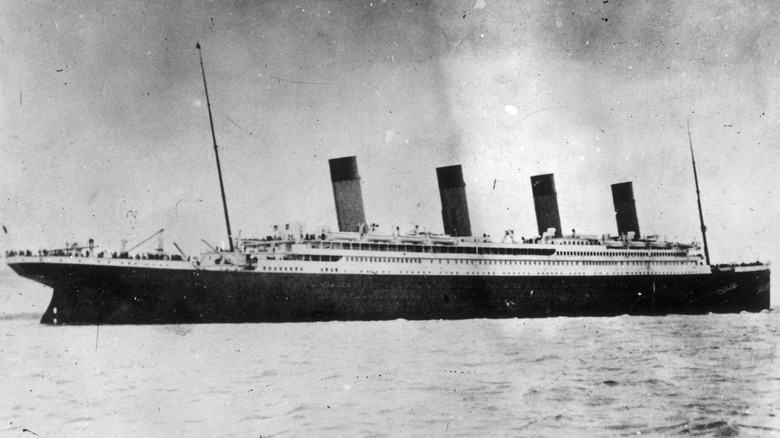
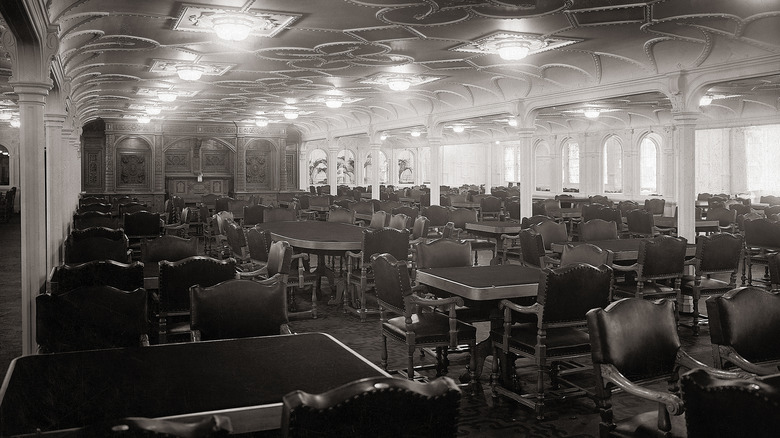
On the evening of April 14, 1912, the first-class passengers on the RMS Titanic sat down to a hearty meal that included 11 courses, plus cheese, with wine pairings. It was no quick bite. It likely took the diners around four hours to consume their repast. Among the many foods these very rich VIPs, which included heirs to the Guggenheim and Astor fortunes, enjoyed that evening of what would turn out to be their final meal on the ship, there was a surprising side that accompanied a roasted meat. It was applesauce served with calvados-glazed roast duckling, offered as a choice for the fifth course.
Applesauce may seem like an odd choice for such an extravagant meal, but it was a traditional side for roast meat, like pork, or fowl, such as goose and duck, since the tartly sweet flavor of the applesauce cuts through the meat's rich fattiness. This certainly wasn't unusual; we've found similar pairings from the same time period and contemporary recipes as well. But what was a bit more uncommon was how the chef prepared the applesauce, compared to today's versions, and the duckling recipe itself.
An applesauce with savory notes
The applesauce served on the Titanic was unlike the sweet, smooth jarred variety you may be used to today. It was made using chopped tart apples, minced shallots, apple cider vinegar, and a small amount of sugar. This would have been much less sweet than many modern versions and, with the addition of the shallots, would have had a savory undertone. The duckling recipe also included apple flavors to help unify the dish. It was prepared with a glaze made of calvados, the apple brandy from the French region of Normandy.
The roast duckling and applesauce was just one of the many foods served on the Titanic and available during the final first-class dinner. Dishes included roasted squab on wilted cress, lamb with mint sauce, and a wide range of other foods. Unbeknownst to the diners that evening, as dark-suited saloon stewards took their dinner orders, in just a few hours the most modern and largest ship ever built at the time would strike an iceberg in the North Atlantic and sink, resulting in the death of more than 1,500 people, including many of the wealthy elite enjoying their elaborate meal, blissfully unaware of what was to come.