

Always Grab These 2 Spices For Flavorful Swedish Meatballs
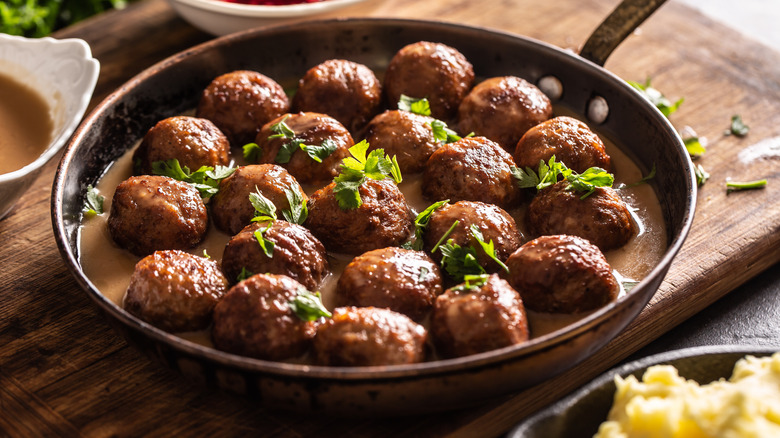
Swedish meatballs (köttbullar) have become a beloved international dish that has spread far beyond their Northern European homeland, with Ikea playing at least a small part in popularizing this comforting, filling dish (which Chowhound ranked second highest among dishes the Swedish furniture retailer has to offer). Made with pork and beef drenched in a rich, creamy gravy of pan drippings, beef stock, cream, and often a little flour to thicken it. My mother's side of the family came from Sweden, and she passed down a köttbullar recipe that I love to make when the weather starts to get colder. Besides being small and soft, thanks to the addition of milk-soaked bread crumbs, two key spices that make the dish so different from other types of meatballs are allspice and nutmeg.
These two spices elevate the dish with aromatic, slightly pungent flavors and aromas that help cut the richness of the meat and cream sauce. Allspice has a hint of pepperiness, warmth, and a flavor similar to a combo of cloves and cinnamon. While most Swedish meatball recipes include allspice, not all incorporate nutmeg, but my mom was a stickler for it in her family's version. Nutmeg, as the name suggests, has a bit of nuttiness, along with warmth, earthiness, and a touch of sweetness. Use freshly ground nutmeg, grated using a microplane, for the best flavor.
International spices make this Swedish dish that became an American favorite
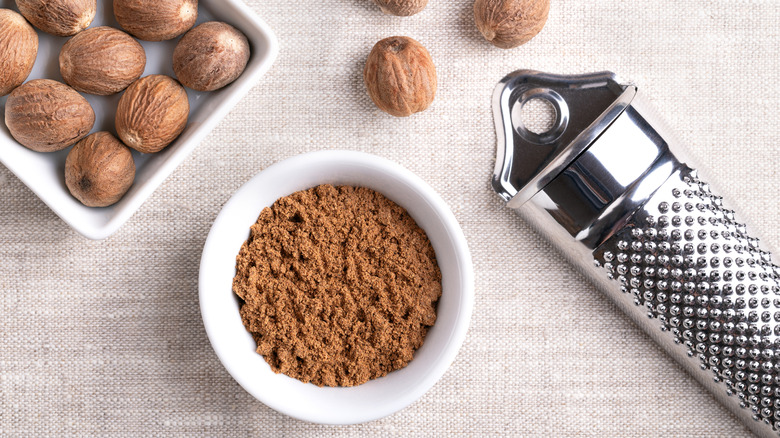
A pinch or so of allspice and nutmeg for every pound of meat is all you need to make Swedish meatballs shine. These spices also work well with the dish's traditional accompaniments like mashed potatoes and sweet-tart lingonberry jam. The allspice and nutmeg in the meatballs keep the jam from overwhelming the other flavors. Likewise, the spiced meatballs help cut the heaviness of the dairy-rich potatoes.
Swedish meatballs have quite the international story. Nutmeg is the seed of the Myristica fragrans, a tree originating on the Banda Islands, a small chain in Melanesia (Oceania). By the Middle Ages, the spice had made its way to Europe through trade and would eventually become a much-used spice in Swedish cooking for savory dishes like meat pies and soups. Allspice is a dried berry from a type of myrtle called Pimenta dioica. It arrived in Europe from Jamaica, where the spice originated, beginning in the 17th century. In Scandinavia, allspice became popular for brining and pickling food as well as for savory dishes.
Swedish meatballs likely came to the United States with Swedish immigrants who mainly settled in the Upper Midwest, many arriving in the 1880s, where it remained popular. But the dish didn't really get Americanized until the 1950s, when it became super popular as a buffet food that Boomers still fondly recall. Just remember, if you want the best version, be sure to add allspice and nutmeg.