

Skip The Ketchup: Glaze Your Meatloaf With This Savory Condiment Instead
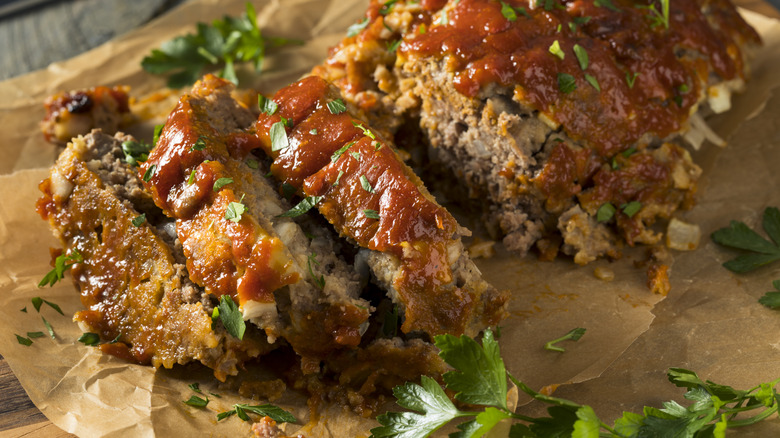
Meatloaf, an American dinnertime classic, has actually been around since medieval times. Made with fish sauce, pine nuts, breadcrumbs soaked in wine, and minced meat, this dish was first featured in the ancient Roman cookbook "Apicius." Meatloaf, as we know it today, is a bit different. Starting with the right ground beef blend, the dish omits some of these historical ingredients in favor of Worcestershire sauce, egg, and other seasonings. The mixture is squished into a brick, glazed with ketchup, and baked in the oven. But, can modern meatloaf be elevated with a few small changes? Absolutely.
Instead of glazing your meatloaf with ketchup, consider using Dijon mustard instead. It provides a sharp, earthy flavor with a bit of a kick that nicely complements meatloaf's distinct savory, umami flavors. While ketchup typically uses sweetness to balance these flavors, you can use Dijon instead to break up the richness and create a meatloaf with a more complex, tangy taste.
To create this glaze, you'll want to mix Dijon mustard with a bit of honey or brown sugar until fully combined. This can lessen the intense kick of the Dijon so it doesn't overpower the meatloaf's original flavor profile, and bring back some of the sweetness you would normally get from ketchup. To evenly distribute the glaze, brush it onto the meatloaf with a pastry brush before putting it in the oven.
Why Dijon mustard works well on meatloaf
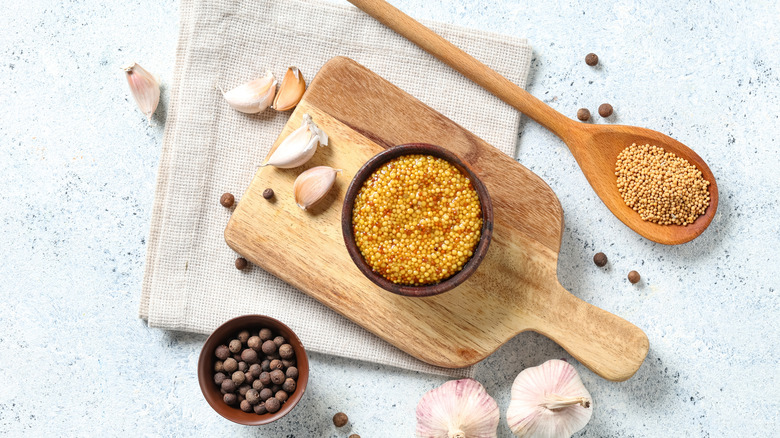
Dijon mustard, namesake of the city of Dijon in France, contains a special ingredient that gives it its unique flavor: white wine. The condiment was created in Dijon when brown mustard seeds were planted in the region of Burgundy alongside the large vineyards. Locals combined the two ingredients, and Dijon mustard was born. The brown mustard seeds give Dijon mustard its signature sharper flavor, differentiating it from yellow mustard's more mellow, sour taste.
The unique condiment can be added to many different types of dishes, but using Dijon mustard to glaze meat is a classic culinary technique applied in many high-end dishes. For instance, Gordon Ramsay's iconic beef Wellington recipe features a Dijon mustard coating. The condiment is also commonly used to crust racks of lamb, glaze crown roasts, coat chicken before frying, and more.
The acidic white wine and spicy brown mustard seeds in Dijon mustard cut through the fatty, savory flavor of the meat, creating a balanced bite of food. The glaze also tenderizes the meat in the oven; acidic compounds from the mustard break down the meat proteins for a more tender bite. The process is similar to using lime juice to tenderize shrimp for ceviche. Who says this fancy ingredient can't be used to elevate meatloaf?