

The Easy Mashed Potato Upgrade That Costs Almost Nothing
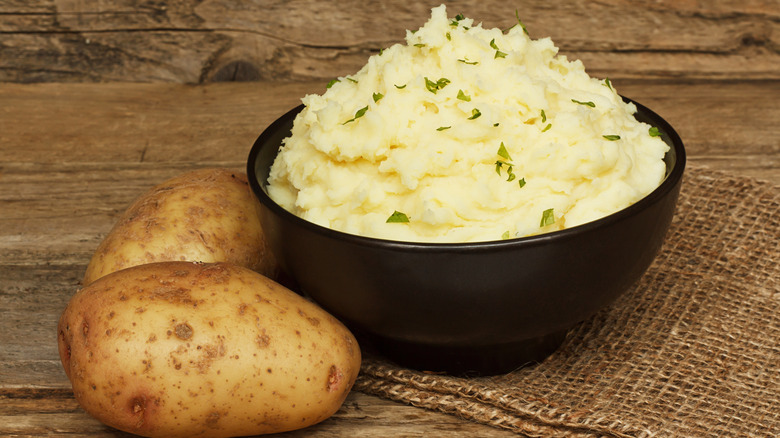
Considering potatoes are hardly the most flavorsome food in the world, it's not surprising that a bowl of mashed potatoes can end up a little flat. Before you add extra butter, it probably just needs something with a little more kick — like a teaspoon or two of mustard. It costs pennies, takes seconds, and otherwise doesn't require changing much about your go-to mashed potato method.
Some mustard stirred into a buttery mash gives it a little tang, a gentle bite, and just enough contrast to make the potatoes taste interesting, but not too mustardy. Yellow, English, Dijon, or stone-ground mustard; they all do the trick, just to varying degrees. Dijon has a pronounced mustardy bite, English offers even more direct and nose-tingling heat, yellow is a little milder than the others, and stone-ground has mustard seeds, so it also changes the texture a little.
Creamy and decadent mashed potatoes are often made using rich ingredients, including butter, milk, cream, and even cheese, so adding a little mustard can balance these heavier flavors with acidity and heat. The amount you add is up to you, with the idea being to make the buttery mash taste brighter. If you want to lean into a stronger-tasting mustard mash, that's also an option.
How to make mustard mash even better
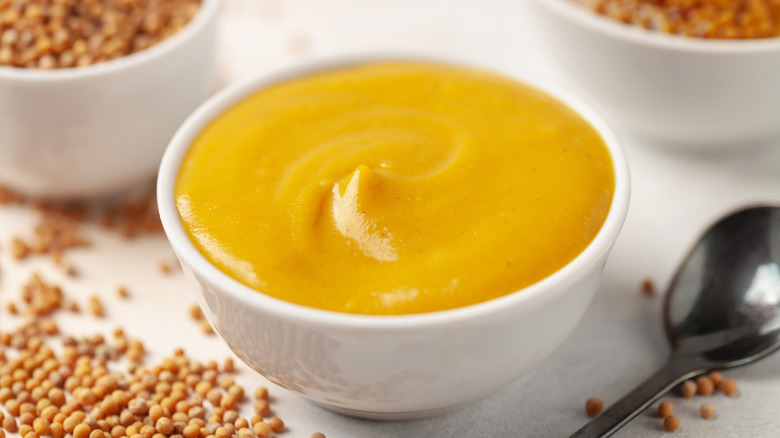
If you're serving mashed potatoes alongside a rich main course — think roast beef and gravy, a super-moist turkey meatloaf, or crispy fried chicken — mustard is even more useful. Rich foods bring a lot of fatty, salty flavors to your plate, so instead of pilling on even more rich flavors into mashed potatoes, a mustardy tang prevents your meal from tasting too monotonous.
The type of potato also matters when it comes to a good mash. Yukon Golds are the clear winner because they're naturally buttery and have a creamy texture. Russets are good too, but they contain more starch, so they need to be handled with care so as not to turn gummy. It's often recommended to mash the potatoes when they're still hot and to add warm butter and dairy rather than cold, tips that both help with texture. Once everything's combined, simply slip the mustard in, tasting for preference.
Since mustard is bringing acidity to an otherwise rich side dish, there are other ingredients you can add alongside it to bring some much needed freshness. Fresh herbs, such as a handful of chives, parsley, or even dill, are a particularly great and inexpensive option. They add a lovely, herbaceous note that works well with mustard.