

Make Creamy, Decadent Mashed Potatoes Using One Tried-And-True Kitchen Tool
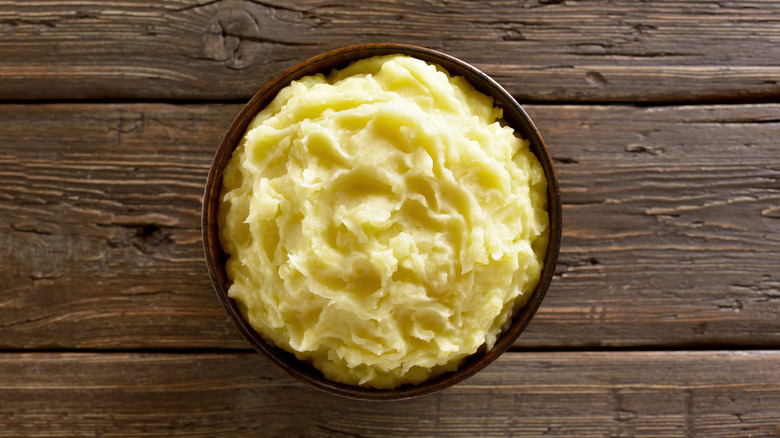
Some of my earliest food memories include a heaping pile of fluffy mashed potatoes smothered with gravy. As a picky eater growing up, they were one of the only things I ate — so much so that my mother made them almost every night, a sure guarantee that I would eat the entirety of at least one food item on my plate. Now, I make them often, whether rounding out a hearty meal, layered on top of a decadent shepherd's pie, or as the star side of my holiday meal. While I love a chunky mash, there's something particularly satisfying about silky-smooth mashed potatoes, and when I make the latter, I turn to my favorite kitchen utensil: the immersion blender.
The immersion blender — or hand blender — is the magic wand of kitchen appliances. Essentially a long stick with a motor on one end that powers a spinning blade on the other, it can be used to emulsify anything together, from soups and sauces to smoothies. My immersion blender comes with various attachments, including a mini food processor and whisk, but I generally use it in its true form. At a low speed, I find it's the absolute best way to whip up a super velvety batch of mashed potatoes with minimal fuss, less mess, and less time, with an added bonus of a breezy cleanup.
Immersion blender tips and tricks
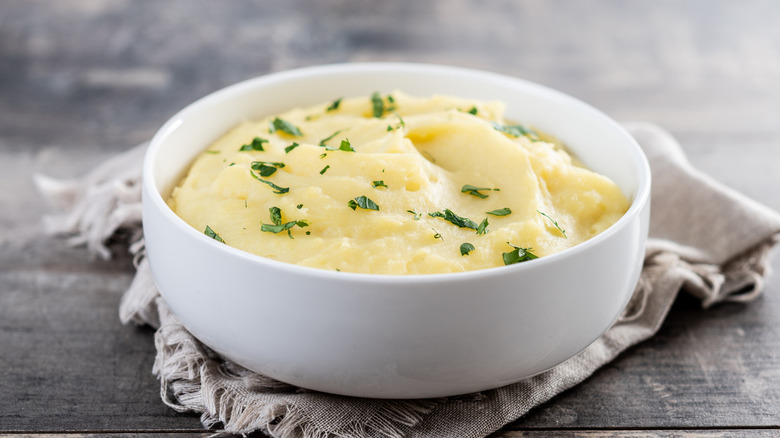
Basic mashed potatoes require next to no effort as is — starting in cold water, bring potatoes of your choosing (I like to use Yukon Gold) to a gentle boil and cook until tender, and then mash together to your desired consistency. While using a traditional potato masher is perfectly acceptable, and something we should all have on-hand, an immersion blender will do all of the work for you, getting you to that desired creamy consistency simply with the simple press of a button. Once blended, stir in your desired mix-ins, like heavy cream, butter, or sour cream to give it an added richness and tang. I personally like to stir in the innards of a whole roasted garlic head as well as chopped thyme for a deeper, sweeter flavor.
There are a number of excellent immersion blenders from trusted brands on the market at different price points to choose from. (To make it even easier on yourself, we have a list of the 10 best immersion blenders on the market to get you started.) All of this comes with a couple of very necessary PSAs and tips for anyone embarking on their mashed potato journey. First and foremost, when using any immersion blender, always make sure that the entire blade is submerged before turning it on to prevent splashing. And when it comes to starchy spuds, less is more: overworking them can turn them dense and gluey, a point of no return that even the best home cooks cannot come back. Therefore, use the immersion blender at a lower speed while simultaneously working quickly to reach maximum fluff.