

Dijon Vs Stone-Ground Mustard: Is There A Difference?
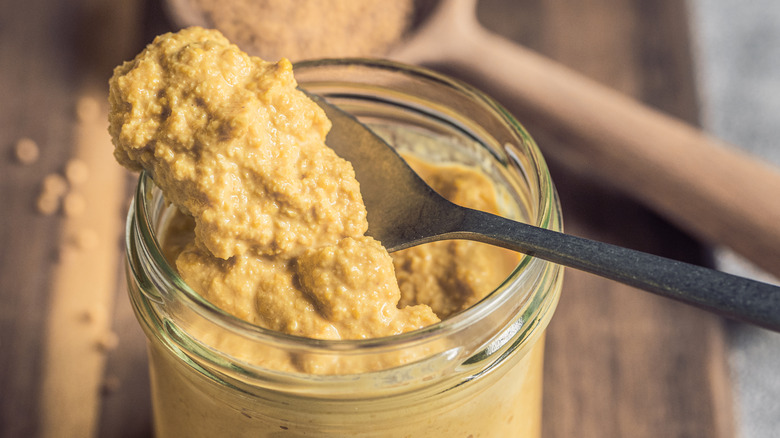
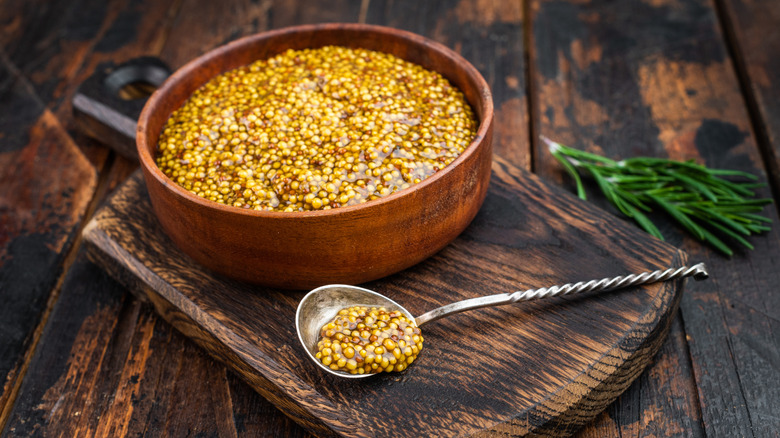
You find them sitting side-by-side in the condiment aisle, with their yellow hues and the same "last name" like cousins at a family party, but the differences between Dijon mustard and stone-ground mustard aren't as straightforward as you might think. For anyone on a mission to understand everything about mustard, a key difference to wrap your head around is that a classic Dijon mustard has a smooth, creamy texture whereas stone-ground (or whole grain) mustard is much more coarse, with chunky bits of mustard seed throughout.
However, the truth is a little more complicated. "Dijon" refers to a style of mustard that has its origins in the area surrounding the French city of Dijon, but it isn't a legally protected style the way balsamic vinegar is either authentic or not. It's more of a reference to a mustard typically made with brown or black mustard seeds, and a lovely tangy taste.
"Stone-ground" just describes how the mustard seeds were processed. That process is why the two can look different despite both being made from the same baseline ingredient of mustard seeds. The difference simply coming down to how much the seeds are ground up means that while Dijon usually refers to mustard that's been processed until perfectly smooth, you can also find chunkier Dijon packed with whole or partially crushed seeds — also known as a stone-ground or whole grain Dijon.
Which mustard to use
Now that you understand the differences between these two mustard labels, and how one refers to a style and one refers to a production method, you might be wondering which to reach for in any given moment. Simply put, if a recipe just says "Dijon mustard," it's calling for the smooth version. The softer consistency of Dijon mustard means you often find it in recipes for vinaigrettes, creamy sauces, and marinades — anything where it can blend easily into other liquid ingredients without adding texture.
A courser stone-ground mustard, on the other hand, is the better choice when you want the addition of mustard to bring some texture as well as flavor. The seeds are only partially crushed, so all that chunkiness is great served with sandwiches, burgers, and potato salad. If you're interested in making your own mustard, you can make this style at home by simply not grinding the mustard seeds down too much and leaving a bit of grain.