

Bobby Flay Follows This 4-Minute Rule For The Ultimate Porterhouse Steak

The multi-hyphenate celebrity chef, repeat restaurant owner, and New York City french fry fan Bobby Flay has blanketed the food world in his wisdom. And a lot of Flay's advice has to do with steaks. The "Throwdown!" host has so many beefy tips that they can actually get pretty granular. So it should come as no surprise that he'd have guidance about thick-cut (one-and-a-half to two-inch) porterhouse steaks in particular.
The Flay way is to bring the beef to room temperature before salting it copiously and placing it in a just-oiled pan set to scorching over medium-high, then just leaving it there for four long minutes, he previously shared with Bon Appétit. This may alarm the frequent steak-flippers of the world (not to mention your smoke detector), but it helps the cut develop the deeply browned crust Flay likes. Doneness skeptics are justified in questioning whether this technique alone will get a steak of these substantial proportions to the ideal temperature. However, the four-minute sear is just the beginning — the meat is ultimately removed to a cutting board for slicing before it goes back in the pan, crust up, to finish to a proper medium-rare under the broiler.
Why Bobby Flay's one-sided steak-cooking start might work for you
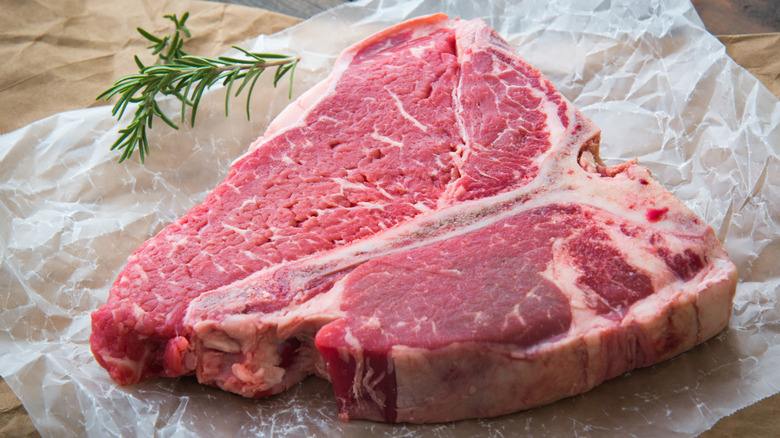
Bobby Flay's porterhouse prep may at first sound a little unexpected. Some folks are so committed to meat movement that they even believe that flipping your steak just once is a myth. And, heck, whatever technique gets you to your favorite steak is the right one. But Flay's porterhouse approach makes plenty of sense. The colorful crust most folks seek on their steaks comes from the Maillard reaction, the process that kicks in when protein meets high enough heat for long enough to develop what's commonly considered a sear. And four minutes in an optimally hot cast iron pan is almost guaranteed to bring about that desired effect.
Now, frequent beef flippers might argue that all their turning will still affect the steak's crust, while also ensuring more even cooking. Single flippers, like in Flay's stovetop-to-broiler method, trust that the second part of that process will also bring about the same evenness. Since either side ultimately makes contact with the pan, and for pretty equal amounts of time, this really isn't even that wide a leap of faith on your way to an excellent steak.