

Italian Vs American Pasta Salad: What's The Difference?
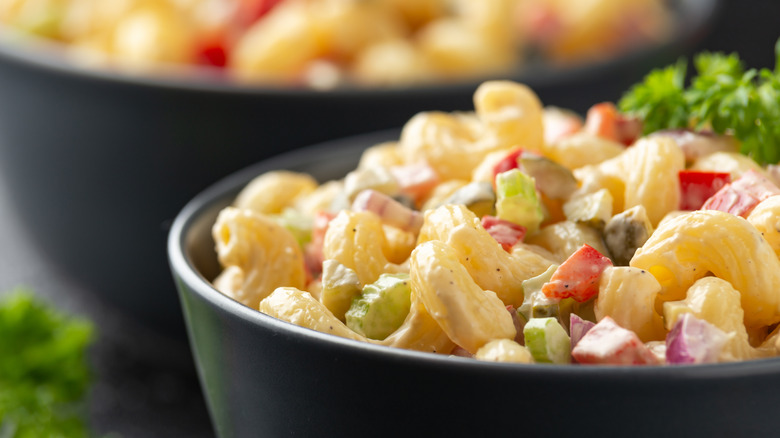
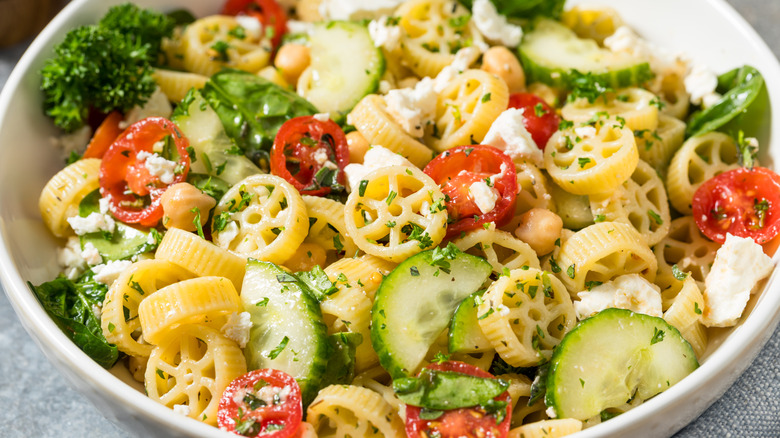
American and Italian pasta salads may share roots, but you only have to look at a plate of American pasta salad next to what Italians call "pasta fredda" (cold pasta) to see the ways in which they differ. American pasta salad, generally speaking, tends to be creamy with a mayonnaise-based dressing while the Italian version is often dressed more simply with olive oil and vinegar.
The ingredients differ, too. Americans are more likely to add richer ingredients like ranch and bacon, or lean into bigger themes like deviled egg pasta salad, taco pasta salad, or find ways to turn classic sandwich fillings into pasta salad. Italians, on the other hand, are more likely to stick to fresh Mediterranean ingredients found in other Italian dishes, such as tomatoes, olives, basil, and mozzarella.
Where pasta salad actually originated is trickier to establish. Some link cold pasta dishes to Italian-Jewish cooking, since they could be prepared ahead for the Sabbath, when observant Jews traditionally refrain from cooking. What is easier to establish is the development of macaroni salad in the United States, where mayonnaise-based versions have become a beloved (and undeniably American) part of picnics, barbecues, and deli counters. The ingredients only tell part of the story, though, because Americans and Italians don't necessarily eat their pasta salads the same way.
They're made for different occassions
One of the biggest differences between these two dishes is their purpose. The American versions belong firmly to a more "make-ahead" side of cooking, whether you're meal prepping or making pasta salad to clean out your fridge. It feels like less of a full meal and more of a side dish, something to put next to burgers, grilled meat, sandwiches, or other picnic foods.
And sure, Italian pasta fredda could theoretically be served as a side, but that isn't typically how Italians eat pasta. Whether warm or cold, pasta is generally served as a "primo piatto," or first course, rather than as a side dish. Italian pasta salad is usually made a few hours before mealtime and then served at room temperature, as opposed to straight from the fridge. And it's popular in the warmer months when a cold plate of pasta feels especially refreshing. I grew up in Italy and we were often given cold pasta salad as our lunchtime meal at school starting in May.
That is not to say there isn't still crossover, of course. An Italian-inspired pasta salad can be creamy, and an American version can be dressed with olive oil. Even using pesto as a pasta salad dressing is something both countries have in common. Ultimately, the beauty of both regional styles of pasta salad is that they adapt to a wide variety of flavorful ingredients, proving that pasta doesn't have to be piping hot to be delicious.