

A Pro Chef Says To Avoid The Most Recognizable Store-Bought Pasta Brand In The US — Here's Why

On the surface, pasta may seem like a simple product, and in some ways, it is. After all, you can easily make pasta with just flour and eggs. However, pasta has a rich history stretching back centuries. From regional Italian pasta shapes and sauces to classic culinary debates, including "is dried or fresh pasta better," there are plenty of complexities within the world of pasta worth exploring.
One niche aspect has to do with the material used to make pasta extruder "dies," the discs used to mold the dough's final shape. These dies are commonly made from either Teflon or bronze. Bronze is more traditional, and results in a more textured pasta. Teflon is more commonly used for mass-produced pasta, and is the main reason executive chef Jesus Medina, of the Four Seasons Hotel Beverly Hills, recommends consumers avoid Barilla (and similar mass-produced pastas).
"I tend to avoid Barilla, as it can overcook very quickly and often lacks the structure needed to properly hold and bind with sauces, resulting in a softer, less cohesive final dish," Medina told Chowhound in Six Store-Bought Pasta Brands to Buy and Two to Avoid, According to Experts. Medina ties these drawbacks directly to the fact that Barilla uses Teflon dies rather than bronze, saying, "while it's ubiquitous and affordable, it's made with Teflon dies, which creates that smooth, slippery surface that doesn't allow sauce to properly cling."
Choosing Teflon- vs. bronze-die pasta
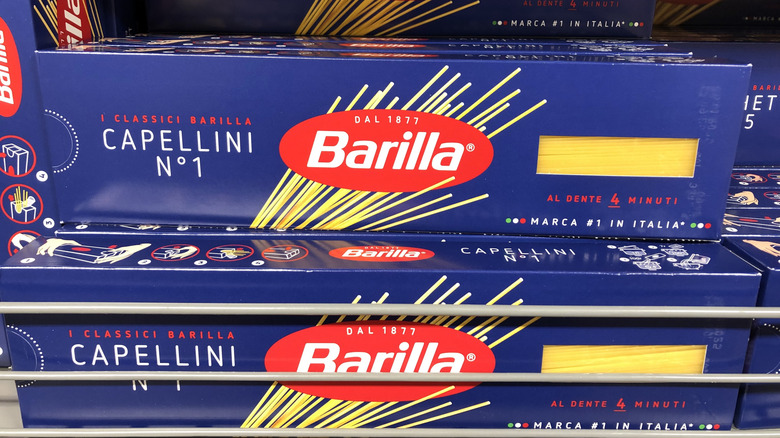
While there are several things to look for when searching for store-bought pasta, thankfully, there are some telltale signs a pasta has been extruded through Teflon rather than bronze dies. Teflon-die pasta is smoother and shinier. Bronze-die pasta has a more matte finish, and may even appear chalky. Also, packaged pasta made with bronze dies often says so on the label. For example, Rummo-brand pasta, which Jesus Medina recommends, has a "bronze-cut/absorbs more sauce" seal on its packaging.
It makes sense that a more textured pasta is better for sauce absorption. After all, pasta shape plays a big role in determining which sauce pairs best with it. Smoother shapes, such as spaghetti, pair better with lighter sauces while more complex shapes with ridges and crevices are better for thicker sauces. This has to do with how the sauce coats the pasta; however, even smooth-surfaced pastas such as spaghetti can benefit from the additional texture a bronze die imparts.
To be fair, there are some benefits to Teflon-die pasta. It's more durable and easier to cook, for example, and the smooth surface means the pasta is less likely to break or crack. Bronze-die pasta, while it does have a rougher texture ideal for sauce adhesion, is more fragile.