

For Flavorful, Crispy Cabbage, Don't Overlook This Simple Step
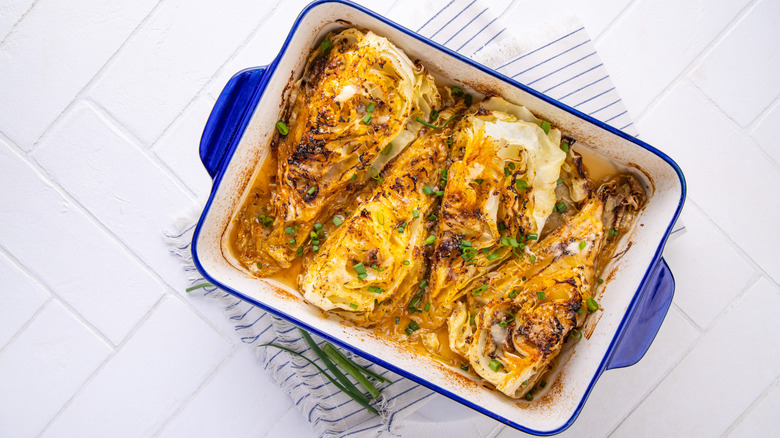
It's time to start giving cabbage credit where credit is due — for too long, this leafy vegetable has had the reputation of being bland and soggy, but cabbage itself is rarely to blame for that quality. While cornstarch is one secret to extra-crispy cabbage, its more basic needs are plenty of heat and enough fat. The second you skimp on the fat, that's when you end up with something sad, limp, and a little flavorless.
In order to properly brown something like cabbage, you need to give it the right conditions. Fat, most usually oil in this case, helps the surface of the cabbage get hot enough for the Maillard reaction to occur. This is a chemical change that creates all the browned, savory flavors we associate with things like toast, roasted vegetables, and seared meat. But don't think you need to drown your cabbage in oil to achieve this. For a medium head cut into wedges, for example, you only need about 2 to 3 tablespoons of oil.
And the cooking method matters too. Roasting is one of the best routes if crispiness is the goal. Sautéing or frying is another way to give shredded or chopped cabbage lovely browned edges. You just need to make sure all of the pieces have enough breathing room on the baking tray or frying pan because if they are packed together, they'll quickly turn soggy instead of crispy.
The fat you choose can change the whole dish
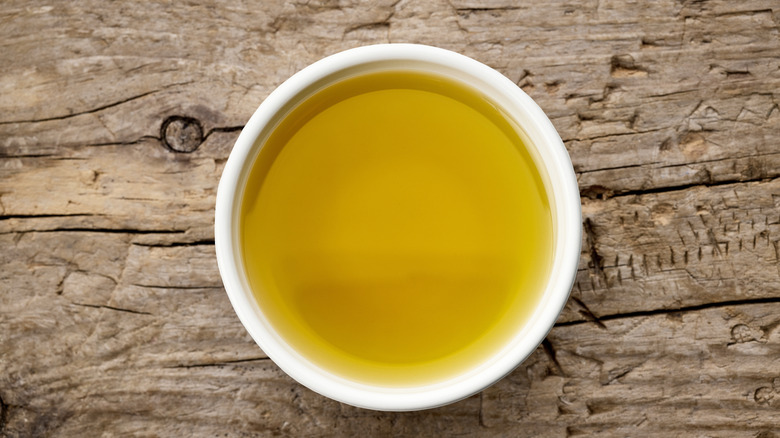
The fat itself should be considered well. Olive oil is quite possibly the best all-purpose choice, but cabbage is a highly absorbent vegetable that is good at taking on different flavors. So while a fruity extra-virgin olive oil can make roasted cabbage taste brighter, neutral oils like canola or vegetable oil also work to let the the taste of the cabbage take center stage. There's also the option of butter. For a mouthwatering plate of Southern fried cabbage, some butter may help to bring out a richer flavor. The only issue is that butter can burn at high temperatures, so if you're roasting, it's often better to mix in butter towards the end. Other animal fats also work for cabbage. Don't throw out your bacon grease, as cooking cabbage in this fat can give the leaves an extra smoky and savory depth.
One last trick is simply not to fuss with your cabbage too much as it cooks. Give it some time sitting on a hot surface as that allows it to get properly and deeply brown. If you keep flipping it every few minutes or moving it around the skillet, you'll only interrupt the very process you're trying to create. Let it get dark and become a little crisp before you move it, and you'll end up with perfectly crispy cabbage that could change the mind of even the biggest cruciferous skeptic.