

The Carrots Of Today Are Often Orange — But They Weren't Always This Color

Whether you want to turn carrots into vegan bacon or you're looking to make smoky carrots on the grill, the bag you'll need to grab at your local grocery store is almost guaranteed to be filled with orange carrots. So synonymous is this color with carrots that we can often forget these crunchy root vegetables also come in a range of other colors, such as purple, yellow, and red. In fact, the first food crops of carrots, which can be traced back thousands of years, were largely purple, white, and even black. And from there, they started to spread around the globe, landing in Europe and slowly becoming the color we know them to have today, thanks to a process of selective breeding. Simply put, farmers chose which colors they wanted to save and breed, and orange won this particular popularity contest.
There's a famous Dutch story that suggests that they were deliberately bred orange to honor William of Orange, and while it is a cute story, there is no strong evidence that this was actually why orange carrots became so popular. In fact, orange carrots first appear in European records as far back as the 15th century, two centuries before William of Orange's reign. Yellow carrots also seem to have been a common variation during that time too, and some experts believe that the orange carrots of today may have descended from these yellow varieties.
What makes different colored carrots different?
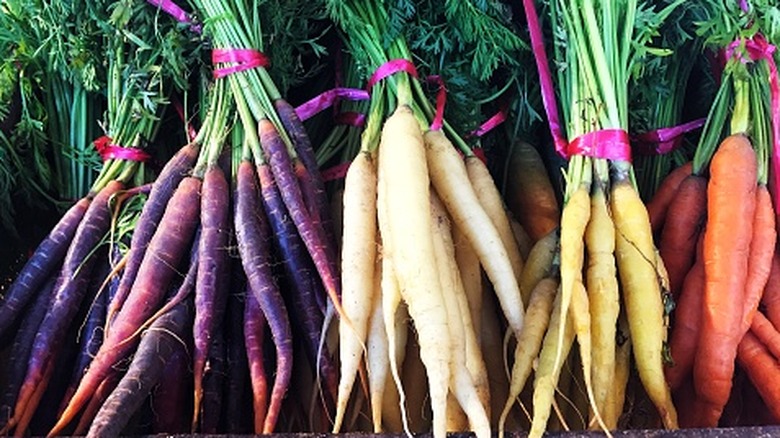
These colors aren't just skin deep — orange carrots actually get their hue from plant pigments called carotenoids, the same pigments that make most sweet potatoes orange too. And these directly affect what nutrients are in the carrots themselves. The carotenoids in carrots, as well sweet potatoes, pumpkins, and other orange foods, can be converted by the body into vitamin A. On the flip side, purple carrots get their color from anthocyanins, which is the same group of plant pigments also found in foods such as blueberries and eggplant, so these contain significantly less vitamin A-boosting abilities.
While orange is the color we tend to associate with carrots, other colors never actually disappeared. For example, red carrots continue to be grown across parts of Asia. And in recent years, other colors such as yellow, red, and purple have returned to Western grocery stores and farmers markets where their unique and striking shades make them an exciting find. The carrot origin story is actually a funny little reminder that "normal" is often just the result of what we're most used to, because while the orange carrot is perhaps the most famous carrot, it is not the original.