

What Makes Most Sweet Potatoes Orange?

With their bright orange flesh, sweet potatoes are one of the most instantly recognizable vegetables in the produce aisle. And that orange flesh actually tells us a lot about what's inside them. The color comes from carotenoids, the same group of natural pigments that also gives carrots and pumpkins their color too. The particular carotenoid in orange sweet potatoes is called beta-carotene — which has another job besides making sweet potatoes look good in a vegetarian sandwich or piled up on a roasting tray — our bodies are able to convert beta-carotene into vitamin A.
This is why orange sweet potatoes are often brought up in conversations about health — their bright and beautiful color is a useful clue that they carry a substantial amount of a pigment our bodies convert into an essential nutrient. The exact amount of the pigment varies between varieties, often the darker the orange, the more carotenoids are present.
Because orange-fleshed varieties are the most commonly eaten sweet potatoes in the U.S., these orange roots have become the thing most of us picture when we hear "sweet potato." However, the difference between Japanese and American sweet potatoes is a reminder that this isn't a universal rule, as Japan's most cultivated variety has a pale yellowish flesh that looks quite different to what Americans might know as sweet potato.
So why are some sweet potatoes white or purple instead?
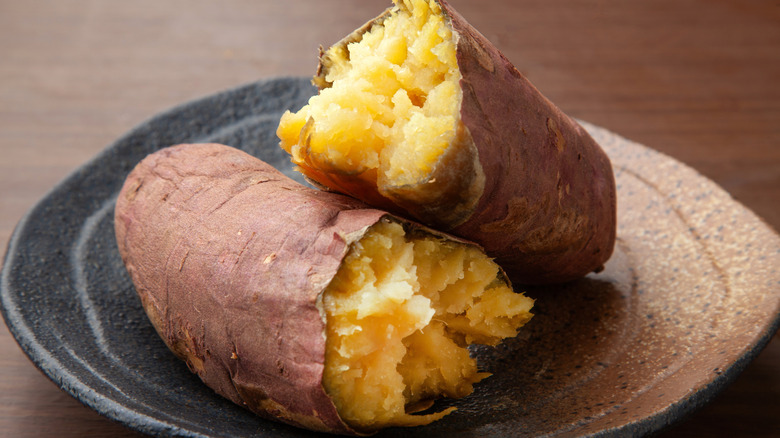
Technically, sweet potatoes aren't a type of potato at all — they are their own separate root vegetable, known as ipomoea batatas, and they come in a rather impressive range of colors, of which orange is just one option. Different varieties of sweet potato produce different combinations and concentrations of pigments, and that's why their flesh can range from white, cream, and yellow to orange and purple.
While orange-fleshed varieties have higher carotenoid levels, purple-fleshed varieties contain a pigment called anthocyanins instead. These are the pigments responsible for a beautiful, deep color you see on red cabbage, blueberries, eggplant skin and pomegranate, to name a few. In other words, the color of a sweet potato is just a matter of whatever particular plant pigments it has — nature just decided to give a whole lot of orange to some.
So the next time you hear someone talking about orange sweet potatoes, you'll know that there's a good scientific reason for their color, it's all that beta-carotene doing some decorating. And unlike a few drops of food coloring, that bright color means there's some serious nutritional goodness hiding beneath the surface for us to benefit from, too.