

What's The Average Lifespan Of A KitchenAid Dishwasher?

KitchenAid has a good reputation as a go-to brand for appliances that last. Just look at KitchenAid's stand mixers, which can last decades. As for how long you can expect your KitchenAid dishwasher to last, there's unfortunately no precise estimate, but it's possible to nail down an approximate window.
The good news is that a KitchenAid dishwasher should last longer than your "average" dishwasher. Dishwashers generally last for around ten years, give or take a little, with the obvious caveat that there are a lot of brands out there, and it's a bit of a guessing game. KitchenAid's dishwashers have an estimated 10-year lifespan, but you may be able to expect a few years more than that. Many appliance experts suggest that KitchenAid dishwashers last around 10 to 14 years. That said, don't expect it to reach its upper teenage years, as it's harder to find anyone who can argue that they'll get past the 15-year mark.
As mentioned, this lifespan isn't exactly official. The closest confirmed thing out there is the warranty, which covers parts and labor for just a year, while some parts like the heating element, motor, and electronic controls get five years (the stainless steel tub is covered for life). But this shouldn't be misunderstood as a lifespan estimate; it's just what the company will fix for free.
Extending the lifespan of your dishwasher
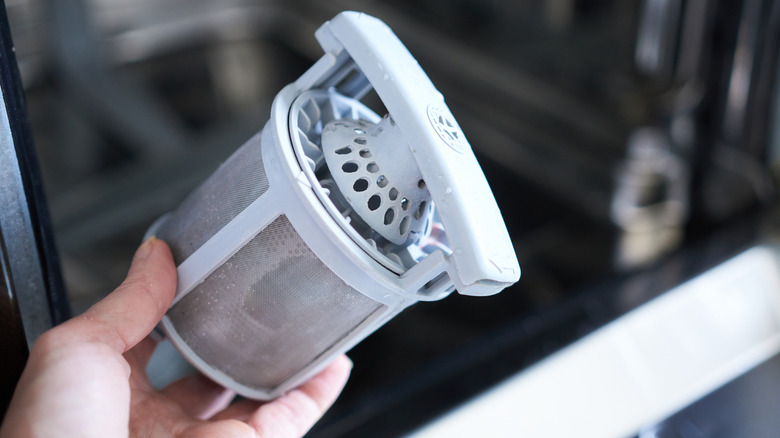
Much of a dishwasher's lifespan (KitchenAid or otherwise) depends on how you treat it. Water quality matters. If you live somewhere with hard water (water with lots of minerals), those minerals build up inside and gum up the dishwasher while also leaving your glassware cloudy. So, getting a dishwasher with a water softener (some KitchenAid models have this built in) or a rinse aid made for hard water is a smart idea. Keeping the filter maintained is another essential — a dirty filter is a dishwasher mistake that can leave your cookware filthy. KitchenAid's own product help site recommends cleaning it monthly, or every two weeks if you're running the dishwasher daily. You can soak it if it's hard to scrub the gunk out.
Another way to keep things functioning is to pay attention to the detergent. Too much can make the dishwasher overflow with suds, which has a knock-on effect of corroding the appliance's parts and blocking water flow. For this reason, KitchenAid suggests using tablets where you can't accidentally dump in too much. Perhaps surprisingly, the way you load your dishwasher could also impact its lifespan. With KitchenAid machines, the issue is typically the uppermost rack. If anything here blocks the upper spray arm, the pump will have to work harder, which wears it down faster.
While it's no guarantee, these steps can help you avoid premature repairs. Speaking of which, if your KitchenAid dishwasher is malfunctioning, it's usually worth getting it repaired if it's under 11 years old. If it's any older, it may be wiser to get a new one rather than spend any money on costly repairs.