

What's The Average Lifespan Of A KitchenAid Stand Mixer?
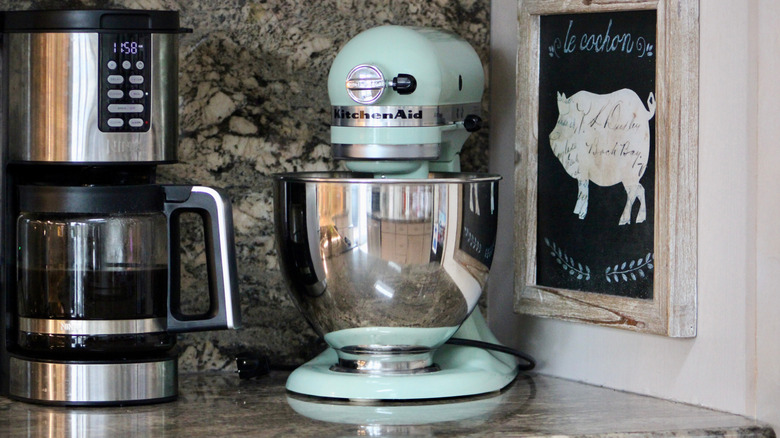
KitchenAid stand mixers are sometimes held up as one of the best options on the market for home bakers, although at around $350 for the cheapest model and over $1,000 for the upper end, you'll want to be sure that it'll last a while. Of course, the lifespan inevitably varies based on factors like how often and intensely you use it, so it's impossible to give one single, universally accurate answer. However, we can make an educated estimate.
Let's start with what the company says. Unfortunately, KitchenAid and parent company Whirlpool don't seem to have publicly indicated any expected lifespan. For what it's worth, the brand offers a one-year warranty under which you can get your mixer replaced if there are defects, but this shouldn't be interpreted as a sign that it will only last, say, one and a half years. (That said, it may be worth giving the mixer a decent workout early on so you can use the warranty in case there are any problems.)
The reality is that the appliance should last much longer: Based on consumer reports, it seems that you can get an average of 10 to 15 years of mixing out of your KitchenAid. Some report getting 20 years or even more out of it when it's well looked after. If you're a frequent user, the lifespan could be shorter, especially for those using it for lots of kneading (say, for bread or pizza dough). The model can also have an impact: The upper-end Professional and Artisan models have metal components that last longer (and an Ina Garten stamp of approval), while the plastic and nylon in entry-level Classic models may wear out faster.
Stretching your KitchenAid's lifespan
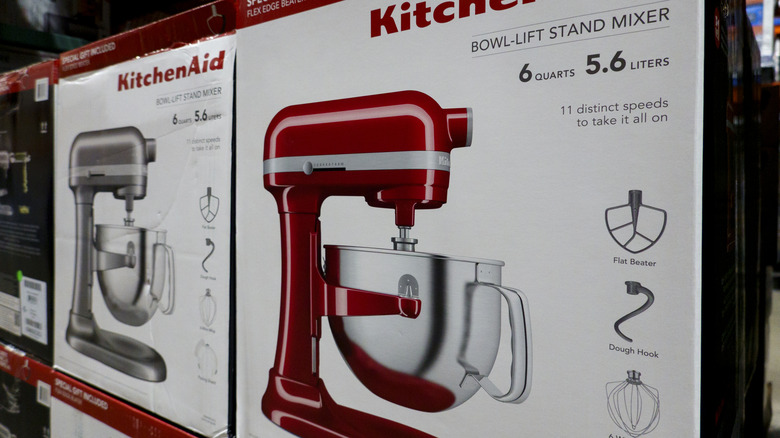
If you want your KitchenAid stand mixer to last past that 15- or even 20-year mark, you'll probably need to be at least a little attentive to its needs. Be aware of the appliance's internal grease: Although KitchenAid claims they have enough to last a lifetime, it can separate or even leak if you're not careful. To safeguard against this, avoid storing the mixer on its side, running it too long without giving it a chance to cool down, or using it too infrequently. It can also happen if you live in a hot climate. So, if you think the machine seems to be in its dying throes (for example, mixing more slowly or sounding janky), getting it re-greased may do the trick and save you buying a new one.
Grease aside, you can help extend its lifespan by following some pretty typical guidelines. Be sure to clean the mixer after every use, don't push it too hard (a good example would be mixing thick or heavy doughs for long periods — say, over 10 minutes at a time), and don't run it at high speeds unnecessarily. Finally, know that if something breaks, it may be cheaper to pay for the mixer to be repaired. Some reports suggest that even vintage appliances can be fixed up to be as good as new for less than the cost of purchasing a new one (with the bonus good feeling from not throwing anything away unnecessarily).