

5 Disadvantages Of An Ice Maker In Your Fridge
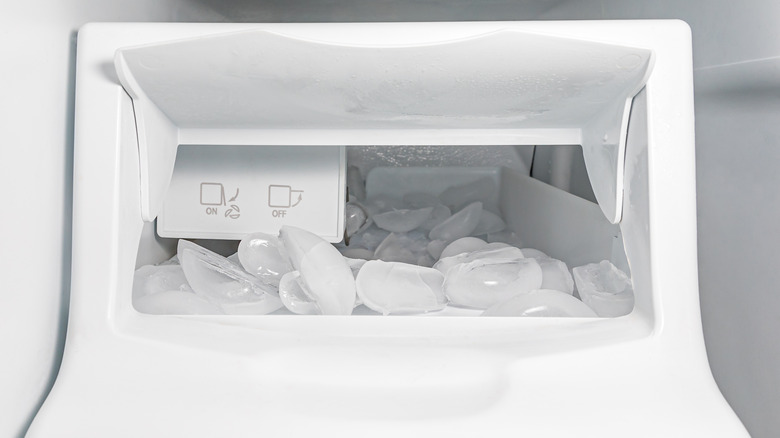
When it's time to shop for a new refrigerator, you've got a ton of decisions to make. In addition to setting a budget for your purchase and choosing a brand that you trust, you'll also need to decide whether you want a French door style, side-by-side doors, a top or bottom freezer, and a built-in ice maker. While the idea of a built-in ice maker sounds smart at first, there are a few things you'll want to consider before you decide to go with a refrigerator model that churns out ice cubes on demand.
Here, we'll take a look at some of the reasons why you should think twice before you decide to purchase a refrigerator that comes with a built-in ice maker. In a world where convenience is king, many (understandably) gravitate toward this option, but there are several reasons why it's not a great idea. From higher initial costs to more frequent repairs to smelly ice cubes (yuck, we know), keep the following potential issues in mind when you're browsing for a new fridge and are trying to decide whether a built-in ice maker is the right choice for your kitchen.
Higher costs from the get-go
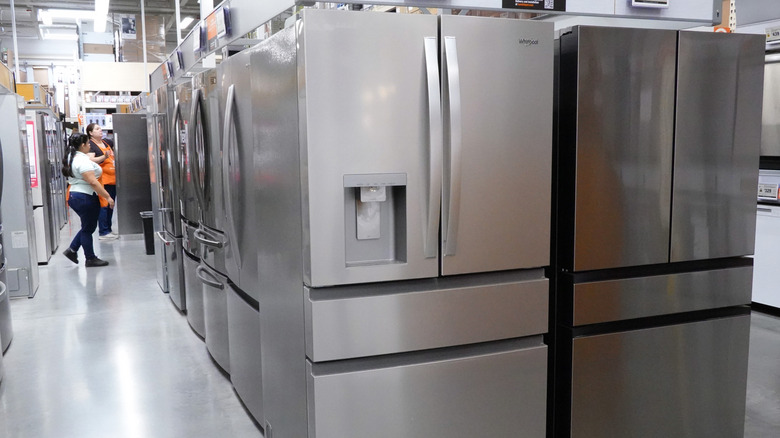
While refrigerators with a built-in ice maker can offer convenience, they're typically more expensive than their no-frills counterparts. You may pay a higher installation cost if your new refrigerator has a built-in ice maker, as getting it up and running isn't as simple as plugging it in and letting it cool down. Your new refrigerator will need to be connected to a water line. If you don't have an easy-to-access water line connection near your fridge, you may need to hire a plumber to create an access point for water to get to your fridge. In many cases, in-fridge ice makers aren't a standalone feature — your fridge may also filter the water before it begins the ice-making process. This means you'll need to pay for replacement filters over time to ensure that the ice you're getting from your fridge (as well as the water from the water dispenser, if it has one) is clean.
In addition to a higher up-front cost, choosing a refrigerator with an ice maker may shorten it's overall lifespan. The more components your refrigerator has, the more components can break and cause issues (more on repairs and potential leaks in a moment). While convenience may outweigh a potentially shorter lifespan, it can be an important factor to consider if you want your new refrigerator to last as long as possible.
Loss of storage space

We've all been there — playing fridge Tetris to try to figure out how to make the week's groceries fit perfectly (without overcrowding your fridge, of course — it's one of the storage mistakes that can ruin your food). When you purchase a fridge with a built-in ice maker, you're giving up quite a bit of valuable storage space, which can make it harder to keep your fridge fully stocked. Exactly where you'll lose storage space depends on the model of your fridge.
In some cases, the components of the ice maker (and the bin that stores ice cubes) is housed entirely in the freezer, which can make it hard to stock up on bulk frozen items due to a lack of space. In other cases, ice makers take up quite a bit of space from the top shelf of the refrigerator, making it tougher to store non-frozen items. While some area is going to be taken up by ice cube trays if you decide to go the non-automatic route, they often occupy far less space than an entire in-refrigerator ice maker. If your refrigerator is typically packed but you have counter space to spare, it may also make sense to purchase an automatic countertop ice maker.
Ice cubes might smell (and taste) like the food in your fridge
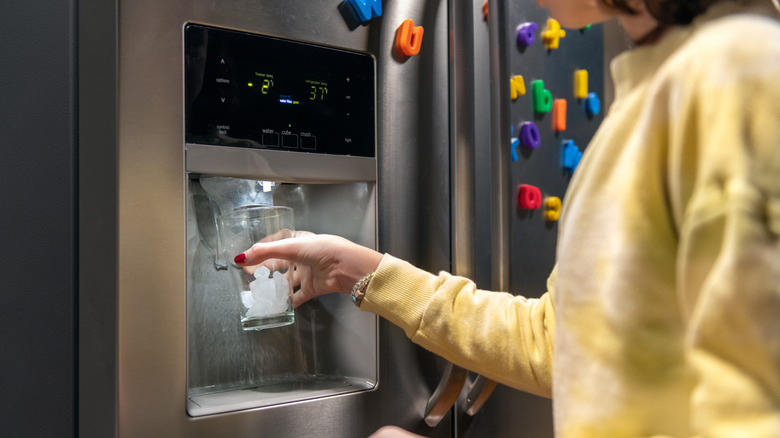
If you have a built-in ice maker, you may have noticed, from time to time, that the ice doesn't exactly smell or taste fresh. You're not imagining it — the ice in your freezer can actually pick up odors (and tastes) from the food in your fridge. In many refrigerators (those with a single evaporator system, if you want to get technical), cold air moves back and forth between the fridge and the freezer. If you have particularly strong-smelling foods in your fridge, you may find that the ice from the ice maker in your freezer begins to smell and/or taste like your leftovers. While you can solve this by choosing a refrigerator with a double evaporator system, these are typically more pricey than single evaporator refrigerators.
In addition to picking up smells (and tastes) from the rest of your refrigerator, ice makers can easily become filthy. While cleaning your in-fridge ice maker every now and then isn't the end of the world, it's certainly a bit of a hassle — and there's more to it than simply washing an ice cube tray and an ice bin. You'll need to unplug your fridge and wipe down the components of the ice maker with a mix of water and vinegar, and you'll want to go through this process every few weeks to keep your ice maker clean.
Potential for leaks — which also means potential for mold growth
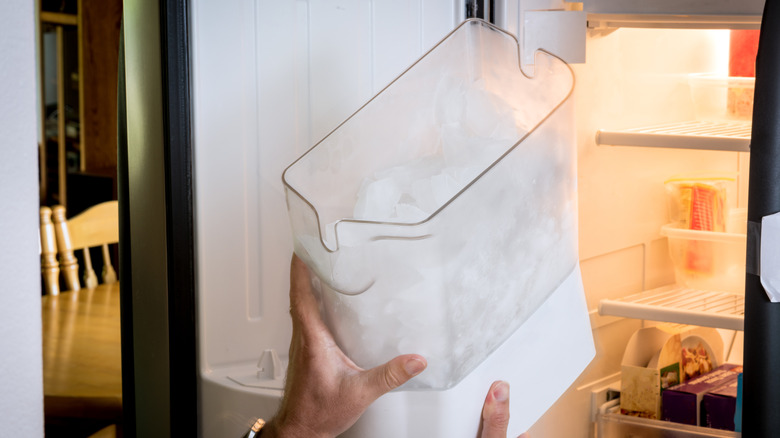
If you've noticed that your fridge is leaking, you should definitely check your ice maker first — there's a good chance it's responsible for the puddle on the floor. There are several issues that can cause leaks from your built-in ice maker. As mentioned, your ice maker gets water from your home's water line. If the connection isn't rock-solid, leaks may occur. Other potential leak-causing issues: the defrost drain can also become blocked, the fill cup (where the water makes its way from your house's main line to the ice tray to freeze) may become misaligned, or ice may become jammed up in the path between the ice maker and the dispenser.
While a large leak is quickly noticeable and demands attention, smaller leaks may not be so obvious. If you have a small leak, the concerns are twofold: you might develop water damage behind or underneath your fridge, and mold could grow as the moisture sits. While it's a good idea to take a look behind your fridge from time to time, it's easy to go weeks — or even months — without noticing a small leak in the back of your fridge, especially if you tend to put off cleaning your ice maker.
Potential for major repair costs
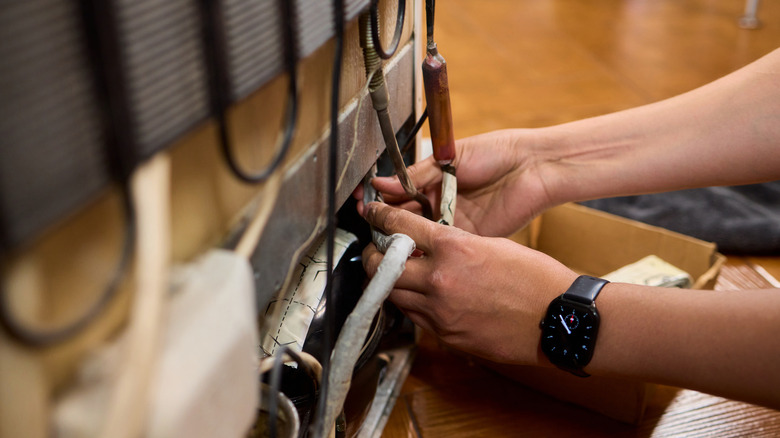
Finally, repair costs for a built-in ice maker can cost a pretty penny. From water connection issues to drain blockages to a problematic water inlet valve, there are a ton of things that can go wrong. According to Angi, you can expect to pay anywhere between $75 and $660 to get your ice maker repaired (of course, this can vary based on location and the nature of the repair). You might want to factor in repair costs (along with water filter costs, as well as the higher initial price of a fridge with a built-in ice maker, plus the cost of a double evaporator system, if you decide to go that route) when calculating the true cost of a fridge with an ice maker.
The bottom line: If you absolutely need the convenience of a built-in ice maker in your fridge, it's smart to know the risks — and potential costs — associated with having ice on-demand. In many cases, using ice cube trays or getting a countertop ice maker that you could pull out when necessary can be a better fit. If you do decide to go with a built-in ice maker, be sure to clean it regularly and pull out your fridge from time to time to check for leaks.