

Russet Or Yukon Gold: Which Variety To Use For Your Steakhouse-Style Mashed Potatoes
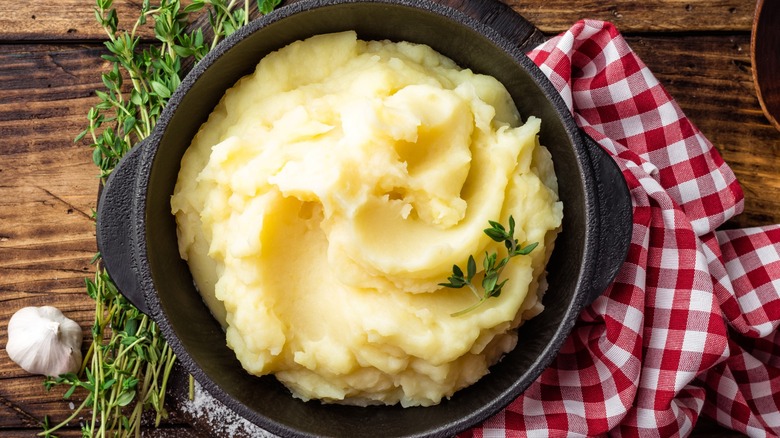
When you go to a steakhouse, it's not just about the steak — the sides are a major part of your dining experience, and it's tough to beat classic steakhouse-style mashed potatoes. If you're trying to recreate that steakhouse experience in your home, one of the reasons your version might miss the mark: You're using the wrong potatoes. Michael Senich, Longhorn Steakhouse vice president and corporate executive chef, talked exclusively with Chowhound about why picking the right potatoes is key to creating steakhouse-style mashed potatoes in your kitchen. According to Senich, there are two options: russets or Yukon Golds, and which one you choose depends on what texture you're looking for.
"The hallmarks of great steakhouse mashed potatoes are a light, fluffy texture and rich, buttery flavor. I prefer russet potatoes because they create that classic consistency," Senich says. If you're not a fan of the fluffy russet potato texture, fear not — they aren't your only option, according to Senich. "Yukon Golds are equally delicious and offer a naturally creamier consistency with richer flavor. It really comes down to personal preference and the texture you're trying to achieve." Understanding the difference between waxy and starchy potatoes can help you decide which type is the best fit for your taste buds. Russets are on the starchy side, but Yukon Golds lean a little more waxy than those, kind of a hybrid between the two textures, creating the creamy consistency Senich mentioned. No matter what type of potato you choose, you'll need to put in a bit of work to create steakhouse-style flavor and texture, according to Senich.
How to create steakhouse-style mashed potatoes at home
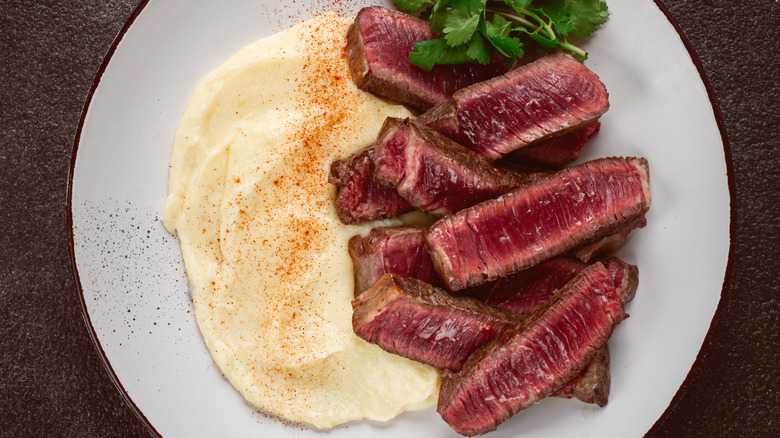
Now that you know the difference your potato choice can make in consistency and flavor, it's time to think about other factors that can help you make steakhouse-style mashed potatoes. First, pick up a food mill or potato ricer if you don't already have one. "It creates a smooth, fluffy texture and helps avoid overmixing," says Michael Senich of Longhorn Steakhouse.
Additionally, if you've noticed that restaurant mashed potatoes are much tastier than the ones you make at home, a lack of butter might be to blame. Senich recommends hitting your potatoes with a heavy dose of the good stuff. "I like about 8 ounces for every 2 pounds of potatoes," he says. One of the more important tips you need when cooking mashed potatoes: Warm the butter and milk first. "One of my favorite tips is to warm the milk and butter together before adding them to the potatoes, which helps maintain a smooth texture and keeps them hotter longer," says Senich.
After you've added your warm dairy, it's time to season your mashed potatoes to perfection. Senich advises using white pepper with your salt. White pepper doesn't show up as black flecks in your silky smooth potatoes and lends an earthier flavor to the finished dish. "[T]he result is mashed potatoes that are creamy, comforting, and indulgent, a classic choice for the perfect complement to a great steak" — whether you choose russets or Yukon Gold.