

For Unforgettable Hot Dogs, Make Them West Virginia Style (They're A Must-Try Appalachian Delicacy)
You may think of the hot dog as a cookout staple, but historically, it's been a perfect blue-collar meal with regional variations usually innovated by the immigrant population of a community at a point in time. In the early 1900s, what became the West Virginia dog — a dog crowned with chili, coleslaw, onions, and mustard — was sold at hot dog stands mostly run by Greek or Italian immigrants, and the customers were largely working-class individuals coming from nearby mines or factories with a tight window for a lunch break. The dog that evolved from that community provided sustenance to make it through tough jobs while remaining a quick bite.
The West Virginia dog's tasty amalgamation of ingredients hails from different origins. Chili may have started as cowboy food along the Texas and Mexico border, but Greek immigrants to the North also created their own version of it, reminiscent of Macedonian lamb stews, that's today most recognized as Cincinnati chili. With many West Virginia hot dog stand owners hailing from Greece, chili on a hot dog made perfect sense. Meanwhile, people in the Appalachian region were used to growing vegetables locally so European immigrants could easily make coleslaw as they did before. The chili, colloquially referred to as the "sauce," and the coleslaw work together to create a refreshing — and uniquely West Virginian — experience. The heat from the chili is tamped down by the cool, tangy taste of fresh coleslaw. For the record, the sauce tends to be a thinner consistency than a traditional bowl of chili, though you certainly can make it with a hearty ladle of homemade chili if you prefer.
You don't have to go to West Virginia to make your own
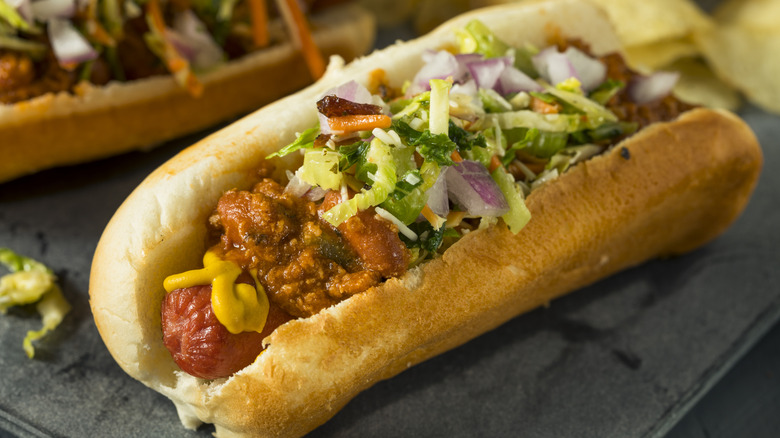
There's a long list of hot dog toppings; it's part of what makes hot dogs great. Coleslaw, relish, even ketchup (no judgment) are used to match the tastes of each hot dog lover. West Virginians have strong beliefs about the ingredients and even the order in which they are added, but these directions should be safe to use at home. Start by warming hot dog buns and cooking your dogs properly before putting them together. Then apply mustard on both sides of the bun, and follow it with onions, chili (or "sauce"), and a helping of coleslaw to top it. Go to your average hot dog stand in the southern parts of West Virginia and order a dog with everything, and this is what you're likely to get. The story is a little different as you head north and cross the "West Virginia slaw line."
The preeminent belief is that because the northern part of West Virginia had a more dominant Italian immigrant community, coleslaw didn't really catch on as it did in the southern part of the state. This created the invisible slaw line that cuts roughly through the center of West Virginia. That's not to say it's impossible to get coleslaw when you're in the northern panhandle there, as many places have it available upon request. Ultimately, there are so many hot dog styles that there's no universal dog, and your favorite is just that: yours. But if your goal is to recreate this ultimate blend of regional tastes in one Appalachian delicacy, you gotta use some coleslaw.