

How Did Cowboys' Chili On The Trail Differ From The Classic Comfort Dinner We Know Today?
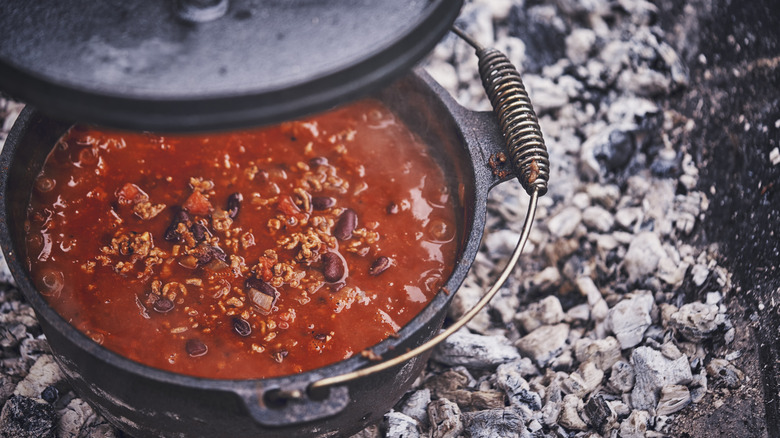
When thinking of the Old West, you may think a free saloon lunch was a meal deal you couldn't pass up, but the quality of meals you'd get were a complete gamble. Cowboys instead opted for making their own meals on the trail, including chili. There is one big difference between a bowl of cowboys' chili from the Old West and today's version, though: the meat. While most chili recipes today begin with ground beef, cowboys on the trail used chunks of meat, usually a tough and inexpensive one. Chuck wagon cooks had to rely on either fresh game or meats they could preserve. Ground beef was just not an option.
To make the meat edible and flavorful, the chunks would simmer with a blend of ground-up chiles, onions, and maybe some lard for added fat — a much simpler preparation compared to modern chili which features everything from tomatoes and broth to an whole array of seasonings. This became known as a bowl of red. It also lacked elaborate garnishes like sour cream and cheese which are popular today.
As for the cooking practice of stewing meat in chiles, tribes all across the Americas prepared meals this way for thousands of years. As cowboys in the 1800s traveled west during United States expansion, they likely learned about chili from the Mexican people of the time. One story that came out of the Mexican-American War was that United States soldiers came upon bowls of chili after attacking an overnight camp of Mexican soldiers. This could explain also explain why chili in the Old West was often served with tortillas.
Chili in the Old West
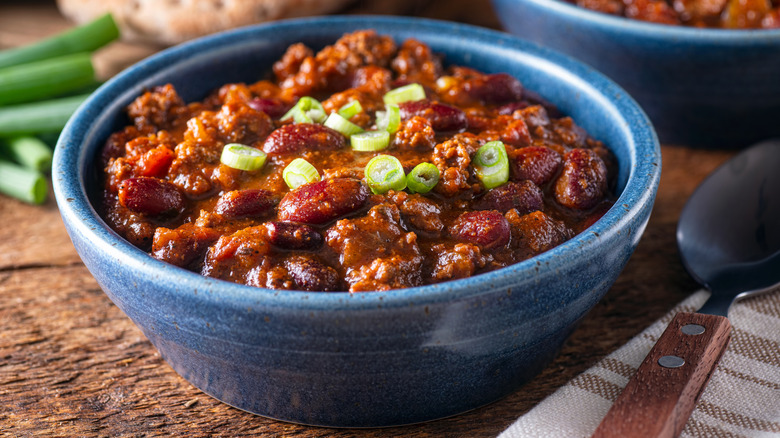
Tortillas are a staple of Latin American cuisine, and Texas was part of Mexico until 1836. One frontier town of the Old West was San Antonio. And it was there where Mexican women who became known as the Chili Queens prepared chili con carne, along with other meals like enchiladas and tamales, in their homes early in the morning to then transport and sell in the plazas around town. Along with the bowl of chili, patrons (which included hungry cowboys) would have sides that included tortillas and the ever-divisive beans. Today's chili purists, plus the International Chili Society and the Chili Appreciation Society International say beans have no place in chili, despite several recipes of the 1800s and early 1900s saying the contrary.
Life in the Old West was a daily grind. It built tough people who drank rotgut whiskey and ate hard meats. But like countless other cultures around the world, people found ways to turn what they had available into hearty meals we now consider comfort food. Chili is one of the best-known American examples. Its origins are indigenous, cowboy culture adopted it, and thrived on it. Today, chili is the official state dish of Texas and some would argue the official food of the nation. Whether you prefer the cowboy version with hunks of meat and tortillas, the modern recipe with ground beef and toppings, or your own variation with secret ingredients, you can never go wrong with a hearty bowl of chili.