

The Creamy Condiment In Your Fridge You Should Replace More Often Than You Think
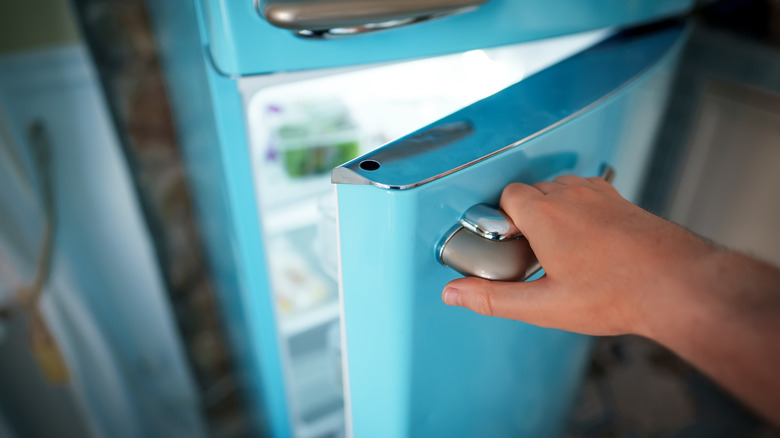
If you leave mayo in the fridge for months until you use it up, you're potentially making a food safety error. Food safety recommendations suggest that an opened jar of commercially produced mayo is good for around two to three months. The USDA gives a more cautious two-month limit.
The "best by" dates may contribute to confusion about mayo's shelf life. These dates are less about food safety and more about flagging when mayo will have peak flavor and texture. The two-month clock really starts ticking once you open the mayo, regardless of what the date says. Even mayo giant Hellman's suggests that you can partially ignore those dates, noting that unopened mayo is fine for a few months past them. What's more important is counting the two months from when the jar is opened (writing the date you open your mayo on the jar can help you keep track). Unopened mayo is longer-lasting and can be stored outside the refrigerator; its shelf life is up to six months.
The shelf life can also vary based on how you handle your mayo. You should try to keep it in the refrigerator as much as possible: Leave it out for more than four hours, and it might not be safe to eat anymore. If you're dipping utensils into the mayo that have had contact with other food (especially if there was raw meat around), mayo can go bad faster as you've potentially introduced other microbes. That means you may have to look out for signs of your mayo going bad.
Telling when mayo has gone bad
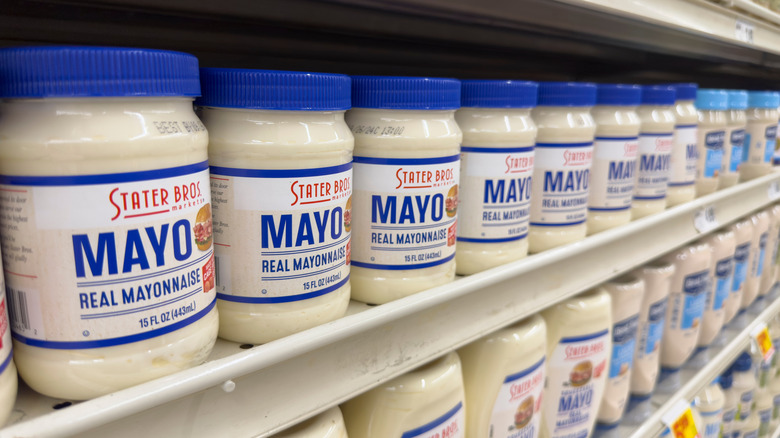
There are a few signs that your mayo should be headed for the trash. The most obvious is mold: It's arguably not super common as the acid and preservatives in mayo slow down bacterial growth, but it can happen. If it does, you can't just scrape out the moldy parts and keep the rest: The whole jar should get tossed.
The other signs may require closer attention. If the mayo is any darker than its standard white-to-pale-yellow shade, it's well past its prime. The sniff test can help, too. Mayo should have a pretty mild smell, maybe with a slight tanginess from the vinegar. If there's a rancid smell (which can be sharp, sour, and generally unpleasant), the fats may be breaking down and it's time to ditch it. Finally, consider the texture. If it's creamy, you're good to go, but separation, lumps, and pools of oil are all signs that the mayo has de-emulsified and won't be particularly nice.
There's one important caveat. Much of this advice is for store-bought mayo that has preservatives. Homemade mayo, while arguably tastier unless made with olive oil, is a more annoying situation. Without those additives, it will only last about a week in the fridge. Some sources cautiously say just a few days, others say you might be able to stretch it to two weeks. If you're unsure, you can look out for the same signs of spoilage as commercial mayo: discoloration, that rancid smell, and separation. If you're ever unsure, err on the side of caution and throw it away.