

What Exactly Does Food's 'Sell-By' Date Mean?
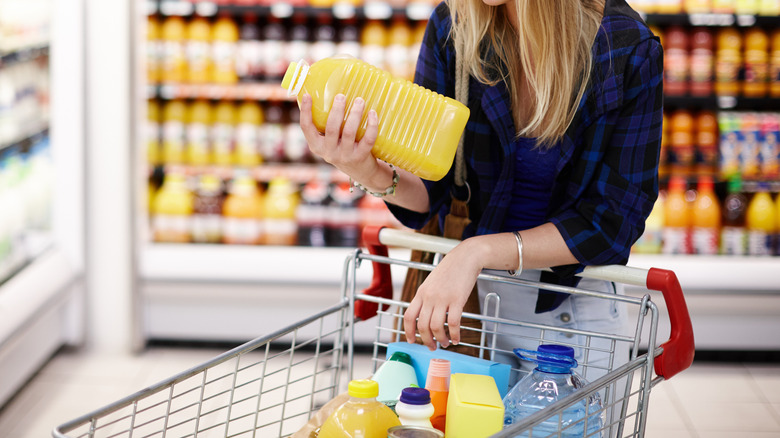
Figuring out how to decipher expiration dates, both open and closed, on food packaging can be pretty confusing. In addition to those dates, there's also the sell-by date, which many shoppers glance at and assume it marks the last day the food is safe to eat. This actually isn't the case, though, and misconceptions like this lead to perfectly good food being thrown out before it's spoiled. This is why understanding the sell-by date helps shoppers make better decisions when it comes to food waste.
The sell-by date, in reality, is primarily intended for sellers — not shoppers. It actually doesn't have anything to do with food safety, but rather exists to let the store know how long the food item should be displayed for sale. After this date, the quality of the food may begin to go downhill, but this doesn't necessarily mean it's not safe to eat. It just means that the food is past its peak, quality-wise, and is starting to deteriorate.
Should you still buy food past the sell-by date?
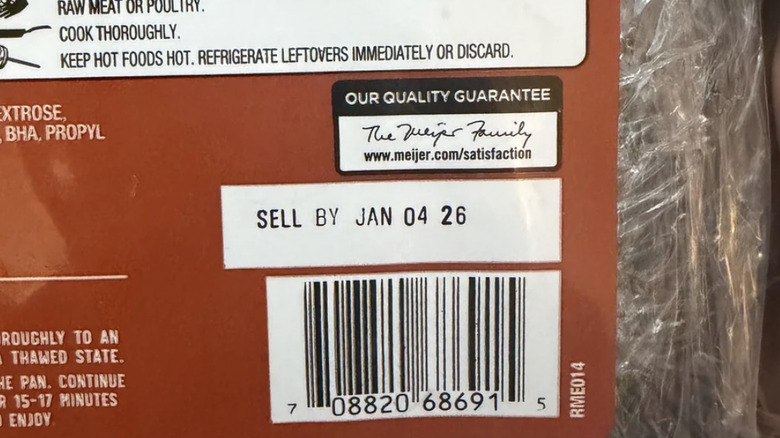
Despite the fact that the sell-by date is just meant for inventory purchases, it's still a good idea to not purchase food items that happen to remain on the shelves past this date. This is simply because there are just fresher options available that would be more well worth your money (and last longer in your kitchen). If you do find yourself needing to purchase a food item that is close to or past its sell-by date, it's not completely out of the question. Before purchasing, however, be sure to also double-check the other dates listed on the packaging, like the expiration, best-by, use-by dates for food quality and safety purposes. These will give you a more accurate idea of how long you as a consumer have before the food is no longer of good quality or safe to eat.
Additionally, there are some products that can last past their expiration date, like ground coffee (or foods that actually don't expire at all). Regardless, if one of these foods has an mold or off-putting smell to them, don't disregard your suspicions — mistakes do happen and dates on packaging could be wrong. And as a general rule, it's important to remember that all dates on food are assuming that the shopper handles and stores it correctly after purchase.