

Are Wrinkled Blueberries Safe To Eat? Here's What To Look Out For
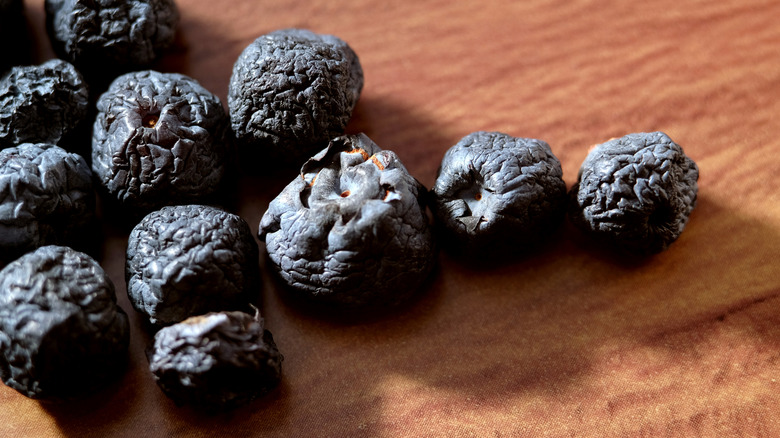
So your two-day old blueberries are a bit wrinkly and shriveled. They may not be pretty, but you don't necessarily need to throw them in the trash right away. A likely explanation is that they've simply lost moisture and dried up a bit. This won't make them any less safe to eat, it's just that the texture might not be ideal. It might be best to throw them into smoothies, pancakes, baked goods like pies, or anywhere else where the texture will be somewhat hidden (or completely blended), but depending your tolerance for uglier-looking fruit, you may not want to put them on top of your yogurt or use them to decorate a dessert.
Although dehydration is a likely explanation for your wrinkly berries, there's another potential factor to be aware of. The wrinkles can be an early sign of spoilage or a fungal disease called anthracnose that causes fruit rot. One expert suggestion is to separate the smooth berries from their wrinkled counterparts (the smooth ones should be fine to eat in this case). Then, keep an eye on the wrinkled ones: If they start to really sink into themselves or ooze liquid out of their stem, this is a sign of that undesirable fruit rot. If the wrinkles are concentrated on the "blossom" end of the fruit (the little divot on one end of the berry), it's another bad sign. An orange or pink slime on the berry's surface is also another red flag here. Overall, a little wrinkling on its own is fine, but if it's accompanied by other signs of deterioration, consider playing it safe and sending them to the compost.
Other signs of spoilage to know
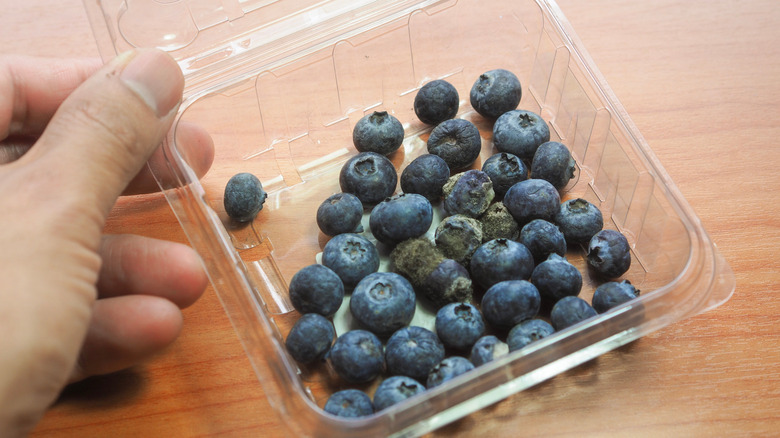
While wrinkled berries can be ambiguous, there are some other defects that should immediately make you trash your berries. Mold is the big one: Any fuzzy berries should be removed, as well as any that were in contact with them. This is because on berries, mold can extend into the fruit in a way you can't see. If you've got just one or two moldy berries in a big container, you won't lose everything: Just throw out the moldy berries and the ones that were touching them, though. You should rinse the remaining berries and keep an eye out for other defects like berries that are mushy or discolored.
Speaking of mushy berries, look out for them even if there's no mold, as they may be rotting (especially if there's any juice leaking out, or a sour smell). If you want to prevent this or mold from happening, you should avoid washing your berries until they're ready to eat: If you get them wet and leave them to sit, the moisture can speed up any decomposition or mold growth.
Finally, there's one false red flag to know with blueberries: If you see a pale, dusty sheen on the surface, that's actually not an issue. It's something called "bloom", and you may also see it on grapes and plums: It occurs naturally and actually serves to protect your berries. It works as a barrier against bacteria and insects, while also helping the berries retain moisture.