

This Simple Knife Technique Creates Clean Cuts In Dessert Every Time
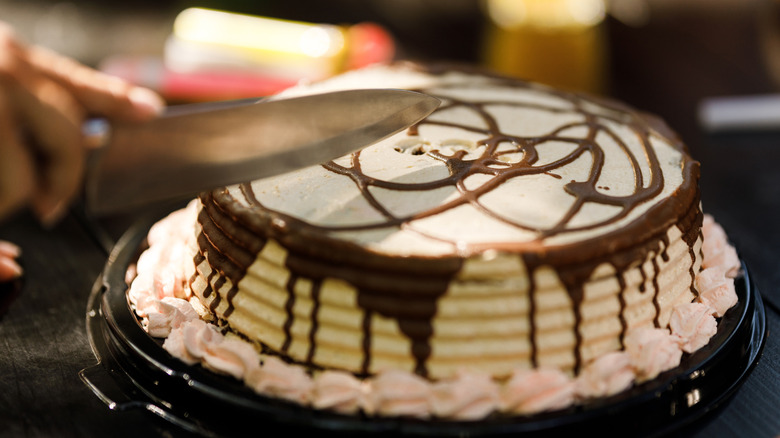
Whether just to punctuate the end of a meal or to celebrate a special occasion, it's hard to top a beautifully presented dessert. Though your slice of choice may vary, each piece is certainly made all the more enjoyable if the cuts are pristine and your plates come out looking picture-worthy. The key to this feat is giving your knife a quick coating of cooking spray to prevent crumbs and to keep fillings from sticking to it as you serve.
While your baked goods will no doubt taste just as delicious even if their edges are crumbly and the sides gooey, it is much more gratifying to serve something that looks just as good as it tastes. First, choose a tool that is suited to cutting sweets, like a thin serrated knife, which won't risk tearing or, worse, smashing the fruits of your labor. Then, a gentle mist of both sides of your knife will provide an even coating that will act as a lubricating barrier and allow you to deftly handle just about any type of dessert.
One pass should be enough to keep your slicing humming right along. If you do start to notice a bit of resistance, you can wipe off any crumbs and then give the knife another spray. Don't get overzealous with it, though, as you don't want the surface of the knife to accumulate a gunky spray buildup. Running your knife under hot water can also do the trick, but this works best with lighter cakes or ones that contain smooth fillings, like a mousse cake, and it is difficult to accomplish in situations like serving at a party or when you are outside.
Getting the most out of slicing with cooking spray
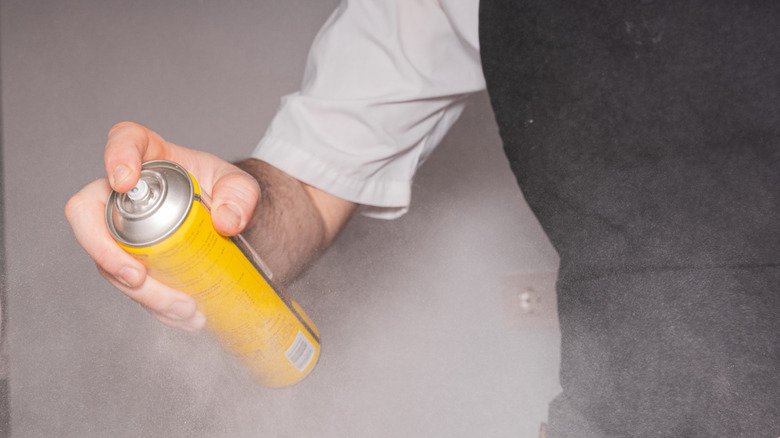
While giving your knife a douse in nonstick cooking spray is certain to level up the presentation of your homemade desserts, it also works with the store-bought variety. That being said, this trick is a lifesaver for cakes with gooey or fruit-filled layers, as well as sticky toppings like marshmallow fluff or delicate meringue. It also works well with denser treats like brownies or cheesecake.
You can certainly use the nonstick spray of your choice, but perhaps skip one with olive oil to avoid adding unwanted flavor. It's worth noting that while a quick wipe of a neutral cooking oil on your blade also works, nonstick spray performs particularly well as it contains an emulsifier (typically lecithin). This helps the coating cling evenly to the knife's surface rather than beading up.
Cooking spray doesn't only give you the edge when it comes to serving your treats. One of the secrets to better baking is that it comes in handy when whipping them up, too. The same principle that keeps the crumbs from adhering to your knife does wonders on measuring cups and spoons so that baking ingredients slide right off, making cleanup a breeze. One thing is for sure: by using nonstick spray on your serving knife, you may have more takers than you anticipated, because your guests won't be able to resist those tantalizing and precise plates.