

America's Oldest Brownie Recipe Didn't Include These 2 Common Ingredients
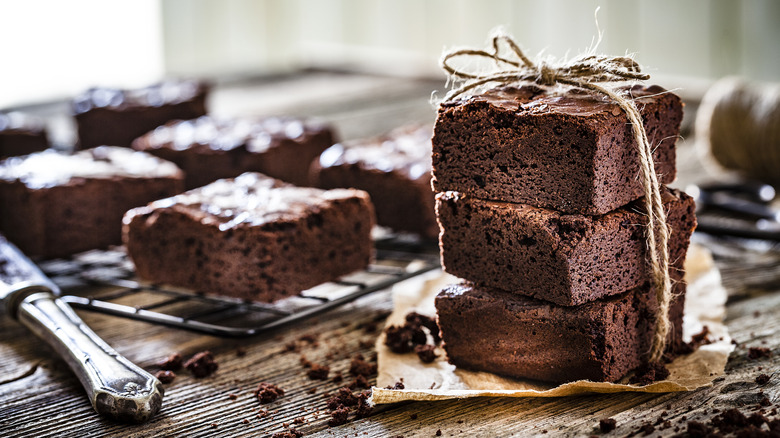
Vintage baking recipes allow us to take a look at the way our grandparents used to create desserts in the kitchen. There are certainly some forgotten vintage dessert fads that deserve a comeback, but other homemade sweet treats have stood the test of time — like brownies. While a fudgy, chocolaty prototype was developed in 1893 at the Palmer House Kitchen in Chicago, the first modern-day brownie recipe to gain traction came from Fannie Merritt Farmer's "The Boston Cooking-School Cookbook," in 1906.
Her recipe certainly included plenty of familiar brownie ingredients, such as sugar, butter, flour, an egg, and unsweetened chocolate. Two key players in today's brownie recipes, baking powder and salt, didn't make the cut. Baking powder helps baked goods rise, and a pinch of salt works to enhance sweet flavors, so it's not surprising that Farmer's brownies typically turn out a little differently from the modern-day version.
According to some home bakers on Reddit who gave the recipe a try, the lack of baking powder created a super-dense result. Another poster who made the recipe said that the brownies turned out thin, which makes sense given the lack of baking powder. If you're interested in whipping up a batch of these no-baking-powder, no-salt brownies, there are a few things you'll want to keep in mind so you can manage your expectations about how your brownies will likely turn out.
How nixing the baking powder and salt can affect baked goods
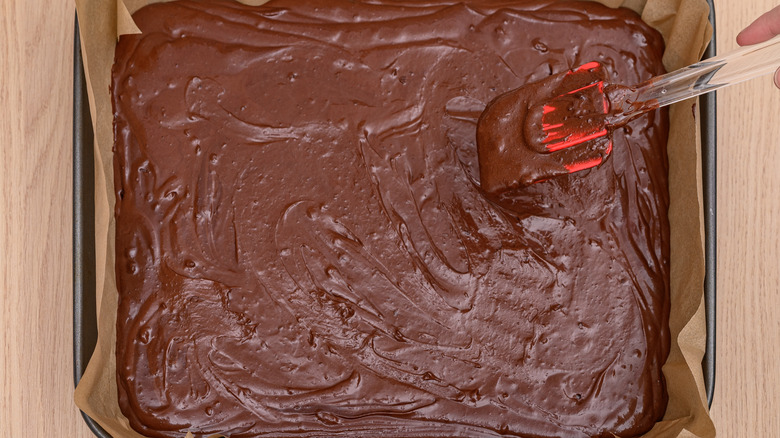
Baking powder and salt are two ingredients that most of us can't really taste, but they can make a serious difference in how your brownie recipe turns out. Baking powder helps baked goods rise, creating the fluffy lift that occurs in cakes, brownies, and certain breads. Usually, baking powder contains a few separate components: a leavening agent (baking powder), an acid to activate the leavening agent (usually cream of tartar), and a filler (such as cornstarch). Pro tip, while we're on the subject: if you ever need to substitute baking soda for baking powder, you can make it work by adding an acid, like cream of tartar or buttermilk. If you leave the baking powder out of your brownie recipe, you'll likely notice less of a lift, which could help create a fudgier end result.
Salt's role in brownie recipes is twofold. It both boosts the taste of your brownies (by helping to balance some of the sweetness from the sugar and chocolate) while also strengthening the gluten protein in your recipe (gluten is courtesy of the all-purpose flour), which can contribute to the chewy texture that helps make brownies oh-so-delicious. If you decide to give the old-school recipe a go, know that they'll likely be pretty different from the brownies you typically make, but it can be worth a try to get a taste of what it was like to enjoy dessert at the turn of the 20th century.