

This Little-Known Midwestern Comfort Food Was Made For Cold Nights
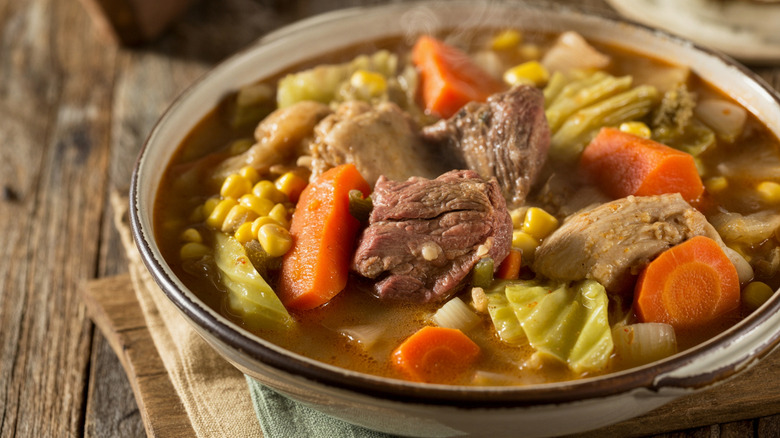
If you're not from Wisconsin, there's a good chance you've never heard of booyah stew — but if the sound of a hearty, stick-to-your-ribs stew sounds appetizing, maybe it's time to get acquainted. It's a thick meat-and-vegetable stew associated with northeast Wisconsin (some recipes call it something like "Green Bay booyah") and has been cooked up in large batches for generations. On the meat side, it can mix chicken, beef, and pork, and then an array of vegetables like carrots, potatoes, celery, peas, and tomatoes round it out. The final product is somewhere between chicken soup and beef stew, but it skews rich because the meats are browned and then simmered for hours to develop a deep savory flavor.
Booyah stew is thought to have come from Belgian immigrants (specifically, the French-speaking Walloons of southern Belgium), who already had this kind of brothy stew in their culinary repertoire when they settled in northeastern Wisconsin in the mid-1800s. The name is a mystery, though: A go-to theory is that it's a jumbled form of the French "bouillon" (for broth), although some associate it with a comparable Walloon word. One hard-to-verify origin story goes that the organizer of a school fundraiser in the early 1900s tried to spell "bouillon" for a journalist, and "booyah" was what came out. Some versions pin responsibility on the journalist, but in any case, it was printed in the newspaper, and the name stuck. It's also casually called "Belgian penicillin", alluding to its reputation as a dish for those feeling run-down or sick in the long Wisconsin winter, not unlike the idea of chicken soup for colds and flu.
Tips for making booyah stew
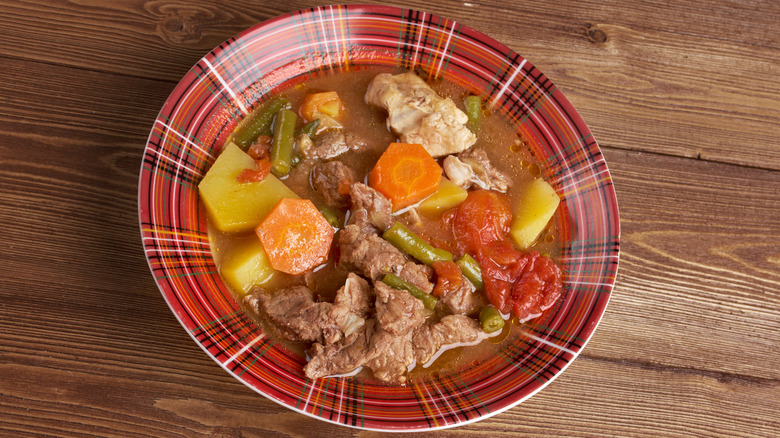
There's no universally accepted booyah stew recipe, so there's no "right" way to make it: Some versions go heavy on the chicken, while others opt for a balance of meats or even leave one like pork out altogether. Whether you include herbs is debatable: Some versions stick to meat and veggies; some call for additions like bay leaf, rosemary, and thyme. Cabbage is another touchy subject. Some variations include it, but others (perhaps questionably) believe that featuring it makes the soup difficult to store. This matters because booyah is typically made in enormous quantities (like over 10 gallons at a time), so you'll want a crowd to share it with, or a lot of freezer space.
The dish's flexibility extends to the cooking method, too. The rough version is to brown the stew meat and let it simmer for a long time. Some renditions cook the meat mostly on its own, adding vegetables towards the end (sometimes the meat broth gets strained); others throw most of the ingredients in before the hours-long simmer. Whatever the order, it's traditionally cooked in a large kettle over an open fire, and it's the sort of thing a bunch of people will cook together, for example for church or school fundraisers.
It's hardly the only American stew to have this communal vibe: Kentucky's burgoo stew has a similarly meaty approach but a more tomato-heavy broth (it also sometimes uses game meat). In Georgia, Brunswick stew is loosely comparable and also relies on tomatoes and corn. One thing's for sure, though: Booyah stew is a Wisconsin original.