

The Best Time To Use The Flat Side Of Your Meat Mallet
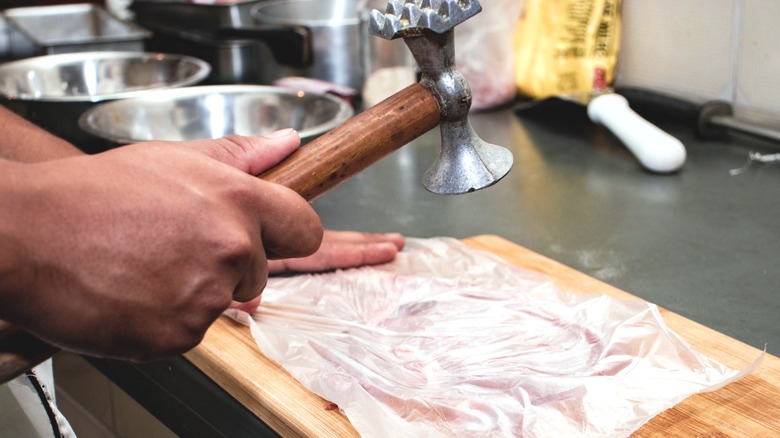
Some kitchen gadgets can be intimidating. If you don't know what they're for or how to use them properly, you could be missing out. The meat mallet is a great example of a potentially vexing device. It looks like a weapon that can do some damage. But given the tool's purpose and that the spiky side looks far more efficient, you may wonder why they'd bother giving you a flat side at all. But each side serves a purpose, and the flat side's purpose has more to do with efficient cooking than tender meat.
While the textured side is great for tenderizing tough cuts of beef, wild game, and sometimes pork chops, that side will tear more delicate cuts of meat. A gentler approach is necessary if you need to transform tender cuts like chicken breasts or pork cutlets into thinner, wider pieces for a dish that needs to cook quickly and evenly, like fried pork schnitzel, or chicken cordon bleu, which requires stuffing and rolling up the meat. That's where the flat side of the mallet comes in handy. Gently pounding the meat with the flat side slowly flattens it to a uniform thickness that cooks evenly and rolls well. You want to work from the center outward using even pressure to get your desired thickness and wide surface area.
The flat side of a meat mallet is the ideal tool because it allows you to slowly apply enough force to reshape the cut without doing as much damage as the spikes do. It breaks down the fibers just enough to affect the shape and texture while keeping the meat intact.
Tips for using the flat side of your mallet like a pro
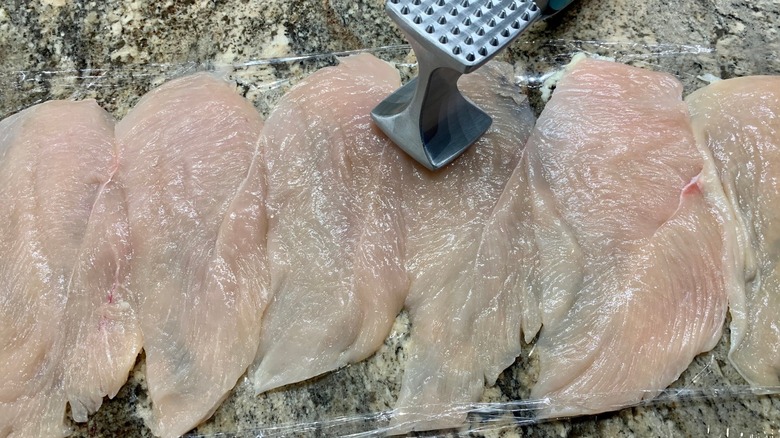
You can get your meat tenderized at many specialty butcher shops, but with a little finesse, the flat side of your meat mallet can work wonders, and being able to do it yourself properly is a useful skill to have. With a little finesse, the flat side of your meat mallet can work wonders. And while I will unabashedly admit to using both sides of my meat mallet to break up ice on occasion, you need a little more restraint when it comes to poultry. Even though you're using the flat side of the mallet, you still want to work gently (from the center) because too much pressure will cause the meat to tear.
A helpful trick is to place the meat on a cutting board covered with plastic wrap and cover the cut with another piece of plastic wrap. Make sure the plastic wrap extends beyond the edges of the meat so it keeps up with the expanding surface area as you pound it. This helps keep the mess (and cross-contamination) to a minimum by preventing any splattering and keeps the meat from sticking to the mallet, which can cause tearing.
That flat side of the mallet also has a few hidden tricks. You can use it to break nut shells open, smash bars of chocolate for baking or decorating, flatten spuds for crispy smashed potatoes, pulverize crackers for a crunchy mac and cheese topping or graham cracker crust, or crush fresh garlic.