

How Some Home Depot Shoppers Are Buying Kitchen Sinks For $0.01
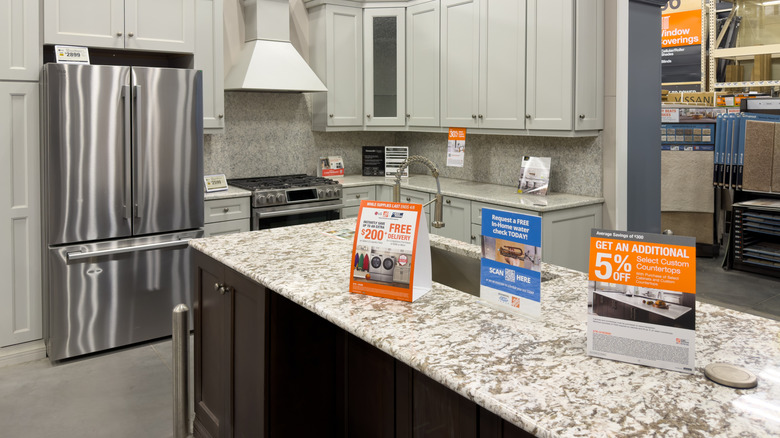
Let's say you're browsing the aisles of Home Depot, imagining your dream kitchen in a budget-free world. Suddenly, you see a price tag on a gorgeous sink that reads just a penny. You think it has to be a mistake, so you take it to the checkout to find out — and you learn that it's actually real. While it's a little tough to believe, this situation is actually happening to some Home Depot shoppers. Here, we're going to take a look at why penny pricing happens, how people are finding penny items (and whether it's even worth looking), and whether customers are allowed to purchase Home Depot's penny items.
We haven't found any official information from Home Depot on why penny deals happen, but we were able to get some insight from people claiming to be Home Depot employees who talked about penny deals on social media. According to these social media posts, when an item sits on clearance through its final markdown cycle without selling, Home Depot's pricing system marks its price as $0.01. This one cent price serves as an internal inventory strategy, keeping the item on the store's books until employees can remove it from the system and send it to receiving for disposal. Sometimes, however, employees miss removing these unsellable products from the sales floor. This can result in items — sometimes big-ticket items, like kitchen sinks (perhaps even double kitchen sinks, if you're lucky) — sitting on the shelf at Home Depot for customers to find.
How Home Depot customers are finding penny kitchen sinks and other items
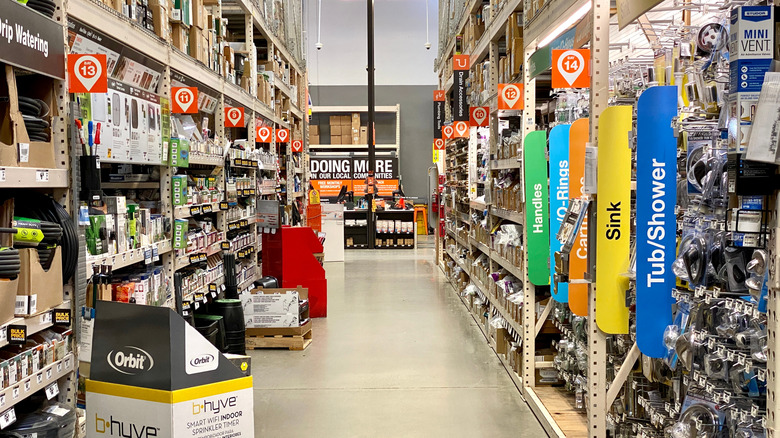
There are a few different ways Home Depot customers are locating penny items in stores. We want to be clear — we're speculating here, as Home Depot hasn't put out any information on penny items. Simply checking the price tag is one way to start. Look for clearance items that have prices ending in .02, .03, or .04, which some shoppers believe signals that a product is nearing its final markdown phase. These numbers presumably indicate the number of weeks until the item's final markdown. That item might eventually get the $0.01 label, so you can keep your eyes on it. Discount shopping apps like Deal Soldier and Hidden Clearances can also help alert you to penny deals.
Knowing where to look in the store can also be important. Start with the clearance section, where you might also find deals on returned and unsold kitchen appliances, if your Home Depot has one. Some say that the items that are marked down to a penny are typically placed on higher shelves. We've also heard that end cap items can be a smart spot to look for penny deals.
Wherever you look, you'll want to open the Home Depot app on your phone, scan the barcode on the item itself (not the barcode next to the price on the shelf), then see whether you found a penny item on your phone (it should scan as a penny at the checkout as well). Penny deals are fairly rare, according to Home Depot employees on social media, so finding them is more of a fun treasure hunt than a reliable way to save cash.
If you find a penny item at Home Depot, can you actually buy it?
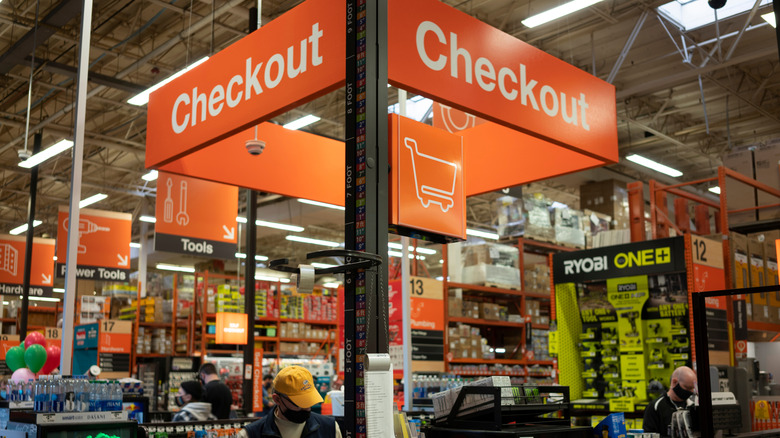
Often, things that seem too good to be true are just that, and penny items at Home Depot may fall into that category. Again, remember that penny items are meant to be taken off of store shelves, and if one slips through the cracks, it's likely a mistake. If you find a penny item, you may be able to simply take it up to the checkout and smile as you save money on your kitchen remodel.
Sometimes, however, this may not be the case. If you're trying to scan a penny item and a Home Depot employee tries to stop you from purchasing it at the penny price, the situation might escalate to a manager, and management might decide to refuse the sale. Some posters on Reddit who claim to be Home Depot employees say that the store's operating procedures dictate that they have to honor the price for one penny-priced item, but for any additional stock of the item after that, they should sell it to you at the item's last clearance price (rather than for a penny). While we can't say for sure whether that's truly the rule at every store — or whether you'll be able to take home a penny item that you find — you may get the deal of a lifetime if you try.