

Should You Use A Stand Mixer For Cake Batter?
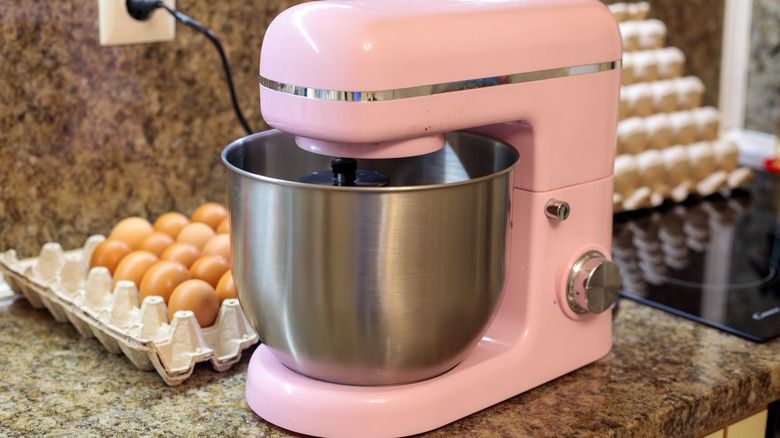
It's not hard to find home bakers who swear by stand mixers for all sorts of doughs and batters. But if you're sticking to simple cakes, chances are you don't actually need one. If you're a fairly serious and frequent baker, sure, a stand mixer probably makes sense; they're especially good for kneading bread, with the right mixer attachment, but that's another topic.
A hand mixer should comfortably handle the basics of cake batter, like creaming butter and sugar or mixing in flour. Both hand mixers and stand mixers will do the same job. Let's take creaming as an example (a common part of cake recipes): this gives a light, fluffy butter mix by adding air pockets into the butter, which later traps the gas that will be released by baking powder, resulting in a lighter cake. But you can over-cream butter and sugar, wiping out those air pockets and making for a dense and gummy cake. (Arguably, this is more of a risk with a stand mixer, where you can turn it on and accidentally leave it running too long while you do other things.)
The same goes for mixing flour into batter: Once it hits liquid, its gluten proteins are activated. With a little mixing, this develops the proteins enough to give the cake a solid structure, but if you over-mix (again, something that's easy to do with a turn-on-and-leave-it stand mixer), they'll develop too many connections and give you a tough or gummy cake. This is why cake recipes often tell you to mix batter until the flour streaks have just disappeared. That said, a stand mixer can certainly be worth the counter space, especially if you tend to bake certain types of cakes.
When a stand mixer earns its counter space
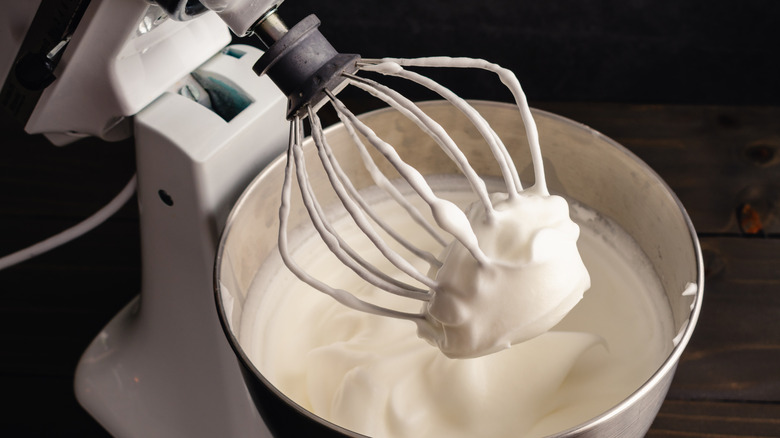
There are cases where a stand mixer may be more worthwhile for cake batters. Lighter cakes that rely on whipped egg whites, like angel food or chiffon cake, are a solid example. This can be done with a hand mixer, but it's a longer task that could be more tiring on your arms, and stand mixers are generally more effective at this as they have more power. Plus, with a stand mixer, you'll have free hands for slowly adding sugar, which is important for some recipes with whipped egg whites.
That said, be wary of the power of a stand mixer — just like with the overmixed batter mentioned before, egg whites can be overwhipped: Softer egg white peaks allow the air to expand just the right amount during baking. If you leave your mixer running and find yourself with super-stiff peaks, you can end up with overly dry blobs of egg white that stick together and mess with your batter.
More broadly, if you're preparing big batches or just working on cakes and other recipes that require longer periods of mixing, a stand mixer is probably okay. Holding a hand mixer upright for 20 or 30 minutes isn't easy for everyone. But if you're just making the occasional low-effort chocolate cake or brownies, your hand mixer (or even the analog method with whisks or other utensils) will do.