

Everyone Had This Gorgeous Dishware In The '50s — Now Collectors Hunt It Down At The Thrift Store
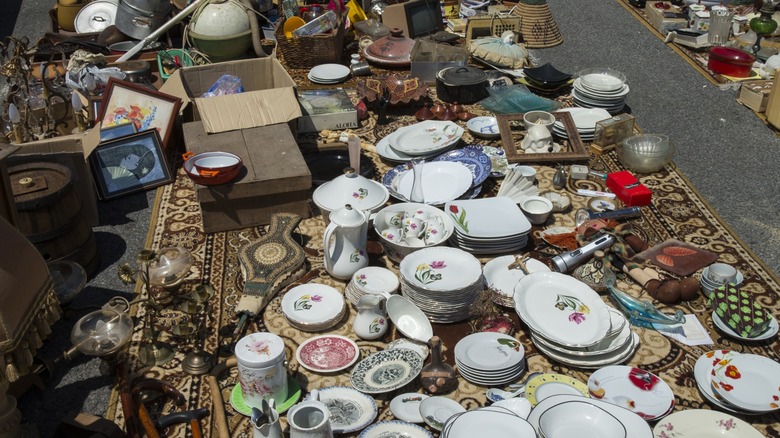
There is plenty of vintage dishware that collectors always have their eye on. If we're talking about pastel-colored pieces that can light up your whole kitchen, Melmac dishes are front and center. Fans hunt them down at the thrift store because of their durable appeal — an answered prayer to ceramic's delicate nature. Melmac dishes are made out of melamine plastic, so they're stronger than regular plastic, but their texture is similar to ceramic, allowing you to get the best out of both worlds. Once you pick one up, though, you'll see a notable difference, as melamine plastic is significantly lighter.
Melmac was also more affordable in the '50s, making it possible for most families to have exquisite dishware that didn't cost a fortune. The real charm behind Melmac dishes, however, lies in their colorful appearance, which looks even better as a set that can be fanned out for display. They usually come in solid pastel hues, but there are also some models with intricate designs. Price varies in the modern market, with a four-piece set costing about $30 on Etsy. A gorgeous 14-piece set of dinnerware and drinkware can go up to $80, so it can ultimately depend on the seller as to whether you can snag it for a good price. If you happen to spot one in the wild, you can confirm if it's a Melmac dish by just looking at the bottom, where it would usually state so.
What to know when you want your own set
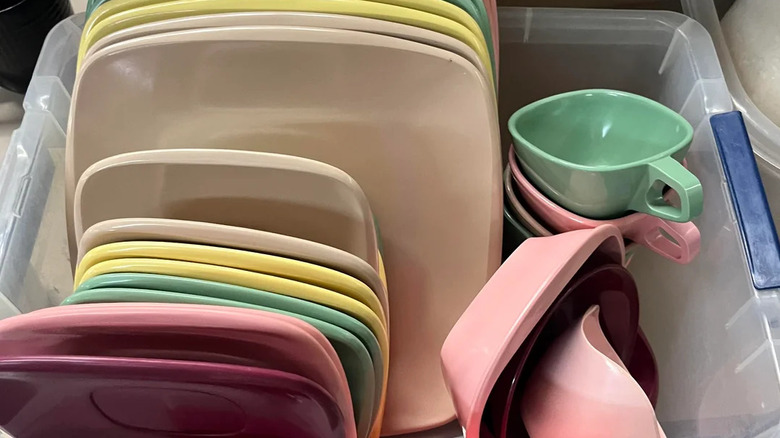
Melmac is not its own brand; rather, it's what they called the melamine powder from American Cyanamid, which was one of the leading manufacturers in the country until it closed down in the '90s. If someone were to use the powder, their dishware could carry the name Melmac. Some brands that produced Melmac dishware were Aztec, Prolon, and Texasware among many others, so there are plenty of options for you to hunt down.
Despite its charming appearance, there's a clear disadvantage to using this material though: it's not microwave-safe. So, if you need better microwave cooking practices, it's best to go for ceramic or glass. Continuing to use plastic is one of the most common microwave mistakes you need to stop making. In fact, according to the FDA, melamine can transfer into food if very acidic foods are heated in it at extreme high temperatures. On the bright side, however, it is okay to use melamine for serving and as tableware, which means you can show off your vintage Melmac dish at the dinner table without worries. Also keep in mind that while Melmac is durable, it does have a tendency to stain and scratch. You should take proper precautions to wash and maintain it just as how you would to carefully clean any other vintage dishes.