

The Japanese Condiment That's Blown American Mayo Out Of The Water Since 1925
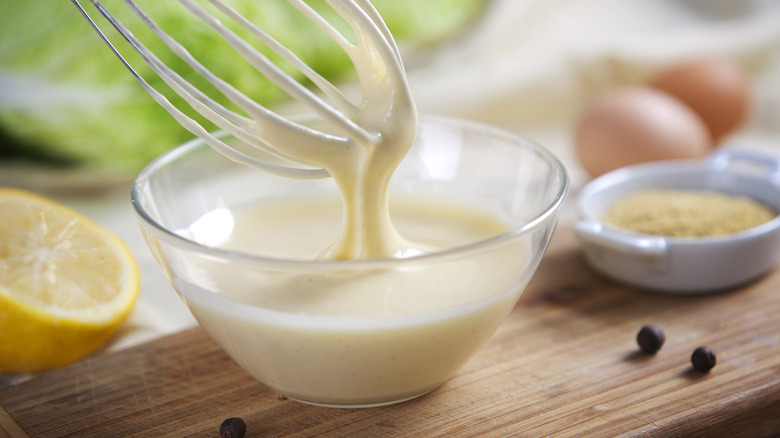
Long before food lovers in America were introduced to its distinctive red-capped bottle and made it a trend in the early-to-mid aughts, Kewpie mayonnaise was already a staple in Japanese kitchens. For more than 100 years, to be more exact, as it was in 1925 that Japan's first commercially produced mayonnaise hit the shelves.
But the story has surprisingly American roots too — Kewpie's founder, Toichiro Nakashima, first encountered mayonnaise while studying in the United States and the United Kingdom in the 1910s, then returned to Japan adamant that this rich condiment he'd so enjoyed in potato salad should have a place in Japanese cooking too. Not that it was an easy transition — Kewpie had to actively teach people what to do with it, with company advertising showing the mayonnaise casually sitting on dining tables to try to present it as an everyday condiment.
But one century later and the Kewpie craze is here to stay, and it has most definitely spread beyond Japan. It's now much loved around the world for its ability to add richness to everything from grilled cheese sandwiches and sushi to dips. It's even a foolproof 60-second ramen upgrade.
Why Japanese Kewpie tastes so different
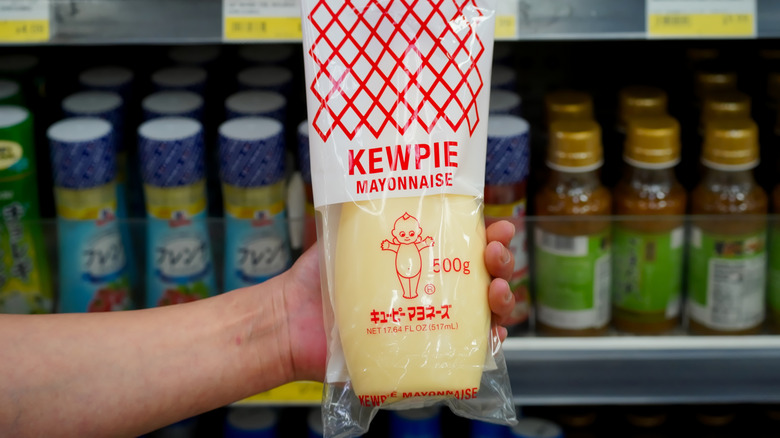
What makes Kewpie from Japan so different from standard American mayonnaise? The biggest difference is the eggs. This is mayonnaise made with egg yolks rather than whole eggs, which is what gives it the rich and savory depth that many chefs claim makes it the best mayo on the market. Kewpie also uses a blended custom vinegar that is made up of ingredients such as apple juice and malt, which gives the mayonnaise a much tangier flavor. And then there's the fact that Kewpie also uses MSG, which is what makes it really stand apart from American mayonnaise, as MSG adds a deep savory umami that other mayos simply cannot compete with.
However, if you want to ensure you're getting the real deal, check the label first. Kewpie produces mayonnaise in both Japan and the United States, and formulations may differ between products, so look for "Product of Japan" if you're after the original Japanese version. The American version has been described as slightly runnier, less intensely flavored, and even less vivid in color, according to some online comments — and this distinction definitely matters, as it is the Japanese Kewpie that has won over the hearts of so many chefs and foodies the world over.