

10 Best Tips For Grilling The Juiciest Chicken Kebabs
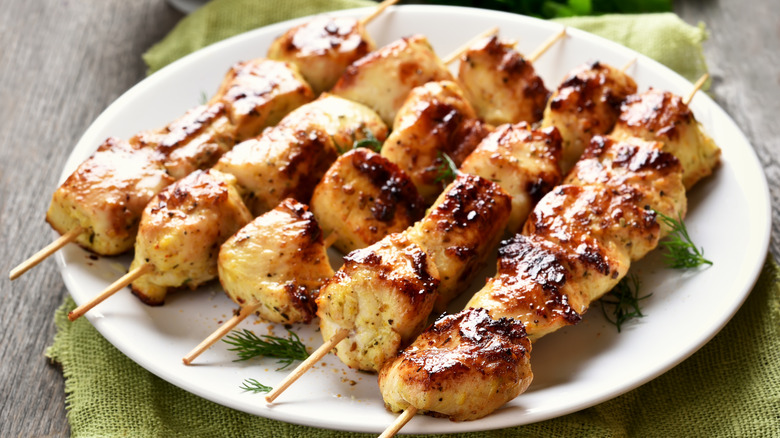
If you're looking for a lean protein that complements myriad marinades, seasonings, and sauces (and that can pick up some nice char on the barbecue), there is no better option than chicken. Unfortunately, it is also one of the most fickle meats to grill, often drying out and growing tough as it cooks. Skewering chicken for kebabs does help mitigate some classic grilling pitfalls, but getting juicy, flavorful results still requires the right technique.
To find out how to grill the juiciest chicken kebabs, we consulted three chefs with extensive experience preparing the dish: Chef Partners Nigel J. Lobo and Ajay Singh of Paradise Valley, Arizona restaurant INDIBAR, and Ajaya Thapa, Chef de Cuisine at Cleo at SLS Baha Mar in The Bahamas. We asked them to share their best advice for every stage of the kebab-grilling process, from selecting and cutting the chicken to marinating, seasoning, grilling, and resting.
The result is a guide to 10 of the best tips for grilling chicken kebabs that are juicy, tender, and packed with flavor. Read on for the chefs' tried-and-true techniques for avoiding dry, tough chicken and getting perfectly grilled kebabs every time.
1. Choose your cut wisely
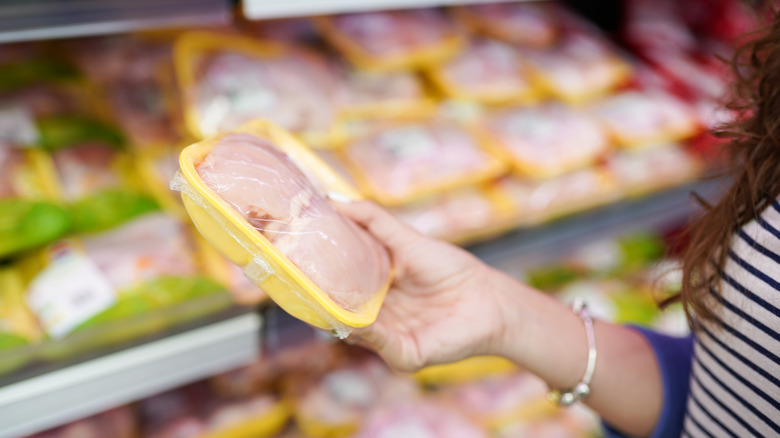
When it comes to choosing the chicken for your kebabs, not all cuts are created equal. While you can make kebabs with any part of the chicken, our experts recommend dark meat. Ajaya Thapa prefers using thigh meat, noting that breast meat requires more attention when cooking as it tends to dry out quicker. Chefs Nigel J. Lobo and Ajay Singh concur that chicken thighs are better for kebabs. "[They] help retain moisture and make the kebabs more forgiving on the grill," they explained.
It is not impossible to grill a moist kebab using white-meat chicken, but it might take a bit more finesse. "If you are using the breast cut, quick[ly] cook over a high heat to char the outside and then on a low heat to retain the moisture and to cook fully," Thapa says.
2. Take the extra time to brine
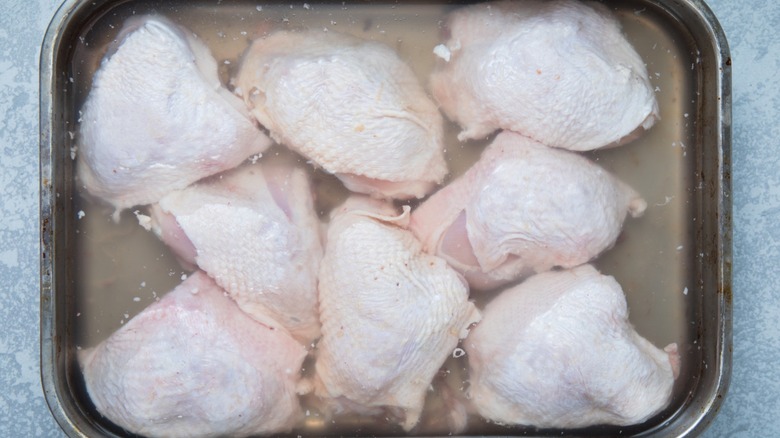
While not an absolutely necessary step, the chefs agree that brining meat makes an actual difference in keeping kebabs juicy. A good brine will consist of a lightly salted water solution with seasoning. "Brining the meat helps to break the fibers and prevents stiffening," says Ajaya Thapa. "It also shortens the cooking process and helps in retaining the moisture while cooking."
But how long should you be brining your chicken? Chef partners Nigel J. Lobo and Ajay Singh like soaking it in a saltwater solution for approximately 30 to 60 minutes. This amount of time allows the meat to absorb both water and seasoning, but they note that it is critical to keep your brine balanced. "Avoid brining it for too long or using an overly salty solution, particularly when the marinade will also contain salt," the chefs explained.
3. Cut even kebab pieces
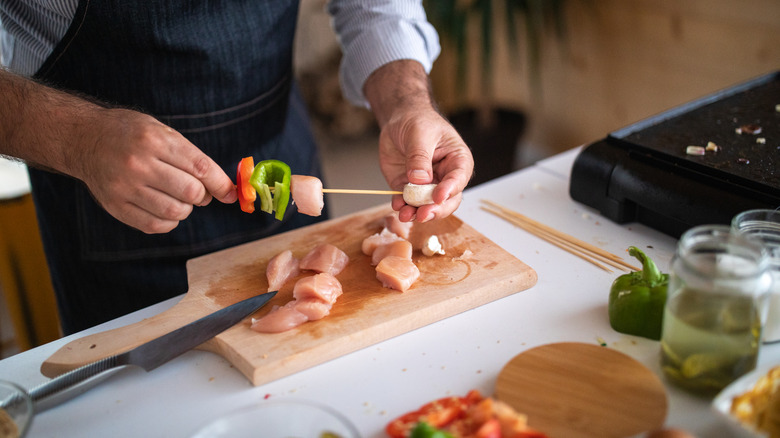
One of the biggest reasons for dry chicken is an uneven cook. As such, the way you cut the chicken for your kebabs can get you one step closer to grilling like a master. "Smaller pieces cook and dry out before the larger ones are ready," say Nigel J. Lobo and Ajay Singh. "Evenly sized pieces are important for consistent cooking."
There is no need to measure each piece of chicken down to the centimeter, but putting in the extra time to ensure that all of your pieces are roughly the same size will make a world of difference when it is time to grill. The size you choose is also completely up to you — just keep in mind that smaller pieces will be done more quickly, and larger pieces will need a bit more time on the grill. Whichever size you choose, Lobo and Singh recommend removing the kebabs from the heat once they reach an internal temperature of 165 degrees Fahrenheit.
4. Marinate your kebabs in yogurt
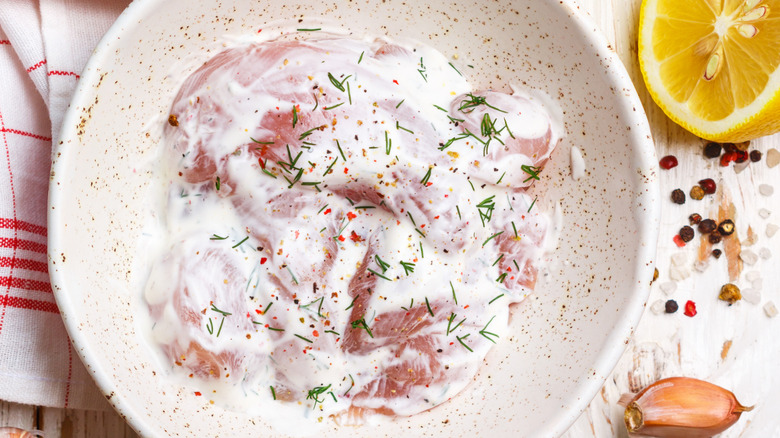
Marinating your chicken in a mixture of yogurt and your desired seasonings — a technique used in a variety of international cuisines for centuries — is a reliable way to add more flavor to grilled chicken and ensure your kebabs stay juicy during grilling. "The yogurt gently tenderizes the chicken while the fat and seasonings create a protective coating that helps prevent moisture loss," Nigel J. Lobo and Ajay Singh advise.
All three of our experts recommend letting your chicken pieces sit in a yogurt marinade overnight. However, if you can spare the extra time, the INDIBAR chefs swear by a two-step marination process that starts with letting chicken pieces rest with a seasoning of salt, spices, and an acidic ingredient such as lemon juice before coating them in yogurt.
"Seasoning each stage properly is important because the marinade should add flavor throughout the chicken, not only to its surface," Lobo and Singh say. "Poor marination, insufficient seasoning, and not including enough fat, such as yogurt or oil, can also result in dry, bland kebabs."
5. Section your grill with different temperatures
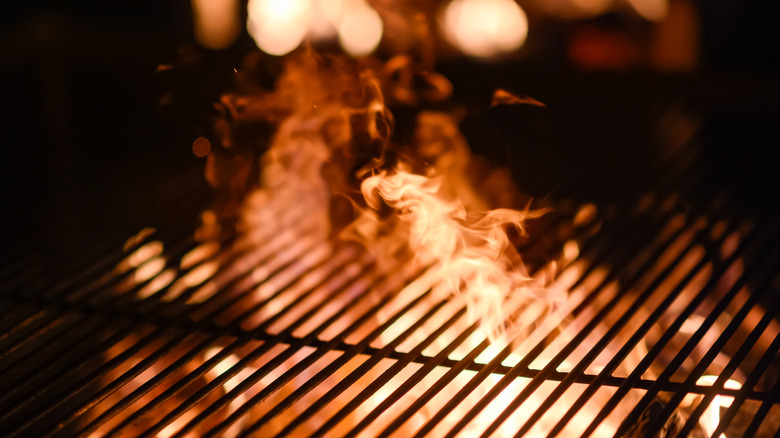
When you are ready to heat up the grill for your chicken kebabs, our experts agree it is beneficial to section your grill with different temperatures. "One side of the grill should be very hot — up to 450 degrees [Fahrenheit] — to get a nice char and seal the meat, and the other side on a medium heat to finish the remaining cooking process," Ajay Thapa says.
Nigel J. Lobo and Ajay Singh reminded us to preheat the grill to 400 to 450 degrees Fahrenheit (on the hot side). "The grill should be hot enough to sear the exterior and develop a good char without burning the marinade before the chicken cooks through," they say. When you achieve that perfect char, you can move your kebabs to the medium-heat side of your grill to finish cooking. "This provides greater control, particularly when using a yogurt-based marinade, which can darken quickly over intense heat," the INDIBAR chefs add.
6. Avoid overcrowding your grill
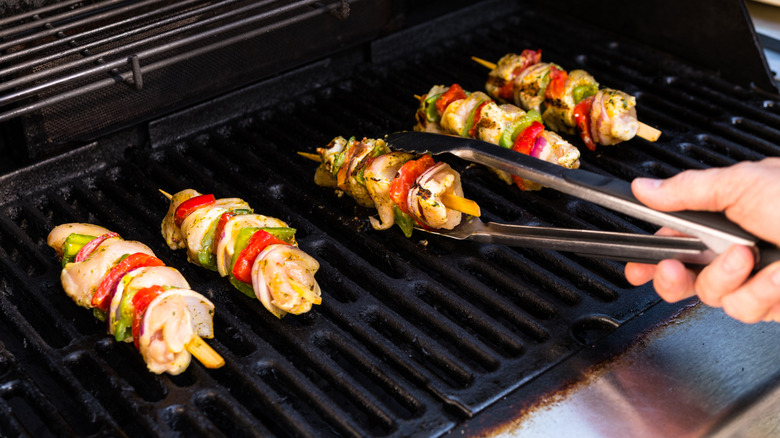
While it might be tempting to pack your grill with as many chicken kebabs as it can fit, leaving space between skewers can help ensure a better cook and juicier meat. "Do not overcrowd the grill because this lowers the temperature and causes the chicken to steam rather than sear," say Nigel J. Lobo and Ajay Singh.
There is no hard-and-fast rule for how much space you should keep between your kebabs. If you have the time (and the grill space), place your kebabs farther apart than you think you will need, and pay close attention to how the kebabs develop char. If they are searing the way you want them to, experiment with adding a few more at a time. When in doubt, more space is always better — especially if your skewers also have vegetables, which can have a high water content and can get soggy, rather than caramelized, on the grill.
7. Resist the urge to flip too soon or too often
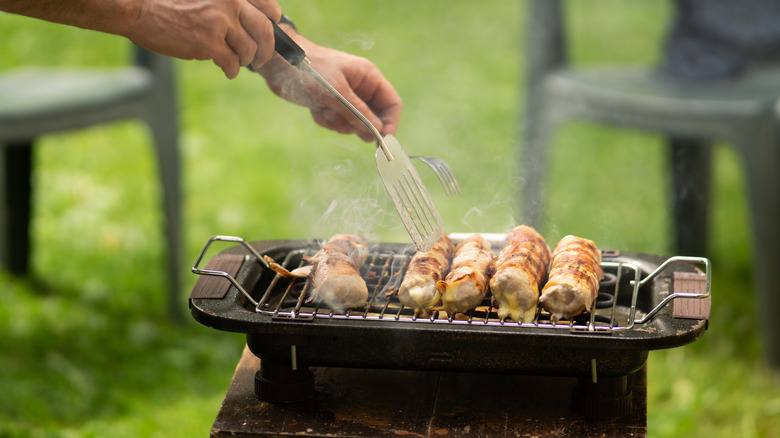
When your kebabs hit the grill, you hear that satisfying sizzle and start smelling the spices in your marinade as they heat up; it can be all too tempting to flip your kebabs and admire your work. However, Nigel J. Lobo and Ajay Singh warn against turning them too early — or too frequently — as they begin developing the sear that will help lock in their juices while grilling.
"Allow them to cook undisturbed long enough to develop color before turning," Lobo and Singh advise. "Avoid constantly flipping or moving them, as this prevents proper caramelization and makes it more difficult to control the cooking." This step is especially crucial before the chicken has gotten its char and color. Once they're off the high heat and have gotten a nice sear, Ajaya Thapa says you can turn your kebabs as they finish cooking.
8. Baste with butter
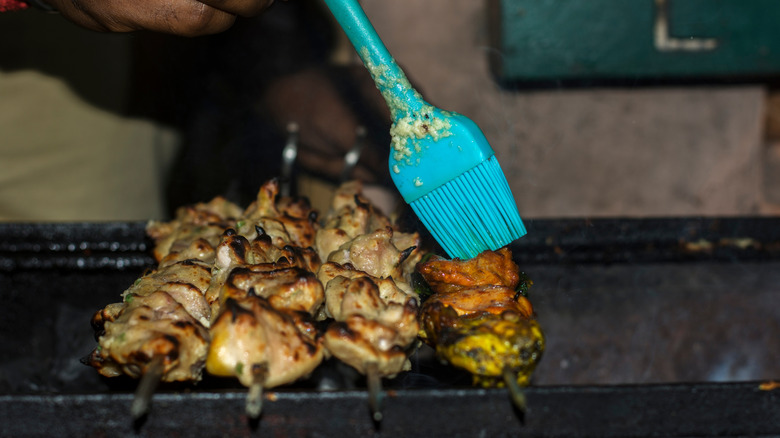
If you thought that you were done seasoning your chicken kebabs when you began grilling them, think again. Our experts agree that basting your kebabs with butter is another way to ensure juicy, flavorful chicken.
When brushing your chicken with butter, Ajaya Thapa recommends doing it gradually, which will add extra moisture and give your kebabs a nutty flavor. Basting works best, she says, after you have moved your kebabs from the high-heat side of your grill to the medium-heat side, where you can add butter every now and then as the chicken finishes cooking.
Lobo and Singh add that oil or ghee (which you can make at home) also work well for basting. Regardless of which fat source you choose, the INDIBAR chefs warn against brushing the cooked meat with marinade that has been in contact with raw chicken.
9. Check your cook with a meat thermometer
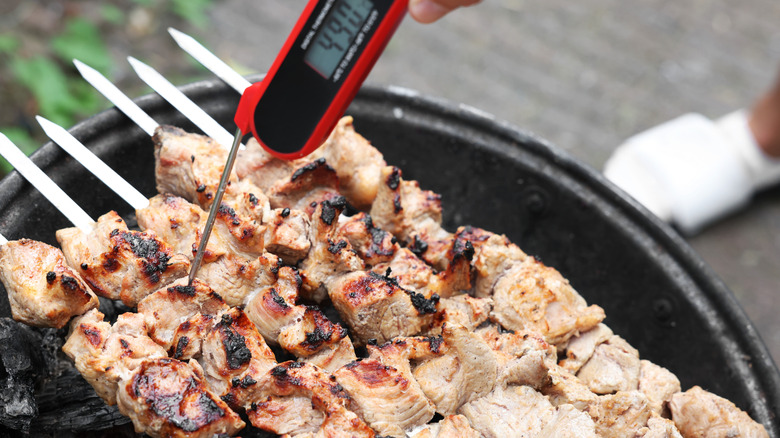
Overcooking your chicken kebabs is a surefire way to end up with tough, flavorless chicken — but there is no reason you should have to guess when your chicken is finished. Nigel J. Lobo and Ajay Singh recommend using a meat thermometer to ensure that your chicken has reached exactly the right internal temperature before taking it off the heat. "Remove the kebabs as soon as the thickest pieces reach 165°F," they say. "Carryover heat will continue cooking them slightly after they leave the grill."
The importance of keeping tabs on the temperature of your chicken kebabs cannot be overstated. Lobo and Singh say that achieving the sweet spot of well-but-fully-cooked chicken is more challenging than most people think. "Chicken can go from juicy to dry very quickly," they add. "Monitoring both the grill temperature and the internal temperature of the meat is essential."
10. Rest the kebabs — but not for too long
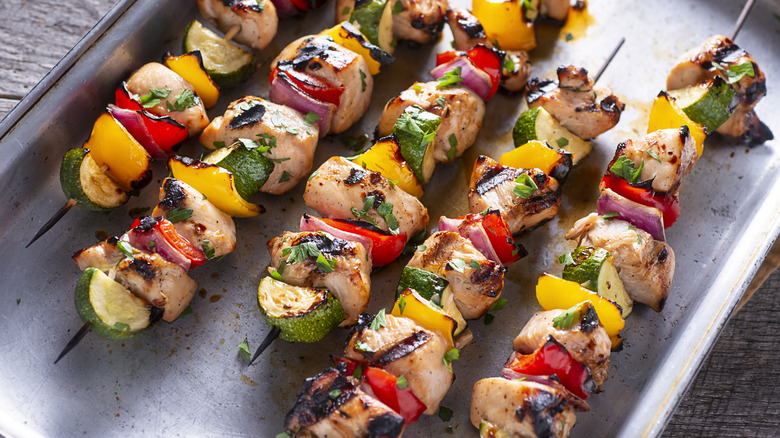
Unlike a thick piece of steak, chicken doesn't need much resting time, as it should be fully cooked when it comes off the grill. Ajay Thapa recommends letting the kebab rest for at least one and a half minutes to let the juices circulate.
At INDIBAR, Nigel J. Lobo and Ajay Singh agree about the importance of resting. "This gives the juices time to redistribute throughout the meat, resulting in a juicier and more tender kebab. Cutting into the chicken immediately can cause those juices to escape, while resting it for too long may allow the kebabs to become cold," the chefs explained.
Finally, the three chefs agree that it's a major mistake to cut into meat right off the grill. "Cutting into the chicken immediately can cause those juices to escape, while resting it for too long may allow the kebabs to become cold," Lobo and Singh say.