

Stanley Vs Yeti Coolers: The Major Differences Between The Brands
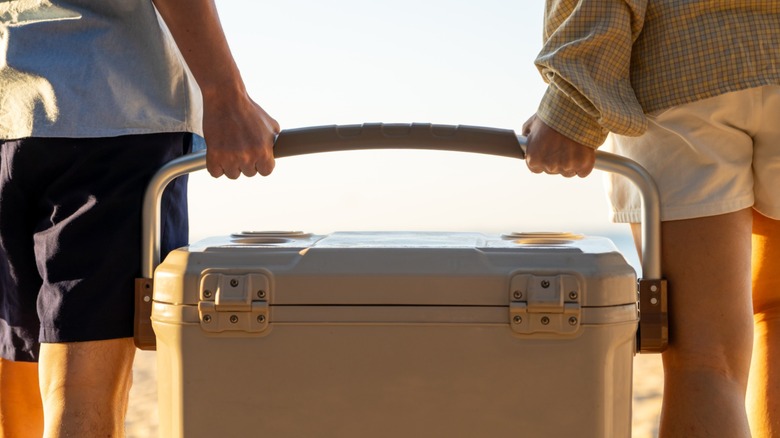
Stanley and Yeti are two of the best-known cult cooler brands on the market. But don't be tempted to think they're identical. In terms of hard coolers, the biggest differences are in the price, portability, durability, and ice retention areas, so the brand that's best for your needs depends largely on how you plan to use it. Stanley's smaller Adventure hard coolers are most comparable to Yeti's Roadie range, both offering portable options that are ideal for day trips and shorter outings, though Stanley has the edge on affordability. Yeti's larger Tundra range tends to cost more and is heavier to carry. But that may still be the stronger choice if you're willing to pay more for maximum durability and longer ice retention.
Of course, most people just want to know how long their cooler will keep ice frozen, and ice retention varies by model, capacity, and conditions like whether the contents are pre-chilled, how full it is, how much ice it contains, how frequently you open it, etc. Independent tests often show that Yeti coolers keep ice frozen for a really long time, up to five days in one test, whereas Stanley's Adventure coolers tend to have a shorter ice retention time — although up to 36 hours for some models is nothing to scoff at.
Both brands rely on foam insulation to keep the temperature down inside the cooler, but the Yeti Tundra uses thicker insulation than most ordinary ice chests, which is what helps slow the melting process, even in very hot weather. That added performance comes with a trade-off, however, as larger Yeti hard coolers are reported to be much heavier and harder to carry and the prices can climb right up to almost $1,600 for their larger premium models. That's probably overkill for an afternoon picnic, but halfway through a weeklong camping trip, it will make a lot more sense.
Which cooler is the better choice?
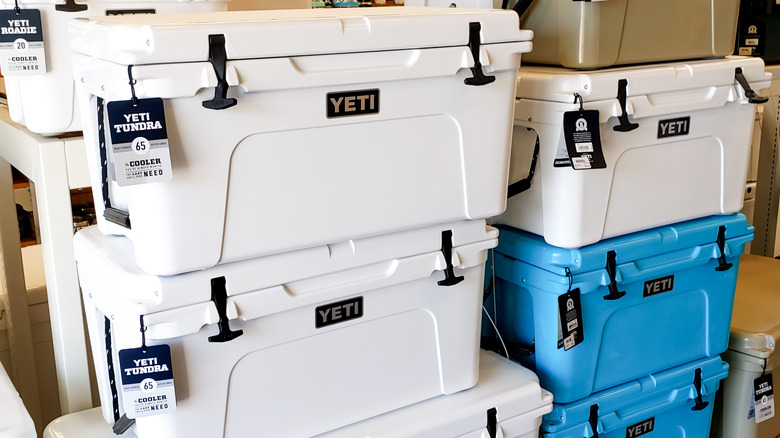
The biggest difference between Stanley and Yeti hard coolers comes down to how they're built and how much ruggedness you're willing to pay for. Yeti builds its coolers using rotomolded construction, which is a process that creates one seamless shell for the body, and this translates to no joints or seams outside the lid itself. And the benefits of that sturdy build go beyond ice retention. Yeti's Tundra coolers are "grizzly resistant," which means they've passed controlled bear-resistance testing. That doesn't mean they're entirely bear-proof; the certification just provides another indication of how tough the Tundra's construction is.
Stanley's Adventure coolers, on the other hand, use a double-wall insulated plastic construction, which is what makes smaller models lighter, easier to carry, and much less bulky in the back of your car. That doesn't mean Stanley coolers aren't rugged (the brand itself describes its coolers as "ruggedly lightweight"). It's just that Stanley generally focuses on lighter options (which tend to cost less), while Yeti's Roadie range and more durable Tundra models are better suited for longer trips, when your ice melting is simply not an option.